
PM says he pushed for economic pressure during July meeting; Trump hails campaign, says ‘big victory’ coming soon; Tehran claims measures will fail, Hormuz still under its control
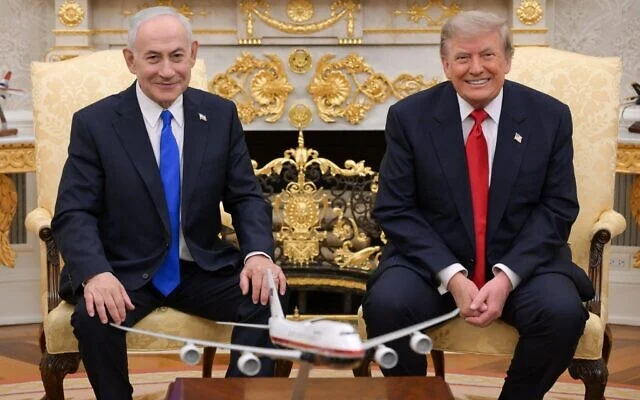
Prime Minister Benjamin Netanyahu said in footage broadcast Wednesday that he urged US President Donald Trump to consider tightening the “siege” on Iran during their July meeting in Washington, and cautioned that it would be impossible to make a deal with Tehran, calling the regime’s leaders “savages.”
Netanyahu linked his proposal to the expanded sanctions campaign threatened by the United States this week.The new measures, detailed by US Treasury Secretary Scott Bessent, target Iran’s digital assets and technology, gold, aviation and shipping sectors, with secondary sanctions potentially affecting entities in the United Arab Emirates, Hong Kong, China, Singapore and Europe transporting Iranian oil.
Netanyahu said he and Trump discussed three possible approaches to Iran during their White House meeting — diplomacy, military action and increasing pressure on Tehran — while expressing doubt that an agreement could be reached with what he called “those savages” in Iran.
“I spoke with President Trump several weeks ago at the White House, in the Oval Office. We discussed three options [against Iran],” Netanyahu said in a video released by his office from a Hebrew-language speech at an event in Jerusalem on Tuesday night.
The prime minister said the first option was reaching an agreement with Tehran, but questioned whether such a deal was realistic.
“I told him, there is one old option. Of course, you can make a deal. A good deal — we have no objection. I doubt that you can make a deal with that bunch over there, with those savages. I’m telling you: You can’t make a deal,” Netanyahu said.
The second option discussed was “military action,” according to Netanyahu, who warned that Israel would respond forcefully if attacked by Iran.
“We will not allow Iran to attack us, and if, God forbid, they attack us, they will suffer a blow beyond anything they have imagined — far stronger than anything they have suffered until now,” he said.
Netanyahu said he then presented Trump with a third option: “to tighten the siege” on Iran.
“You decide,” he recalled telling the US president.
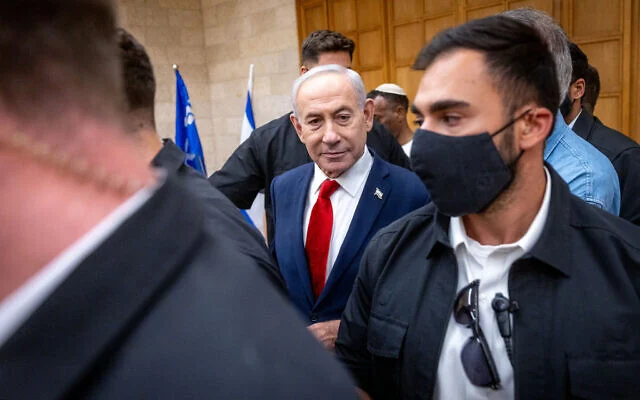
Netanyahu did not explicitly say that he had proposed sanctions, but portrayed Washington’s newly expanded measures against Tehran as an example of the pressure strategy the two leaders discussed.
On Monday, Trump “reaffirmed that decision with something very, very, very powerful,” Netanyahu said, referring to Washington’s announcement of newly expanded sanctions on Iran.
“What President Trump did yesterday was to tighten the siege on Iran — not by tightening the siege on Iran itself, but by tightening the siege on those who help that regime, that terrible dictatorship. That is very important,” Netanyahu said.
Trump struck a similar note Wednesday, telling conservative radio host Glenn Beck that the mounting economic pressure on Tehran was “going toward a very big victory.”
“We’re going to have a big victory here very soon,” he said.
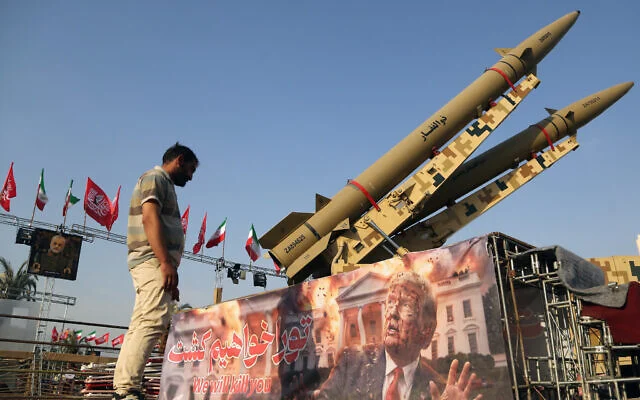
“We cannot let Iran have a nuclear weapon. That’s what it’s all about. That’s 99.9 percent. We cannot let them because they are crazy and they will use it,” Trump said on Wednesday, before claiming that he had already “stopped it twice.”
Trump has long favored heavy economic pressure on Tehran and pursued a “maximum pressure” sanctions campaign during his first term. The US also joined Israeli strikes on Iran’s nuclear program in June 2025.
Iran’s president says measures ‘will not achieve anything’
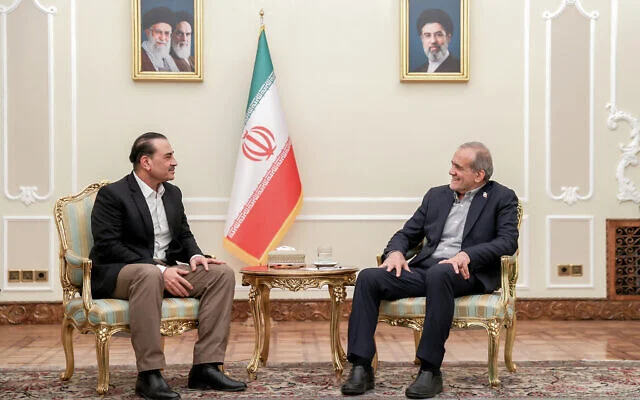
Iranian President Masoud Pezeshkian on Wednesday said that the United States would achieve nothing with its new round of economic sanctions, local media reported.
“With the measures that the government’s economic sectors have foreseen, America will not achieve anything with economic pressure at this stage, just as it was unable to achieve anything in the war,” Pezeshkian said, according to Iran’s ISNA news agency.
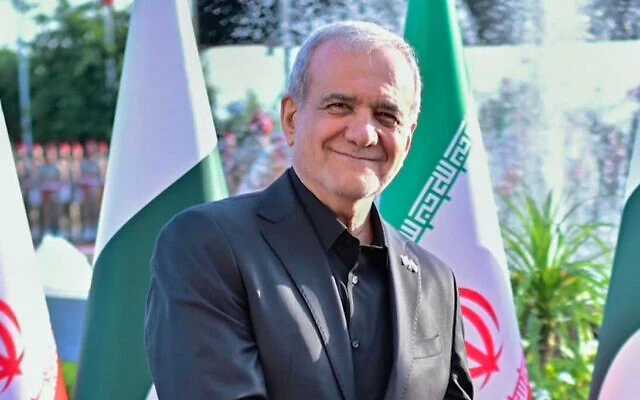
“Our principle is understanding and resolving issues through interaction and negotiation, but at the same time, we will stand firm against economic pressures, as we have done so far and will continue to do,” he added.
Iran’s Islamic Revolutionary Guard Corps said Wednesday, meanwhile, that the Strait of Hormuz remained under Tehran’s control and that no vessel could pass without Iranian permission.
“If America does not accept our conditions, the Strait of Hormuz will not be opened under any circumstances,” the IRGC said.
Iran has exerted control over the strait since the outbreak of the war on February 28 and has sought to impose fees on vessels transiting the waterway. Washington, meanwhile, has pushed for a return to the prewar system of free navigation.
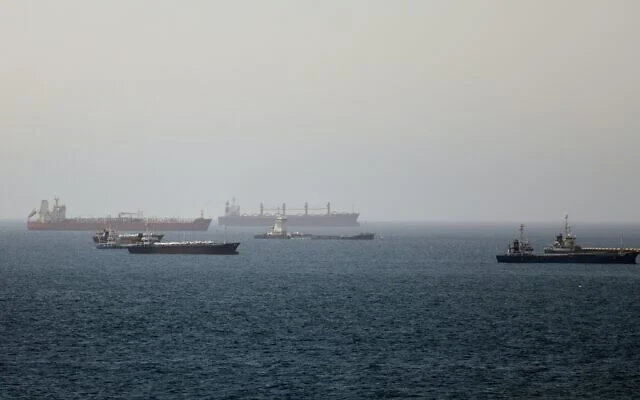
Trump insisted in his Wednesday interview that the strait was in fact fully open.
“The strait is open. We take a lot of ships through the strait now. We’re taking them in. The mines are gone,” he claimed.
Iran and Oman have been negotiating a deal over the future of the strait, which both border. The IRGC said that Iran and Oman had reached agreements on their respective areas of control in the waterway and their splitting of its revenues, according to the semi-official Tasnim news agency.
The report did not elaborate on the terms of the arrangement. The spokesperson for IRGC accused the United States of obstructing negotiations between Tehran and Muscat, causing delays.
Meanwhile, Trump said Wednesday that he believes Iran’s Supreme Leader Mojtaba Khamenei — who has not been seen publicly since succeeding his father in March — is still alive. His father was killed, and he was believed to be injured, in the February 28 strikes that launched the Iran war.
“I don’t think he’s dead. He was very seriously wounded. The left side of his body, the arm, the leg, the whole thing. He was very seriously wounded. But I don’t think he’s dead,” Trump said.
Israeli, US military chiefs discuss regional situation
Earlier this week, senior Israeli and US military officials discussed regional security and lessons from the joint campaign against Iran.
IDF Chief of Staff Lt. Gen. Eyal Zamir met Sunday with US Air Force commander Gen. Kenneth Wilsbach, the Israeli military announced Wednesday.
Israeli Air Force chief Maj. Gen. Omer Tischler also took part in the meeting.
The officers discussed “the regional assessment, advancing lessons learned from the joint campaign, and future areas of cooperation,” according to the IDF.
“The visit reflects the importance of the strategic relationship between Israel and the United States and the close cooperation between the countries,” the military said.

Iran says damaged weapons systems rebuilt
The US-Israeli military discussion came before Iran’s army announcement Wednesday that weapons systems damaged during the war had been rebuilt and that Tehran had also imported new military systems.
“Systems in all branches of the military, including those that were damaged, have been rebuilt, and new systems have also been imported,” army spokesman Mohammad Akraminia said, according to Iranian state-run television.
“New systems have come through the defense industry and the army, and some have also been imported from abroad, and this equipment has enhanced our combat capabilities,” he added.
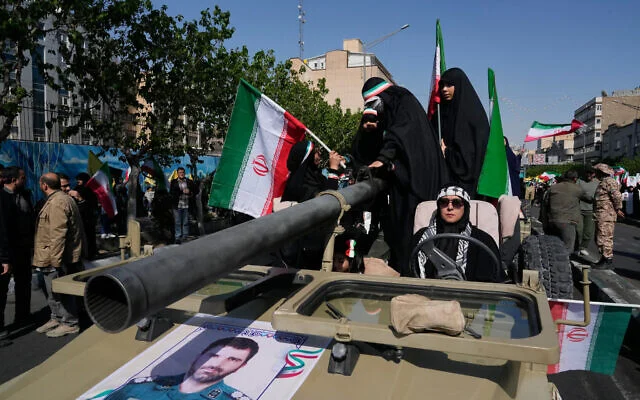
Akraminia said Iran had taken “serious measures in the field of reconstruction and redeployment of systems that had been damaged by the enemy,” the army spokesman said, adding that the country has now changed its military doctrine from defensive to offensive, calling pre-emptive strikes “legitimate.”
As reported by The Times of Israel