
Israeli security officials say Iran’s new supreme leader remains inside the country after surviving an assassination attempt, but describe him as weakened, concealed and increasingly dependent on Revolutionary Guard commander Ahmad Vahidi
A series of conflicting reports about the condition and whereabouts of Iran’s new supreme leader, Mojtaba Khamenei, has raised questions over who is actually making decisions in Tehran and how much authority he exercises over the Islamic Republic.
The controversy began after Saudi broadcaster Al Hadath cited what it described as an Israeli security source claiming that Khamenei was no longer in Iran. The report, which was widely repeated in Israeli media, also alleged that statements and directives attributed to him were in fact being drafted by Iran’s Revolutionary Guard Corps commander Ahmad Vahidi and other senior officials.
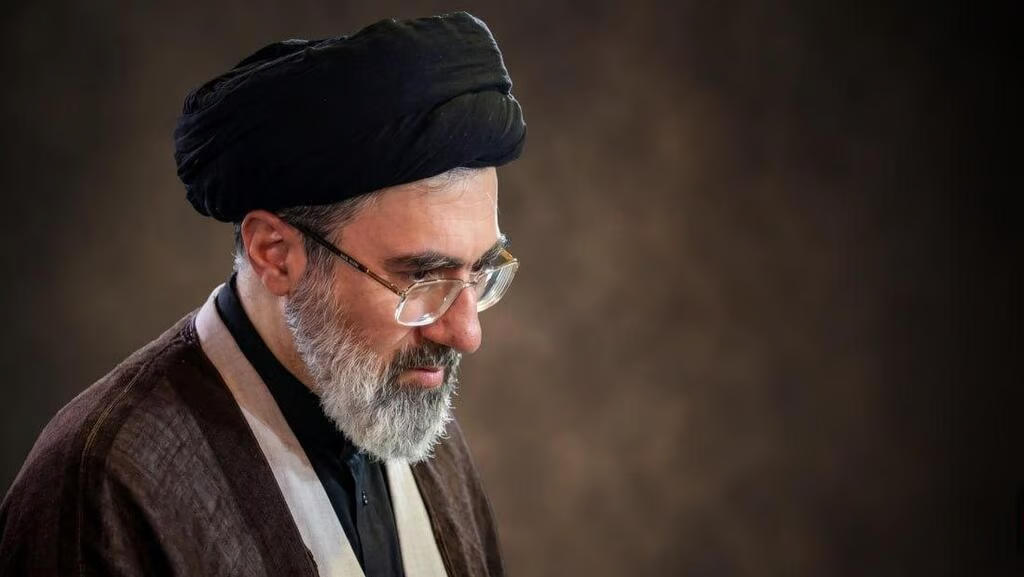
Israeli officials familiar with the intelligence reject that account.
According to information held by Israel, Khamenei is alive, wounded and remains inside Iran. One security official said he continues to issue instructions despite his injuries and that senior figures in Tehran are still awaiting his decisions.
“He is wounded, he is alive and he continues to give orders,” the official said. “In Iran, they are still waiting for his position and his instructions.”
Khamenei has not appeared in public since he was injured during the opening strike of Operation Lion’s Roar, in which his father, former supreme leader Ali Khamenei, was killed. Since then, all of his public statements have been issued in writing.
His prolonged absence has fueled speculation inside and outside Iran about whether he is physically capable of governing and whether the IRGC has effectively taken control of the state.
An Israeli security source said the lack of public appearances does not necessarily mean that Khamenei has lost all control. Rather, it may reflect intense concern that Israel could attempt to assassinate him again.
“He is not 100%,” the source said. “He is operating in a way that makes it extremely difficult to reach him, partly so that he does not expose his location.”
Another senior Israeli official described Khamenei as physically injured and politically weak.
(Photo AHMAD AL-RUBAYE / AFP)
“Mojtaba is in Iran,” the official said. “He is wounded and is a very weak figure who is being managed by Vahidi. They are deliberately building a sense of mystery around him, but the truth is that Vahidi writes everything for him. He is not really an important figure.”
Israeli defense officials believe the regime is deliberately concealing Khamenei’s location for security reasons. Still, they acknowledge that the pattern of written statements, no recorded voice and no public appearances conveys weakness and a lack of visible leadership at a highly sensitive moment for Iran.
Khamenei’s absence from his father’s funeral was viewed by Israeli officials as particularly unusual. Even if the decision was made for security reasons, they said, it suggested that there was a serious problem at the top of Iran’s leadership.
Reports have indicated that Mojtaba Khamenei suffered severe facial burns in the opening attack and has remained in a protected hiding place ever since.
In recent days, he issued a written statement apparently intended to calm tensions inside Iran following his father’s funeral. However, supporters of the hard-line camp demanded that he either show his face or allow the public to hear his voice.
He did neither.
Beni Sabti, an Iran researcher at Israel’s Institute for National Security Studies, assessed that Khamenei is probably still involved in decision-making, but that his authority is limited.
“He is not like his father, who was always the balancing force between the hawkish and moderate factions,” Sabti said. “Although he is functioning mentally and issuing orders, he has been largely neutralized by the Revolutionary Guard. There is a gap between giving instructions and having them fully implemented.”
That assessment is consistent with the view of Israeli officials who believe Khamenei still serves as the formal address for major decisions while the IRGC’s influence over the decision-making process has expanded considerably since he assumed power.
His father, Ali Khamenei, spent decades managing rival power centers across Iran’s political, military and religious establishment. Mojtaba lacks that experience, personal standing and public authority, leaving him far more dependent on the security apparatus.
The growing influence of Vahidi and other senior IRGC commanders has therefore become central to Israeli assessments of the new regime.
Israeli officials believe the Revolutionary Guard now plays a greater role not only in military affairs but also in shaping the supreme leader’s communications, policy positions and response to external threats.
This has led to a broader question: Is Mojtaba Khamenei still governing Iran, or has he become a symbolic figure used to provide religious and constitutional legitimacy to decisions made elsewhere?
For now, Israeli officials say the answer lies somewhere in between.
Khamenei appears to remain part of the decision-making process, but his injuries, concealment and political weakness have made him more vulnerable to manipulation by the IRGC. He may still approve orders, but he is not believed to command the system with the authority once exercised by his father.
The uncertainty has also fueled competing information campaigns.
Some Israeli officials believe the report that Khamenei had left Iran may have been a trial balloon or part of the psychological warfare between Israel and the Islamic Republic. By spreading uncertainty over his location and condition, each side can test reactions inside Iran and among its allies.
Russia, meanwhile, may become the first country to establish direct international contact with the younger Khamenei.
Russia’s TASS news agency, citing an Iranian source, reported that Khamenei could soon hold a telephone call or even a meeting with Russian President Vladimir Putin. The Iranian source repeated the claim that Khamenei’s absence from public view was due to the military situation and security considerations.
Any first conversation with Putin would carry significant symbolic weight. It would signal that Tehran continues to regard Moscow as a central strategic partner during its leadership transition and amid continuing military pressure.
It could also provide Khamenei with an opportunity to demonstrate that he remains Iran’s recognized head of state, even while refusing to appear publicly.
Until such contact occurs, uncertainty is likely to persist.
Israeli officials are avoiding definitive conclusions about the precise balance of power in Tehran. They say the available intelligence indicates that Khamenei is alive, remains inside Iran and continues to participate in decision-making under heavy security restrictions.
At the same time, they assess that his personal authority has been significantly weakened and that the IRGC is strengthening its grip over the regime.
The central Israeli assessment is therefore not that Iran has no leader, but that its new leader is wounded, isolated and increasingly dependent on the military organization that helped elevate him.
That reality may leave the Islamic Republic with a supreme leader in name, while the Revolutionary Guard assumes a greater role in determining how the country is actually governed.
As reported by Ynetnews