
Defense minister hails Israeli flag flying again over the crusader fortress, a symbol of Israel’s previous wars in Lebanon; Staff Sgt. Michael Tyukin, 21, was an only child who moved to Israel from Ukraine
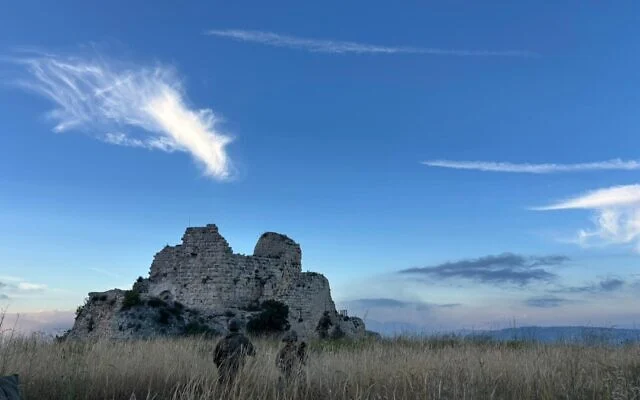
A soldier was killed and four others were lightly wounded in a Hezbollah explosive drone attack in southern Lebanon, the IDF announced on Sunday, while the military captured the historic Beaufort Castle and the surrounding strategic ridge as it pushed deeper into Lebanon.
The soldier, Staff Sgt. Michael Tyukin, 21, of the Givati Brigade’s Reconnaissance Unit, was an only child who moved to Israel from Ukraine with his mother in 2020.
Troops took over territory in the Beaufort Ridge and Wadi Saluki stream area and expanded strikes north of the Litani River after the Hezbollah terror group fired multiple rockets and drones at Israel on Saturday afternoon and evening, forcing schools near the border with Lebanon to close on Sunday.
Footage from Sunday morning showed Israeli and IDF flags flying over the citadel, a strategic medieval Crusader-built fortress with symbolic importance in the history of Israel’s military entanglements in Lebanon. Shelling was audible and smoke rose from the surrounding area.
The fortress, also known as Qalaat al-Shakif, commands sweeping views of the Galilee Panhandle in northern Israel, as well as the Nabatieh area in southern Lebanon, making it a position of considerable strategic value.
Israeli troops captured the castle in one of the first battles of the First Lebanon War in 1982.
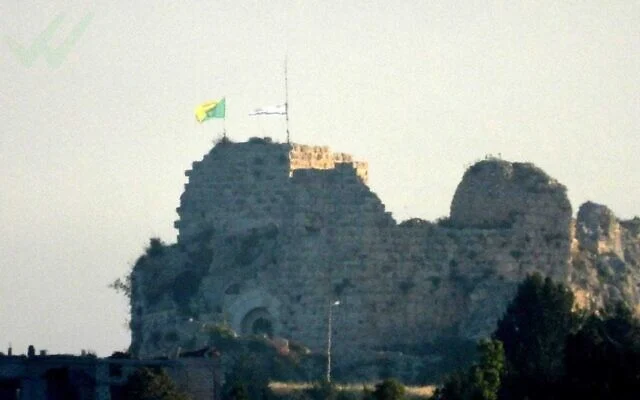
Golani soldiers — the same brigade that carried out the latest raid — battled terrorists from the Palestinian Liberation Organization at the site, killing dozens. Six Israeli soldiers were killed in the 1982 battle.
The IDF then held the castle area during the 18-year occupation of southern Lebanon in 1982-2000, before troops were withdrawn.
“Forty-four years after the heroic Battle of the Beaufort, and on the memorial day for the Peace for the Galilee War, including the Golani soldiers who fell in the Battle of the Beaufort, IDF soldiers, led by the Golani Brigade, returned to the summit of Beaufort and once again raised the Israeli flag and the Golani flag there,” Defense Minister Israel Katz said in a statement.
Speaking later at a memorial ceremony for fallen soldiers of the 1982 First Lebanon War, Katz vowed troops would stay at the castle “as part of the security zone in Lebanon.”
Katz said that “the capture of the Beaufort and the expansion of the [ground] maneuver constitute a clear message to our enemies: Whoever threatens the citizens of Israel will lose their strategic assets one after another.”
The latest Israel-Hezbollah war began on March 2, when Hezbollah fired rockets into northern Israel two days after the US and Israel attacked its main backer, Iran.
The IDF said it launched a ground operation in the Beaufort Ridge and Wadi Saluki stream area in recent days in order to “destroy [Hezbollah] infrastructure and eliminate terrorists, as part of strengthening operational control in southern Lebanon and removing the direct threat to the Galilee Panhandle and Metula,” as well as to “expand the forward defense line.”
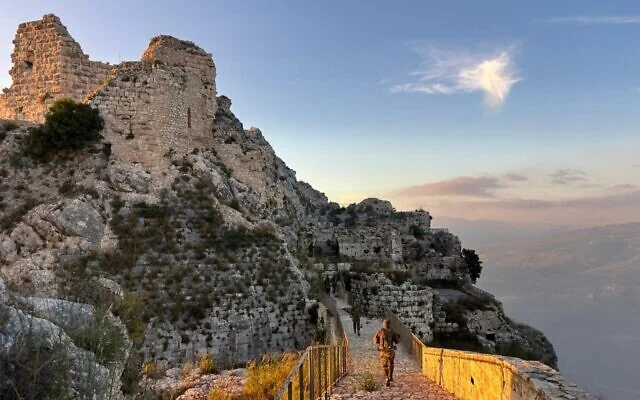
Soldiers crossed the Litani River’s 90-degree bend, just across from the Israeli border community of Metula, and advanced toward the fortress.
The IDF said it expanded its strikes in areas north of the Litani River, and the operation is also “expanding to additional areas at this time.”
The Beaufort and Wadi Saluki area is home to “significant” Hezbollah infrastructure, which the IDF said was established with Iranian assistance, “from which Hezbollah terrorists managed the fighting and carried out numerous terror attacks.”
Hundreds of rockets were fired from the area at Israel and troops in southern Lebanon, according to the military.
“The IDF is operating near Nabatieh, a significant Hezbollah stronghold in southern Lebanon, and is prepared to expand the offensive as required,” the military said.
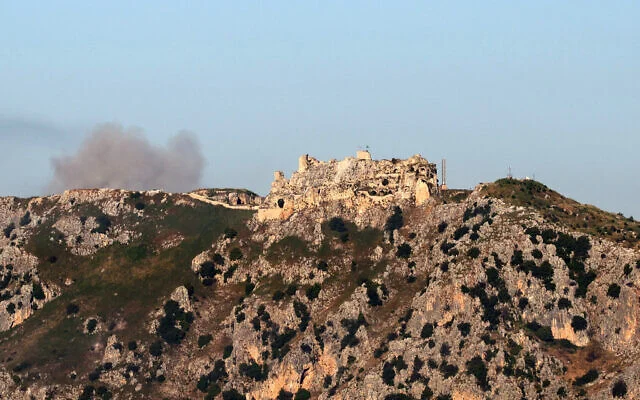
Ahead of the ground offensive, the Israeli Air Force carried out “massive” strikes on Hezbollah infrastructure in the area, including artillery and tank shelling.
The IDF said it also struck “commanding terrain, searched for and neutralized military infrastructure in the Litani area, and conducted essential engineering activities to create the conditions required for the offensive operation.”
There was no immediate comment from Hezbollah or the Lebanese government on the Israeli push.
Also on Sunday, the IDF reissued a wide-scale evacuation warning for all of southern Lebanon.
“In light of the Hezbollah terror organization’s violation of the ceasefire agreement and its targeting of the Israeli home front, the Israel Defense Forces is compelled to act against it forcefully, particularly in your areas,” army spokesman Col. Avichay Adraee said on X.
“Anyone who is near Hezbollah operatives, its facilities, or its weapons is putting their life at risk. Any building used by Hezbollah for military purposes may become a target,” he warned.
The IDF issued this warning numerous times in recent months.
The IDF then said it had launched a wave of strikes on Hezbollah infrastructure sites in Tyre and other areas of southern Lebanon. The military published footage of what it said was a strike on a Hezbollah command center in the Tyre area.
Soldier killed
The IDF announced that Tyukin, 21, a staff sergeant in the Givati Brigade’s Reconnaissance Unit, was killed when a first-person view drone piloted by the Iran-backed Hezbollah terror group struck a position where Givati soldiers were operating at 10:30 p.m. on Saturday. The four other wounded soldiers were taken to a hospital for treatment.

Tyukin, a resident of Ashkelon, was the 25th soldier to be killed since Hezbollah began attacking Israel on March 2 in support of Iran, after US-Israeli strikes on the Islamic Republic. A civilian contractor has also been killed in southern Lebanon.
The fact that the attack took place at night indicated that the Hezbollah drone may have included a night-vision camera. Hezbollah has previously published footage showing FPV drones with night vision.
Israel has struggled to fend off growing attacks on troops in southern Lebanon and northern Israel by Hezbollah’s first-person view drones, which are largely impervious to jamming technology. The terror group has also fired rockets and other types of UAVs, hitting both military and civilian targets.
Tyukin moved to Israel from Ukraine with his mother in 2020. Since he was an only child, she would have had to have signed a special waiver for him to serve in a combat unit.
Defense Minister Katz issued a statement of condolence to Tyukin’s family. “The late Michael immigrated to Israel from Ukraine with his mother only six years ago. He chose to tie his fate to the fate of the State of Israel, he enlisted in significant combat service and became a symbol of Zionism, devotion, and love of the land.”
“I send my heartfelt condolences to his mother, his family, and friends, and pray for the full recovery of the four soldiers who were wounded in the incident. May his memory be a blessing,” he added.
Ashkelon Mayor Tomer Glam also issued a statement of condolence, noting that the municipality will be providing support for the bereaved mother, Ekaterina Krylov, who lost her only child.
Sirens in the north, nature parks closed
Despite the IDF push, Hezbollah kept up its fire on northern Israel, with no injuries reported.
A Hezbollah drone struck an open area in the Western Galilee Sunday morning, the military said. The “suspicious aerial target” triggered sirens in numerous towns along the border.
The military said it identified an impact in an open area, and troops were scanning the area.
Two rockets launched by Hezbollah at the Zarit area on the border late Sunday morning were intercepted, the military said.
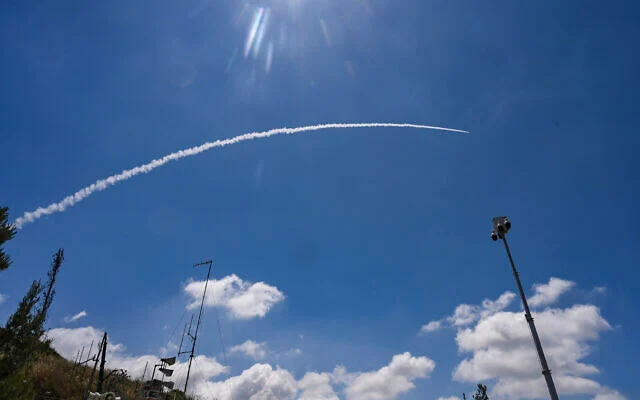
Shortly past noon, two rockets were launched at the Galilee communities Kfar Giladi and Metula, one of which was intercepted while the other struck an open area, according to the military.
Another rocket fired toward Acre was intercepted, while several more hit open areas, the military said. Several rockets fired at the Kiryat Shmona area were also intercepted, while another struck an open area, the military added.
In response to ongoing attacks from Lebanon, the Nature and Parks Authority announced that in accordance with the Home Front Command’s instructions, a number of sites in the north will be closed to tourists.
The locations closed in the Upper Galilee are Achziv Beach, Yechiam National Park, Bar’am National Park, Nahal Ayun Reserve, Nahal Snir Reserve, Hula Reserve, Nahal Amud Reserve, Horshat Tal, and Tel Hazor.
In the Golan Heights, Tel Dan Reserve, Banias Reserve, Nimrod Fortress, and the Nahal Zuyan trails in the Yehudiya Forest Reserve will be closed.
In the Lower Galilee, Korazim National Park, Kfar Nahum National Park, and Ein Afek Reserve will be closed.
Additionally, the Home Front Command ordered educational institutions shut in communities along the Lebanon border amid Hezbollah’s rocket and drone barrages, forcing thousands of children to stay home.
There were no educational activities in communities in Kiryat Shmona, as well as Meron, Bar Yohai, Or HaGanuz, Safsufa, Yesud HaMa’ala, Kisra-Sumei, Beit Jann and Sde Eliezer.
In the Upper Galilee and northern Golan, along with Katzrin and Kidmat Tzvi, educational activities are permitted only indoors or in an area where a shelter can be reached in time.
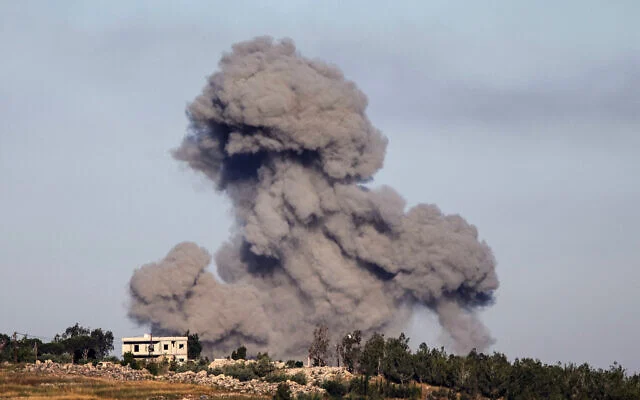
During the fighting in Lebanon, which began on March 2, Hezbollah fired some 5,500 rockets at IDF troops operating in the south of the country, as well as around 2,500 at Israel, according to the military. There were at least 75 rocket impact sites in Israel.
In addition, Hezbollah launched around 300 drones, of which 25 struck Israel, according to the IDF.
The IDF believes Hezbollah still possesses thousands of short-range rockets, along with hundreds of longer-range projectiles. The IDF has said that Hezbollah is launching most of its attacks from deeper within southern Lebanon, north of the Litani River, and not from areas close to the border.
The ceasefire has now significantly eroded, though fighting remains at a lower level than before the truce was announced in mid-April, and the IDF has continued to limit the areas in which it carries out strikes. While the US has okayed Israeli strikes in Lebanon against targets that Jerusalem deems a threat, it has reportedly drawn a line on strikes in Beirut.
Ongoing talks with the Lebanese government have so far yielded few results.
As reported by The Times of Israel