
After US official said to warn of ‘conversation through bombs,’ president claims attack planned for Tuesday will be back on if deal blocking Iran from obtaining nukes not reached
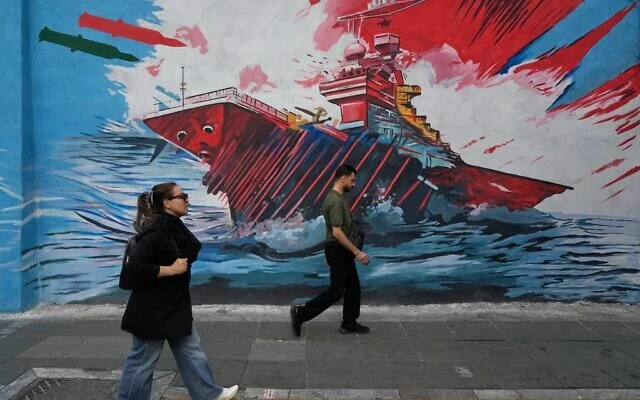
US President Donald Trump announced on Monday that he had called off a major attack against Iran, which he claimed was slated to take place on Tuesday after Gulf allies assured him that a deal with Tehran was now possible thanks to the renewal of “serious negotiations.”
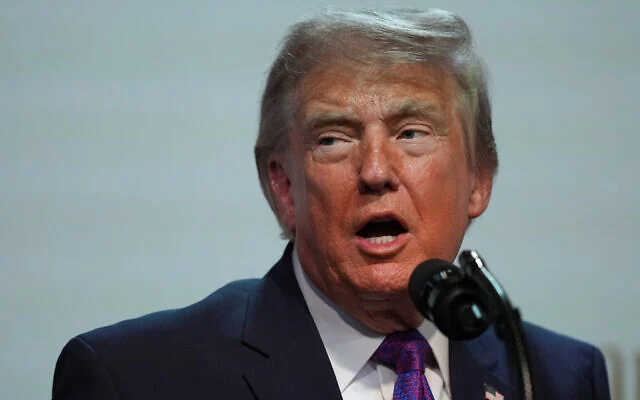
“I have been asked by the Emir of Qatar, Tamim bin Hamad Al Thani, the Crown Prince of Saudi Arabia, Mohammed bin Salman Al Saud, and the President of the United Arab Emirates, Mohamed bin Zayed Al Nahyan, to hold off on our planned military attack of the Islamic Republic of Iran, which was scheduled for tomorrow, in that serious negotiations are now taking place, and that, in their opinion, as great leaders and allies, a deal will be made, which will be very acceptable to the United States of America, as well as all Countries in the Middle East, and beyond,” Trump wrote on Truth Social.
“This deal will include, importantly, NO NUCLEAR WEAPONS FOR IRAN!” Trump wrote, ostensibly referring to an Iranian commitment not to enrich uranium, though it is unclear if that would be a permanent one, as he last week indicated that he would be willing to suffice with a 20-year Iranian halt on uranium enrichment — itself an about face after repeated assertions that Iran must never be allowed to enrich uranium.
While the allegedly planned strike has been put off for now, Trump wrote that he instructed his top generals to “be prepared to go forward with a full, large scale assault of Iran, on a moment’s notice, in the event that an acceptable deal is not reached.”
Trump later told reporters that the leaders of UAE, Saudi Arabia and Qatar had told him “they think that they are getting very close to making a deal” and accordingly requested that he hold off the planned Iran attack for “two or three days.”
Trump added that he informed Israel before making the announcement on Truth Social.
Since the outbreak of the Iran war on February 28, Trump has repeatedly threatened major military assaults against Iran only to later call them off amid claims that progress was being made in negotiations.
Tehran has made no indication that it is prepared to permanently halt its nuclear program or curb its missile program or support for proxies — all demands that Israel has pressed the US to make.
Prior to Trump’s announcement, the sides appeared to be moving closer toward another military confrontation, with the Axios news site citing a US official who called Iran’s latest counterproposal for permanently ending the war insufficient, adding that negotiations were “not making a lot of progress.” The official said that if Iran was not more responsive, there would have to be a “conversation through bombs.”
Iranian media reports had, earlier, described Washington’s demands as “excessive.” But later on Monday, the country’s semi-official Tasnim News Agency reported that Trump had committed to freezing sanctions on Iranian oil during ongoing nuclear talks.
If true, that would represent a new concession by the US. The US Treasury Department’s Office of Foreign Assets Control would issue waivers while negotiations continue, according to the report.
Relatedly, a senior Iranian source told Reuters that Washington has also shown flexibility on allowing Iran to maintain limited peaceful nuclear activities under the supervision of the International Atomic Energy Agency.
The back-and-forth came amid reports that Israel and the US were preparing for the possibility of renewing strikes on Iran, and a day after Trump warned that the “clock is ticking” for Tehran to agree to a deal, “or there won’t be anything left of them.”
Trump has repeatedly set deadlines for Iran to meet various ultimatums and then backed off. A New York Times/Siena poll published on Monday found that the war was unpopular among US voters and dragging down his popularity ahead of this year’s US midterm elections, with his approval rating sinking to 37 percent.
Two Middle East officials told the New York Times that the United States and Israel “are engaged in intense preparations, the largest since the ceasefire took effect,” for a possible renewal of attacks on Iran this week.
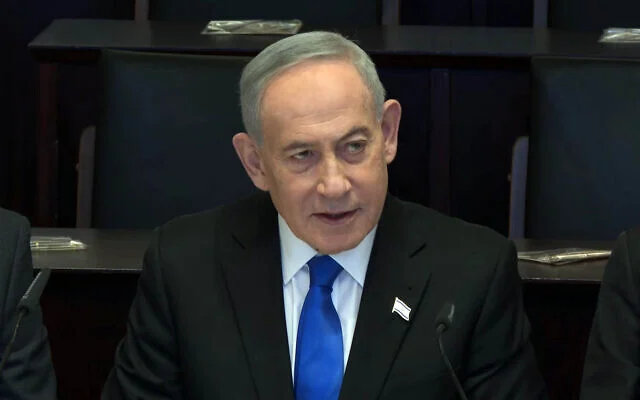
Prime Minister Benjamin Netanyahu was set to convene a small group of senior ministers and aides Monday evening for a security discussion, the office of one of the ministers told The Times of Israel, after a similar discussion Sunday night.
The US official told Axios that the fact that Iran submitted a counterproposal was a good sign, but that war could resume if talks remained stalled.
“It’s time for the Iranians to throw bit of candy out,” the official reportedly said. “We need some real, sturdy, and granular conversation [regarding the nuclear program]. If that’s not gonna happen, we will have a conversation through bombs, which will be a shame.”
In previous terms for a deal dismissed by Trump, Iran had refused to relinquish its stockpile of 60%-enriched uranium, and insisted on the “right” to enrichment. It denies seeking nuclear weapons, but has enriched uranium to levels with no civilian application.
“As we announced yesterday, our concerns were conveyed to the American side,” Iran’s foreign ministry spokesman Esmaeil Baghaei said during a press briefing Monday.
Exchanges are “continuing through the Pakistani mediator,” he said, without providing details.
Baghaei defended Iran’s demands, including the release of Iranian assets frozen abroad and the lifting of long-standing sanctions. “The points raised are Iranian demands that have been firmly defended by the Iranian negotiating team in every round of negotiations,” he said.
He also defended an Iranian stipulation that the US pay war reparations, describing the conflict as “illegal and baseless.”
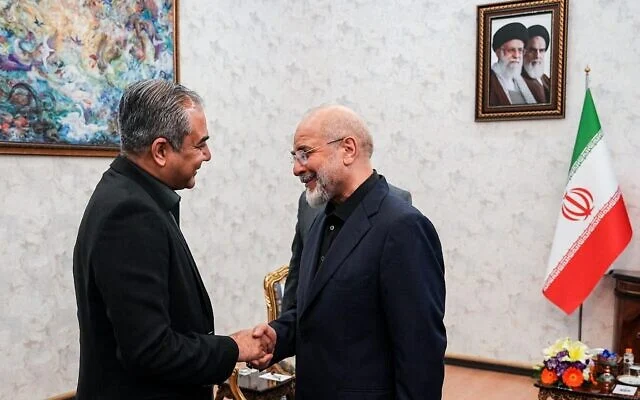
On the possibility of another military confrontation, Baghaei said Iran is “fully prepared for any eventuality.”
On Sunday, Iran’s Fars news agency said Washington had presented a five-point list, which included a demand for Iran to keep only one nuclear site in operation and transfer its stockpile of highly enriched uranium to the United States. The US had refused to release “even 25 percent” of Iran’s frozen assets or pay any reparations for war damage, according to Fars.
The report said the US had also made clear it would only cease hostilities when Tehran engages in formal peace negotiations.
Iran’s Mehr news agency said, “The United States, offering no tangible concessions, wants to obtain concessions that it failed to obtain during the war, which will lead to an impasse in the negotiations.” It described the US conditions as “excessive.”
In an earlier proposal, which was sent last week, Iran had called for an end to the war on all fronts, including Israel’s campaign in Lebanon, as well as a halt to a US naval blockade on Iranian ports in place since April 13. It also called for the lifting of all US sanctions on Iran and the release of its assets frozen abroad.
Fars said the Iranian proposal had emphasized that Tehran would continue to manage the strategic Strait of Hormuz, a vital energy conduit Iran has largely kept closed since the start of the war with the US and Israel on February 28. A fragile ceasefire has been in place since April 8.
Iran announces new body to manage Hormuz
Also on Monday, Iran’s top security authority announced the formation of a new body to manage the Strait of Hormuz, which Tehran wants to charge ships to traverse.
On its official X account, the Supreme National Security Council shared a post for the Persian Gulf Strait Authority (PGSA), saying it would provide “real‑time updates on the #Hormuz_Strait operations and latest developments.”
The account of the Revolutionary Guards navy shared the same post.
It was not immediately clear what the new body would do, but earlier this month Iranian English-speaking broadcaster Press TV said it constituted a “system to exercise sovereignty over the Strait of Hormuz” and that ships passing through the strait were sent “regulations” from Iranian authorities via email.
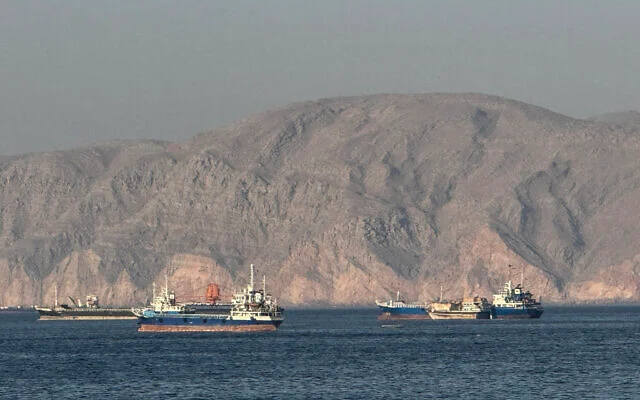
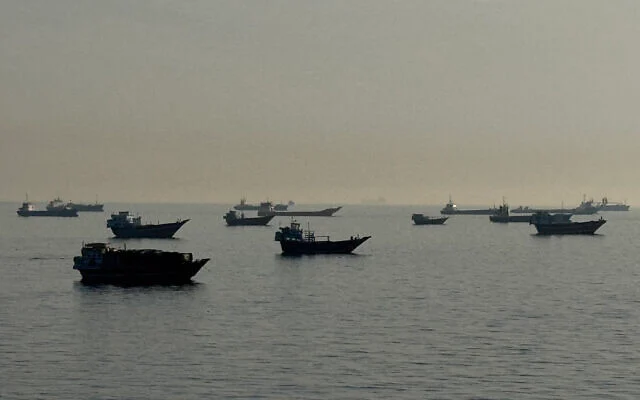
Iran’s grip over the waterway has rattled global markets and given Tehran significant leverage, while the United States has imposed its own naval blockade on Iranian ports. In peacetime, the route accounts for roughly a fifth of global oil and liquefied natural gas shipments, along with other key commodities including fertilizer.
As the strait remains largely closed, Fatih Birol, head of the International Energy Agency, said Monday that commercial oil inventories are depleting rapidly, with only a few weeks’ supply left.
Birol also said at the G7 meeting in Paris that the release of strategic oil reserves had added 2.5 million barrels of oil per day to the market, but that these reserves are not limitless.
Since the war began, Iran has repeatedly said that maritime traffic through the strait would “not return to its pre-war status” and last month it said it had received the first revenue from tolls on the waterway.
On Saturday, Ebrahim Azizi, head of the Iranian parliament’s national security commission, said Iran “has prepared a professional mechanism to manage traffic” through the strait, adding that it will be “unveiled soon.”
Iran warns Gulf countries against ties with Israel
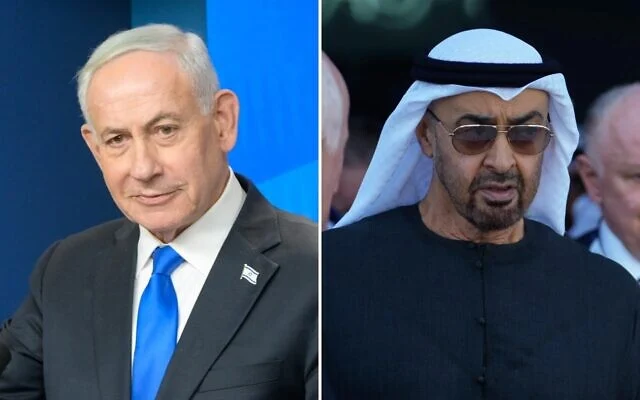
Meanwhile, in the wake of Israeli claims that Prime Minister Benjamin Netanyahu and other Israeli officials visited the United Arab Emirates during the war, Iran warned “some countries in the region” against cooperation with the Jewish state.
“The fact that there have been many exchanges between the Zionist regime and some countries in the region is not hidden from our view,” said Baghaei, the Iranian foreign ministry spokesman.
“The countries of the region, including the UAE, should learn from what happened in the last two or three months,” he said, adding that the contacts “have emboldened the Zionists in committing crimes.”
The UAE has denied that any such visit occurred.
“They saw that the military presence of the US and the Zionist regime in the region does not bring security, it brings insecurity for all countries in the region,” Baghaei said.
Arguing that the prosperity of Middle Eastern countries is harmed by cooperation with the US and Israel, Baghaei called on them “to take control of their own land. They have made their resources available to the aggressors.” He insisted that Iran has “no enmity with any of the countries in the region.”
“We are and will be permanent neighbors with all countries in the region, including the UAE,” he added.
The UAE has been the country most targeted by Iran since the outbreak of war on February 28. On Sunday, a drone strike targeted the UAE’s sole nuclear power plant, sparking a fire.
As reported by The Times of Israel