
Israel needs good people in politics. It also needs those people to make wise political decisions.
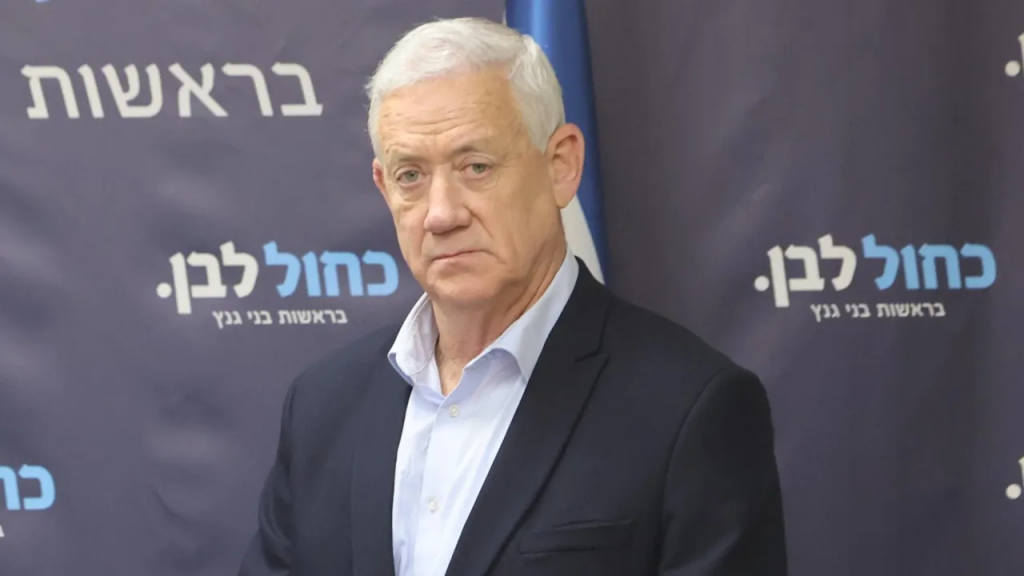
(photo credit: MARC ISRAEL SELLEM/THE JERUSALEM POST)
At first blush, Blue and White head Benny Gantz’s decision Monday to withdraw from the election seems to prove that cruel dictum: good guys finish last.
That is a disturbing thought. If good guys finish last, at least in Israeli politics, does that mean you have to be the opposite – cunning, manipulative, dishonest – to finish first? And if so, what does that say about the system?
The question arises because Gantz is, genuinely, a good guy. Even his political rivals acknowledge this. Many of the tributes that followed his announcement described him as a “mensch.”
But being a mensch didn’t bring Gantz to the point where polls consistently showed his party failing to cross the electoral threshold. One could argue that this very quality catapulted him to political prominence in 2019, even though few knew where the former IDF chief of staff stood on the major issues. His character played a major role in his appeal.
The electorate didn’t punish Gantz for being a good person; it punished him for a series of poor political decisions.
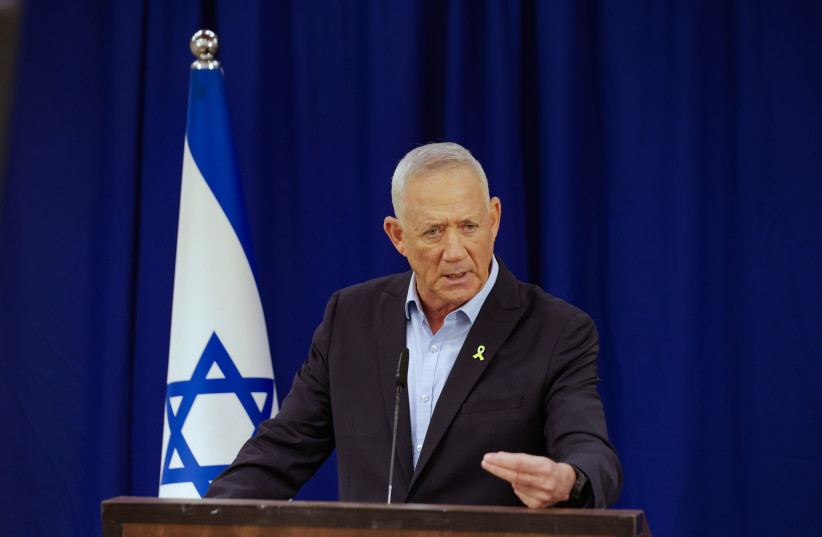
Gantz’s political trajectory from pre- to post-October 7
Consider his trajectory.
During the 2023 judicial reform battle, Gantz balanced strong opposition to the government’s plans with a readiness to negotiate. On one hand, he mobilized public opposition and joined protests; on the other, he took part in compromise talks mediated by President Isaac Herzog.
That combination served him well. He offered voters both resistance and a way forward. By October 6, polls showed his National Unity Party, combining Blue and White, Gideon Sa’ar’s New Hope, and independents such as Gadi Eisenkot and Matan Kahana, rising to 29 Knesset seats from 12.
Then October 7 struck. Five days later, Gantz, recognizing the country’s thirst for leaders who would set political differences aside and unite against the most serious existential threat in 50 years, joined the Benjamin Netanyahu-led emergency government.
The public responded positively. A Maariv poll on October 13 showed his party surging to 41 seats, making it by far the country’s largest. Israelis wanted their leaders to work together, and Gantz, unlike Yesh Atid’s Yair Lapid and Yisrael Beytenu’s Avigdor Liberman, answered that call.
The political reward was striking. So was the lesson: unity was more than an appealing campaign slogan. The public wanted to see it practiced.
But the party subsequently fractured. Sa’ar left to establish an independent faction, and in June 2024, Gantz pulled out of the government. The move did not bring the government down, as he gambled it would. Instead, it began to erode the political advantage he had gained by joining it.
The country was still deep in the Gaza war. The need for cooperation remained, as did the need of the hundreds of thousands of reservists called into service to feel that a united country stood behind them.
Gantz had reasons to leave, including serious disagreements over how the war was being conducted. But leaving also carried a political cost: it weakened the connection between his message of unity and his actions.
Eisenkot’s departure from Blue and White accelerated Gantz’s political decline
The last polls before his departure gave his party 27 seats. Two weeks later, it was down to 23. The decline continued, with Eisenkot’s subsequent departure accelerating the process.
That gap between message and action widened as the deadline for submitting party lists for the October elections approached this year. Gantz kept preaching unity while refusing to join forces with others seeking the same middle ground, including the fledgling party of Gilad Erdan and Yuli Edelstein. Disagreements over leadership stood in the way.
For a time, a third camp emerged: neither pro-Netanyahu nor anti-Netanyahu, but committed to a unity government and a different political discourse.
It never took off. Part of the problem was that the politicians offering to bridge the country’s divisions could not bridge their own leadership differences.
None of this erases Gantz’s decades of service or the responsibility he demonstrated by entering the government after October 7. Those deserve recognition.
But the lesson of his withdrawal is not that decency has no place in Israeli politics. His own rise shows otherwise. Decency helped bring him to the forefront; political judgment determined what he did with that opportunity.
Israel needs good people in politics. It also needs those people to make wise political decisions.
As reported by The Jerusalem Post