
Stephen Maturen/Getty Images
Ahead of the November midterm elections, top Democrats are planning for doomsday scenarios for how President Donald Trump and his administration could intervene in the voting process and laying the groundwork for a forceful response.
In closed-door meetings, Senate Minority Leader Chuck Schumer has convened Democratic senators, legal experts, and former officials to discuss highly specific hypothetical situations, including Trump deploying Department of Homeland Security agents and the National Guard to the polls, federal officials seizing ballots after the administration announces a foreign adversary compromised voting systems, and fake, AI-generated videos alleging election fraud sparking demands for intervention from Trump that lead to a purge of eligible voters from the rolls.
“These sessions didn’t just help us work out how we can thwart some of Trump’s egregious threats. They have been critical in helping us imagine the many twists and turns Trump and his cronies could throw at us, and where gaps in our preparation could potentially exist. I feel more confident — and the American people should, too — that we’re better prepared heading into the election because of our efforts,” Schumer said in a statement to CNN.
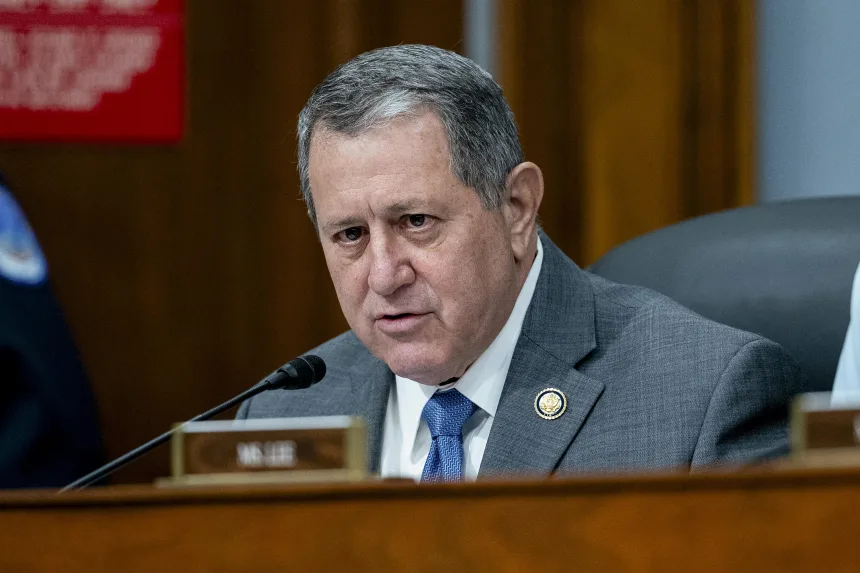
Democratic Rep. Joe Morelle, who’s overseeing election prep efforts in the House, has outlined more than 150 possible threats that could occur on Election Day and beyond. The congressman has also led House Democrats through hypothetical situations, including the possibility of Immigration and Customs Enforcement agents showing up at voting locations and social media influencers spreading misinformation suggesting that election locations have been changed.
“We’re working every day to make sure we’re prepared,” Morelle told CNN. “You should have confidence that the system works. It’s resilient. And yet we’re going to continue to make sure that we’re on the forefront of stopping anything that they try to do.”
Democrats on Capitol Hill have prepared for months, setting up a new election protection task force in the Senate and launching a new bipartisan program to send congressional observers to polling places. House Democrats have been holding hearings around the country to discuss the threats they have identified and how they are preparing for them. Nonpartisan groups are also engaged in worst-case scenario planning and training volunteers to monitor all aspects of the election, including vote-counting and certification of the results. Lawyers have prepared in advance for potential legal challenges.
Democratic Rep. Pramila Jayapal, who has worked with Morelle on his threat assessment plans, said that Democrats have learned to be much more aggressive with their legal strategy.
“We just have to be ready to go to court immediately,” she told CNN. “There is no time to write briefs. So, I think a lot of those briefs are being at least preliminarily drafted, so we are ready.”
The extensive behind-the-scenes planning underscores how much congressional Democrats and their allies are taking seriously the threat of federal interference in the election. There is widespread optimism within the party that they can win the House and even the Senate, but Democrats fear that any attempt at politically motivated election inference could put that in jeopardy.
White House spokeswoman Lauren Bis said in a statement to CNN, “Every American should be asking why the radical Left and Democrats refuse to pass the SAVE America Act which includes commonsense election integrity measures, like Voter ID, that are strongly supported by the vast majority of Americans. This legislation would make sure Americans, and Americans only, decide our elections. ”
Asked if Trump is considering sending ICE agents to the polls in November, then-White House press secretary Karoline Leavitt said in February, “That’s not something I’ve ever heard the president consider. No.”
The work on Capitol Hill is part of an unprecedented effort across the Democratic party to mobilize a coordinated team of lawmakers, lawyers, state officials and outside groups. Already up against Trump’s election legal challenges, and the Department of Justice’s “biggest” election observer program in history, the Democratic endeavor is underway and will continue through the election certification process up until a new Congress is seated on January 3, 2027.
“This represents the largest mobilization of lawyers, organizers, communicators, and people working to support election administrators and secretaries of states and state AGs,” said Vanita Gupta, a former US associate attorney general, who has participated in the exercises with Senate Democrats and worked closely with other groups.
The exercises led by Schumer have included participants acting as stand-ins for key figures, such as the Homeland Security Secretary, the Director of National Intelligence and the Attorney General.
In a non-presidential year without a well-funded national committee to lean on, Democratic lawmakers have worked to build up their own election security apparatus from scratch. This spring, House Minority Leader Hakeem Jeffries met with Morelle to hatch a plan for how Democrats would ensure the November elections are secure and to fight back against any potential threats from the Trump administration.
“I want you to go out and build the greatest election protection and election security program in American history,” Jeffries said, according to Morelle.
Eric Lee/Bloomberg/Getty Images
Schumer launched an elections task force in April to conduct a massive election protection effort. One of the group’s participants, Democratic Sen. Alex Padilla, launched the first-ever bipartisan Senate election observer program, which is preparing to send staffers to observe polling locations on Election Day through the vote counting and election certification process this fall to compliment the robust election observer program that already exists in the House. Election observers are charged with documenting any attempts at election interference or irregularities in the voting process.
“Our elections are safe and secure. We’ve been preparing for the 2026 midterm elections for months and months already,” Padilla, who formerly served as California’s Secretary of State, said in a statement to CNN. “And while we don’t put anything past Donald Trump, Congress, election officials, and voting rights lawyers stand ready to swiftly address any potential threats to our elections.”
The coordinated effort also includes lawyers preparing advance court pleadings such as asking judges to protect the chain of custody for voted ballots in the event that federal agents try to seize them.
Top Democratic leaders in Congress and others have also proactively filed a lawsuit that seeks to block the deployment of ICE or other federal law enforcement officers at or near polling locations or places where ballots are being counted.
Even though federal law already prohibits deploying federal “troops or armed men” to polling places, except to repel “armed enemies of the United States” Trump and his allies have declined to rule out the idea. Asked earlier this year whether he would send ICE officers or National Guard troops to the polls, Trump responded he would do “anything necessary to make sure we have honest elections.”
Elias Law Group, the nation’s largest law firm representing the Democratic Party, is already litigating 85 voting and election cases in 41 states.
“We all basically are prepared to be deployed to a state at a moment’s notice if there is a threat or potential litigation that needs to be handled” one of the law firm’s partners, Aria Branch, told CNN. “We basically have go-bags prepared.”
One of the hypothetical scenarios lawmakers discussed has in part come to fruition. In June, Senate Democrats discussed how to handle the possibility of the Federal Communications Commission threatening to crack down on licenses over political content it didn’t agree with. Three months later, late-night host Jimmy Kimmel said the Trump administration had pressured ABC not to air an interview withTexas Democratic Senate candidate James Talarico.
“It was sobering for me,” a Senate Democratic aide involved in organizing the exercise told CNN.
Early successes in court and Congress this year have helped party leaders and stakeholders build confidence in their strategy.
Democrats blocked multiple Republican attempts to pass Trump’s high-profile elections overhaul bill that divided Republicans and would have dramatically changed the US voting system. The Supreme Court rejected Trump’s controversial plan to change how mail-in ballots are sent to voters across the country and upheld state laws that count mail ballots that arrive after Election Day. The federal government has sued 30 states and Washington DC to hand over election-related records and data, and 26 of those lawsuits have been dismissed according to the Brennan Center for Justice.
And courts across the country threw out at least 60 attempts by Trump and his team to try to overturn the 2020 presidential election results.
“My confidence stems from the fact that we are prepared and we have met every challenge and deflected every challenge,” Morelle said.
Nonpartisan groups also are gearing up.
The ACLU has committed $25 million to “election safeguarding” in this cycle and has worked with allies to train some 10,000 volunteers to date as it prepares to respond to potential problems, said Deirdre Schifeling, the ACLU’s chief political and advocacy officer, who said it marks the largest election effort in the organization’s history.
The volunteers it has trained will focus heavily on seven battleground states and will monitor election activity, ranging from Election Day voting to the counting process.
In all, the organization has gamed out 25 potential scenarios — ranging from ballot-tampering to rogue local officials refusing to certify results — that could disrupt the election or the seating of newly elected members of Congress. The ACLU already has drafted legal filings, news releases and grassroots mobilization plans to respond to each scenario.
Those involved in the broader election planning say they can’t leave anything to chance.
“We can’t have a failure of imagination, given what happened with the Big Lie in 2020,” said Gupta. “Trump is hunting for fabricated problems, with a goal of discrediting results he doesn’t like. That’s why everyone’s doing everything they can to be prepared. So far, his efforts have failed and voters are now voting.”
Democrats began the broad-based effort in part to respond to concerns they were hearing outside the halls of Congress — and hope it will give them a head start for future elections as well.
“Until you had that apparatus in place, you’re going to be questioned left and right from a host of stakeholders and people in the public sphere on what are you doing to guarantee that the elections will not be compromised going forward. And you couldn’t wait until 2028,” a senior House leadership aide told CNN.
As reported by CNN