
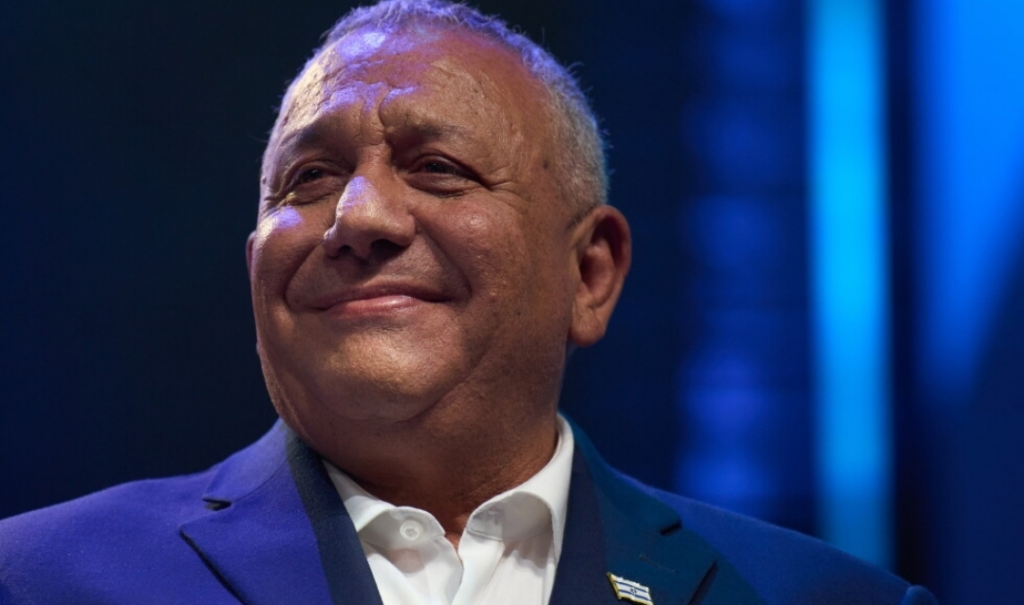
JERUSALEM — A major prediction market on Monday put former IDF Chief of Staff Gadi Eisenkot ahead of Prime Minister Benjamin Netanyahu as the most likely person to lead Israel after the next election.
Polymarket said Eisenkot had a 51 percent chance of becoming the next prime minister, compared with 28 percent for Netanyahu. Former Prime Minister Naftali Bennett stood at 8 percent, and Yisrael Beiteinu leader Avigdor Lieberman at about 5 percent. The market had drawn more than $36 million in trading volume.
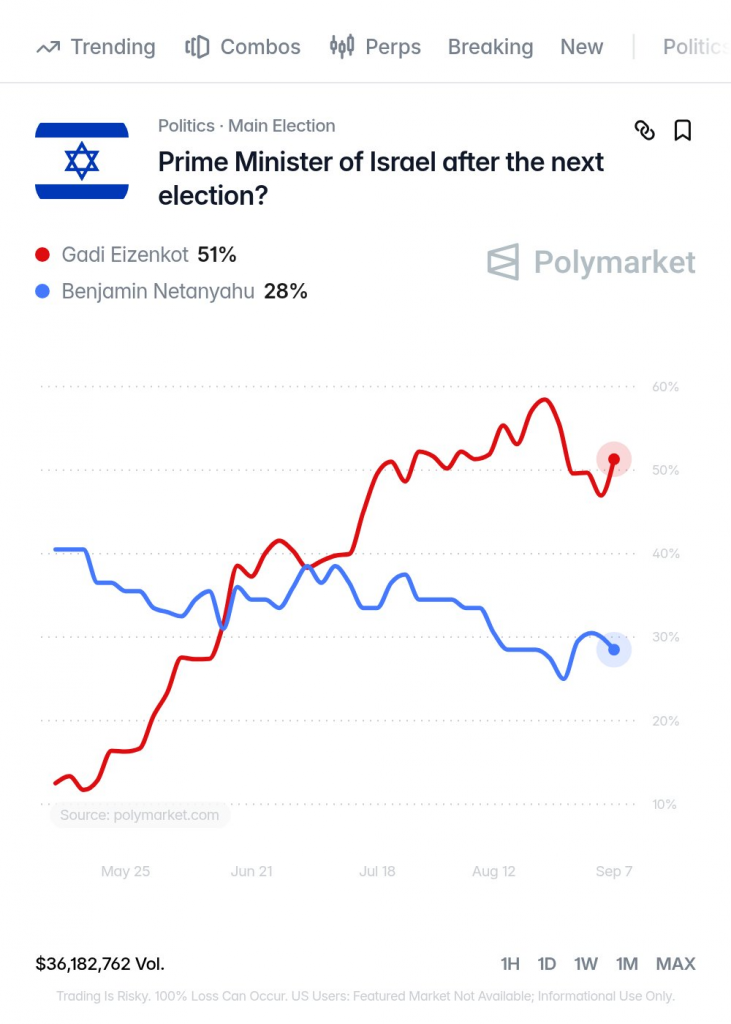
The platform’s official account called the shift “breaking” news, saying the centrist former military chief was now projected to unseat Netanyahu.
The figures are not an official poll. They reflect how traders are pricing the chance that a candidate will be sworn in as prime minister after Israel’s Oct. 27 Knesset election. In Israel’s parliamentary system, the largest party does not automatically form the government. A bloc still needs 61 seats in the 120-member Knesset.
Eisenkot, 66, heads the Yashar party, whose name means “straight” or “honest” in Hebrew. He served as IDF chief of staff from 2015 to 2019 and sat in Netanyahu’s war Cabinet after the Oct. 7, 2023, Hamas massacre before resigning in 2024, saying the government lacked a coherent strategy in Gaza. His son, Gal, was killed in combat in Gaza.
Polls in recent months have shown Yashar running even with or slightly ahead of Likud, with Eisenkot often matching or beating Netanyahu when voters are asked who is more suited to be prime minister. Coalition arithmetic remains tight. Surveys have frequently left both the Netanyahu camp and the anti-Netanyahu Zionist parties short of a majority without additional partners.
Eisenkot has rejected the idea of a Palestinian state after Oct. 7, calling that view “delusional,” while criticizing some government settlement moves and far-right ministers. He has said haredi parties could sit in a government he leads and has floated a draft framework he describes as more moderate than other opposition plans, a point of interest in recent contacts with Degel HaTorah and comments from Shas spiritual leader Rabbi Yitzhak Yosef.
Netanyahu, Israel’s longest-serving prime minister, has framed the election as a choice between wartime leadership and a weaker, divided alternative. His bloc has struggled in polls after the wars that followed Oct. 7.
Polymarket resolves the contract based on who is formally appointed and sworn in after the election, not on who wins the most seats. An interim or caretaker prime minister would not count. Odds can move quickly before Election Day and during coalition talks that often follow.
As reported by VInews