
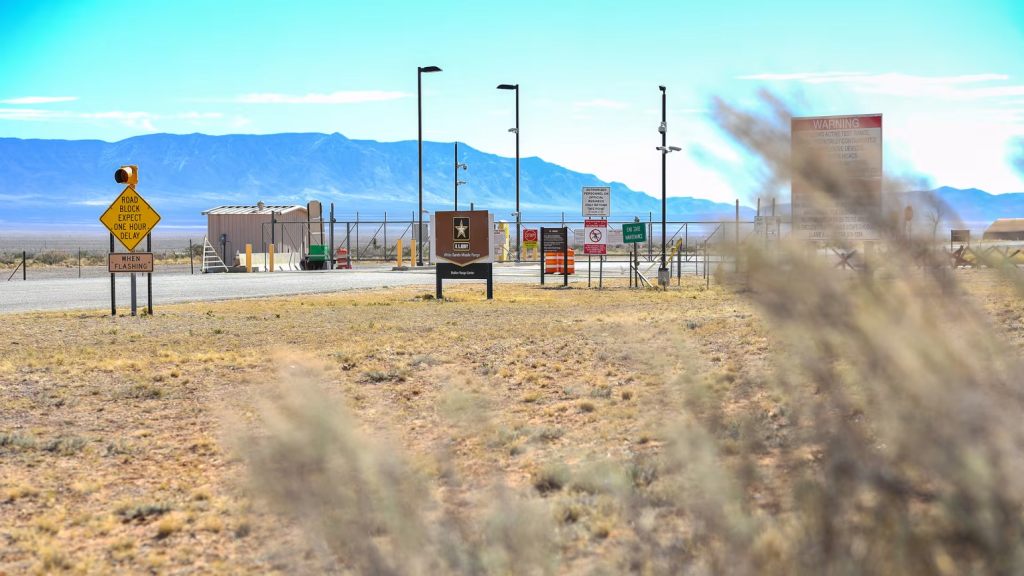
Valerie Macon/AFP/Getty Images
It was spring 2025 and the hunt was on.
American authorities near a sensitive Army missile testing facility in New Mexico had spotted a quadcopter-style drone flying in such a way that suggested it was conducting reconnaissance in restricted airspace around the range.
It wasn’t the first time. Just months earlier, in fall 2024, a similar drone was seen flying a similar pattern over the same base, leading agents with US Customs and Border Protection on a roughly 35-mile chase, multiple current and former US officials said.
Using helicopters and drones and taking “absolutely beautiful video,” a former US official said, the border agents tailed the drone until it crossed into Mexican airspace, where they had to turn back. They never learned who was operating the drone, or why.
But this time, officials set a trap.
For roughly five days, amid dust storms and bad weather, the drone flew in and out over White Sands Missile Range. A task force made up of officials from a hodgepodge of agencies — the Army, the FBI, the Department of Homeland Security, even the small office in the Pentagon that tracks UFOs — studied the drone’s patterns of movement, collected intelligence on it, and tried to understand who was operating it and why.
Finally, using electronic warfare tools, they forced the drone to land in a parking lot on the base. Their first step was to make sure the drone wasn’t armed with explosives, according to the former official familiar with the incident.
Meanwhile, officials were watching a group of Chinese nationals in a rented Mercedes RV parked nearby. According to the former US official and another source familiar with the matter, the people had flown into New York, rented the RV, and driven across the country to Las Vegas to pick up a third person before turning south and beelining for White Sands.
There was another person nearby, too: a Chinese woman who had arrived in Texas on a cruise ship, rented a car and driven to White Sands National Park nearby, where she would remain behind the gates after the park’s closing.
Later, both of the sources said, the FBI would tell military and CBP officials that the people were believed to have ties to Chinese intelligence.
Officials watched the two vehicles, trying to understand how they related to each other and to the drone itself.
Eventually, both groups were detained: The group in the RV was picked up by military officials near the base and turned over to federal authorities, according to the source familiar with the incident.
The woman in the park was ticketed and released by the Department of the Interior, according to the former US official.
CNN was unable to learn what happened to any of them afterward. But officials were sure the two groups were connected: According to one of the sources, identifying information related to the woman was found in the RV.

The Army did not respond to a request for comment before publication. The FBI declined to comment. CBP declined to comment on the specific incident, citing routine policy against commenting on reported incursions. A spokesperson with the Chinese Embassy denied knowledge of the episode.
“The false narrative regarding China engaging in espionage activities is entirely devoid of factual basis or evidence, consisting of nothing more than baseless speculation and sensationalist hype,” the spokesperson said.
The espionage needle in the drone haystack
The episode is one of countless incursions by drones into US airspace over military facilities and other restricted government areas, often flown by hobbyists, cartels ferrying drugs to a third destination, or tourists — but sometimes believed to be flown by foreign agents conducting spy operations.
The proliferation of cheap, easy-to-operate drone technology has made it relatively simple for ordinary people to conduct what at least appears to be drone surveillance — and incredibly difficult for the US government to track and prevent it. That new, chaotic reality has left the government scrambling to catch up.
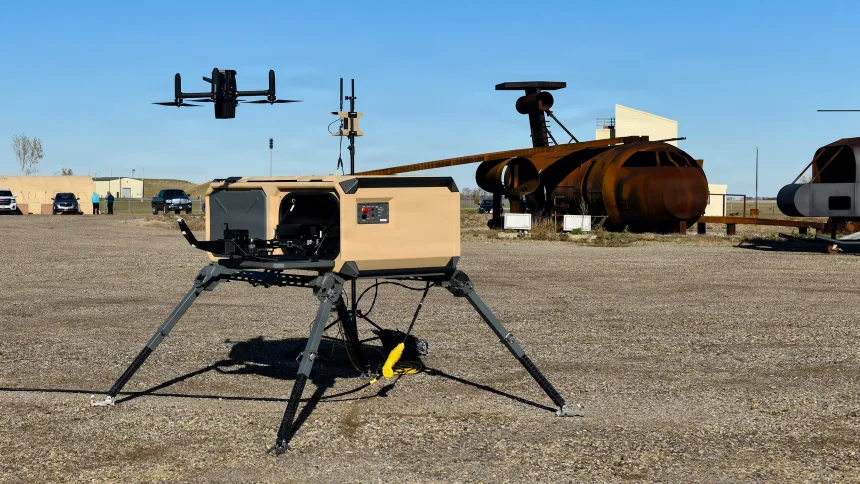
John Ingle/Department of Defense
The nature of any ties to Chinese or other intelligence services is often frustratingly opaque to counterintelligence officials across the government. Investigations involve a matter of gut instinct and guesswork that make it hard to secure more than a petty prosecution for operating a drone in a restricted airspace, current and former officials say.
China is believed to pressure or incentivize ordinary civilians into doing what one official termed “nuisance surveillance” over a variety of military targets, some highly sensitive, some less so. In other instances, those sources say, Chinese nationals inside the US appear to take it upon themselves to spy with no direct order from a Chinese intelligence official.
US officials are worried about the potential for something worse: a lone-wolf-style terrorist attack on critical US infrastructure or civilian targets. Although two US officials with knowledge of the latest intelligence said there’s no indication of an active plot by Iranian proxy groups or other terror groups like ISIS, the obvious opportunity is there.
The recent theft of 15 pesticide drones in New Jersey deeply alarmed American officials, one of the officials said, because of their potential as a delivery system for a chemical weapons attack. Authorities eventually recovered the drones.