
Mediators pushed Hamas to back deal to ‘place ball in Israel’s court,’ given unlikelihood PM will approve any pullback in Gaza before election; Israeli official: Proposal doesn’t meet our demands
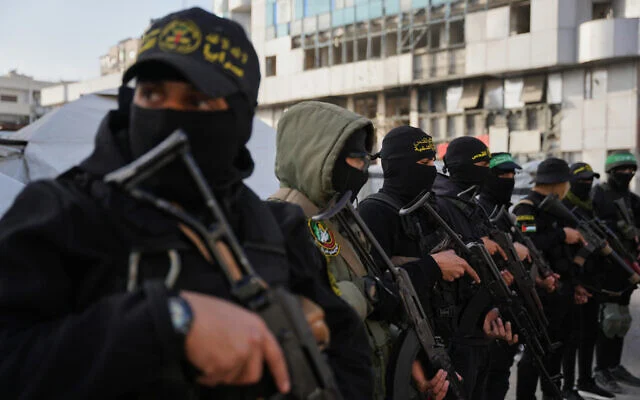
US President Donald Trump announced Thursday that his Board of Peace had reached an agreement on the “complete disarmament of Hamas and all other armed groups in Gaza.”
The agreement was inked hours earlier in Egypt between negotiators from Hamas, the Board of Peace and Mideast mediating countries Egypt, Qatar and Turkey, a source familiar with the matter told The Times of Israel.
However, an Israeli official then issued a statement saying that the Board of Peace’s 15-point disarmament proposal did not meet Jerusalem’s demands for Gaza’s complete demilitarization. Accordingly, despite Trump’s subsequent upbeat post, it was unclear how the agreement would be able to proceed.
Trump declared on Truth Social that the agreement was “a critical step toward Gaza finally being governed by a new Palestinian government that will work closely with the Board of Peace to help the Palestinian people. At the same time, Israel will have the security it deserves, with Gaza no longer used as a base for terror attacks.”
“This is a major milestone in the implementation of the Trump 20-Point Plan. The agreement will be carried out in carefully structured phases. As disarmament is completed, Israeli forces will withdraw, and the International Stabilization Force will work with a new Palestinian police force to take responsibility for Gaza being safe for its residents and its neighbors,” he continued.
“One year ago there was a violent raging war, humanitarian crisis and hostages kept in brutal captivity. We have made historic progress and there is still much work to do,” Trump added, thanking the mediating countries for their efforts.

“The threat that emerged from Gaza on October 7 will NOT be allowed to rebuild!” Trump said. “Under this agreement, Gaza will finally be in the hands of a new Palestinian government that serves its people.”
Reports on a breakthrough began emerging earlier Thursday, though an Israeli official appeared to temper the optimism, saying that the 15-point proposal “does not adequately address” Jerusalem’s demands for the “complete demilitarization, [which is] a precondition for any process.”
Prime Minister Benjamin Netanyahu’s government raised these objections recently to Board of Peace envoy Tony Blair, the Israeli official said in a statement, without specifying its issues with the disarmament proposal.
“There will be no IDF withdrawal from the Yellow Line in the Gaza Strip before Hamas is disarmed and the Strip is fully demilitarized,” the Israeli official added.
The proposal would see Hamas — over an eight-month period — gradually hand over its weapons to the National Committee for the Administration of Gaza, the Board of Peace-overseen panel of Palestinian technocrats that is tasked with replacing the terror group in governing the Strip, an Arab diplomat familiar with the negotiations said earlier Thursday.
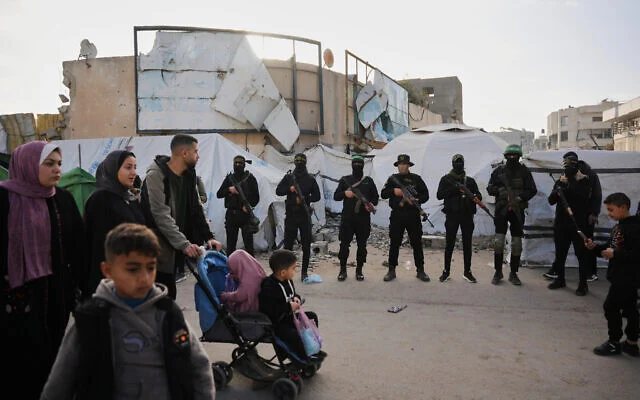
The ISF and Palestinian police will be tasked with assisting in the process, though there is no timeline for either to begin deploying in Gaza.
Israeli-armed anti-Hamas militia groups in Gaza would also be forced to give up their weapons, while a buy-back program will allow Palestinians to receive funds if they hand over their personal weapons. Hamas members who comply with the proposal will be granted amnesty, the Arab diplomat said.
The NCAG will gradually take over areas that have been demilitarized, with a pilot housing project being planned for the Rafah area, a Board of Peace source said.
The Arab diplomat said Hamas was inclined to accept the Board of Peace’s disarmament proposal, recognizing that doing so would “put the ball in Israel’s court,” the Arab diplomat told The Times of Israel.
Mideast mediators — themselves under pressure from the US to deliver — had been leaning on Hamas to get on board, arguing that the terror group can avoid being deemed as the obstacle to a deal.
In making the case to Hamas, the Mideast mediators argued that Netanyahu’s government is unlikely to accept the Board of Peace proposal anyway ahead of the October elections, given that it would require a pull-back of troops from Gaza, the diplomat said.
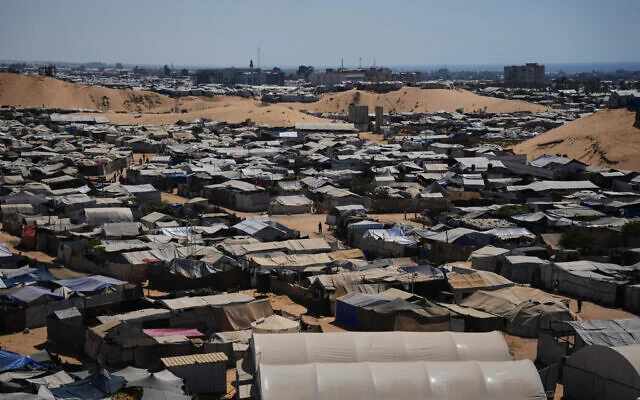
The deal envisions the IDF immediately returning to the original Yellow Line that roughly divided Gaza into eastern and western halves. Earlier this year, Netanyahu directed the army to take over 70 percent of the Strip, in violation of the October ceasefire, which left Israel in control of 53% of the enclave. The Israeli operations have squeezed Gaza’s population of 2 million to an even smaller area of the Strip closer to the coast, where the majority are still living in tent encampments where IDF strikes continue to take place on a near-daily basis.
Channel 12 reported that Israel would be barred from conducting strikes that aren’t against what are deemed as imminent threats, though that assumes Jerusalem gets on board with the Board of Peace proposal.
Separately Thursday, a diplomatic source familiar with the Board of Peace negotiations sent a statement to reporters, stating that the proposal at hand envisions all weapons in Gaza — both heavy and light — will be gradually decommissioned, under the principle of “one authority, one law, one weapon” — that of the NCAG.
The Board of Peace proposal “creates a process for the elimination of all tunnels, depots of weapons, and any weapons production facilities. This is a comprehensive process,” the diplomatic source said. “At the conclusion of the implementation process, there will be no more terror infrastructure in Gaza.”
“This entire process is built on reciprocity, not trust. Each side’s fulfillment of a commitment sequences the next commitment of the other side. A verification mechanism ensures compliance,” the source continued.
Direct contacts between Jared Kushner and the Palestinian Authority’s exiled former Gaza security chief Mohammed Dahlan helped secure a breakthrough in Hamas’s disarmament talks with the Washington-controlled Board of Peace, an aide to Dahlan revealed on Wednesday.
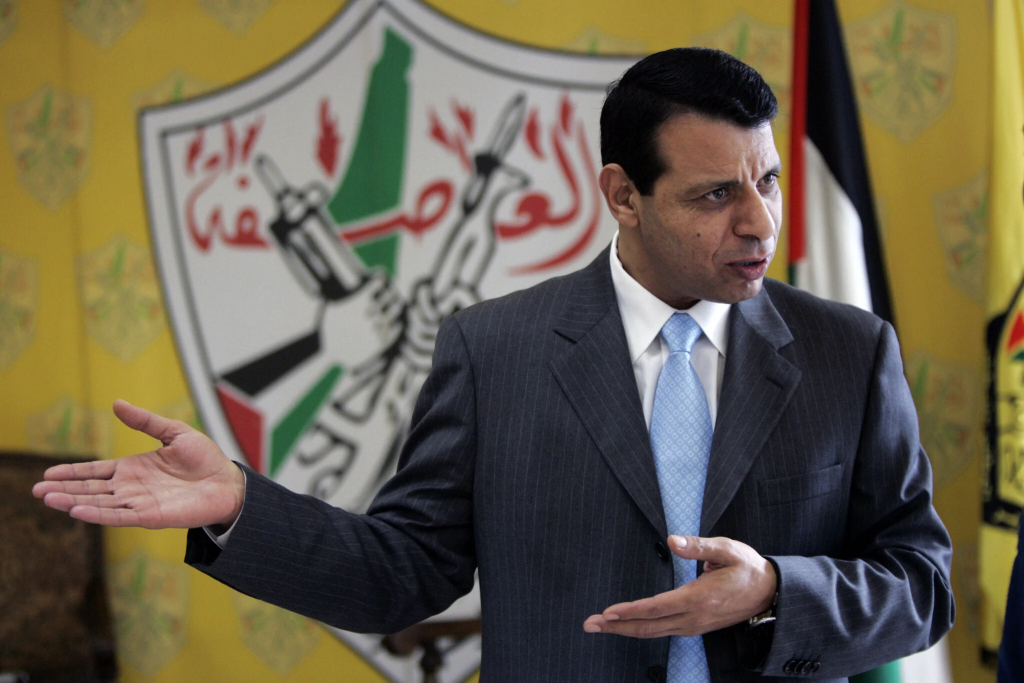
“Dahlan… intervened in these negotiations… through direct contacts with the American side, specifically with Mr. Jared Kushner, with [Board of Peace Gaza envoy] Mr. [Nickolay] Mladenov and with the entire American team,” said Samir Masharawi, who is a senior member of a Dahlan-led breakaway faction from PA President Mahmoud Abbas’s Fatah party, in an interview with the Jordanian Al-Ghad news outlet.
This was the first time that Dahlan had been publicly linked to the Hamas disarmament talks after an extended period in which he worked behind the scenes. Kushner, Trump’s top aide and son-in-law, played a key role in reaching the ceasefire in Gaza last October.
The Arab diplomat told The Times of Israel that Kushner has been consulting with Dahlan since the start of the Trump aide’s involvement in the Gaza file last year.
Dahlan — who lives in Abu Dhabi, where he also serves as a close adviser to UAE President Mohammed bin Zayed — also met earlier this year with Shin Bet chief David Zini, a source familiar with the matter confirmed.
As reported by The Times of Israel