
Active-duty generals, as a rule, should stay out of politics, but every rule has its exception.

(photo credit: Erik Marmor/Getty Image)
Active-duty generals, as a rule, should stay out of politics.
Their job is to fight wars and implement the security policies of the democratically elected government, not publicly intervene in setting that policy.
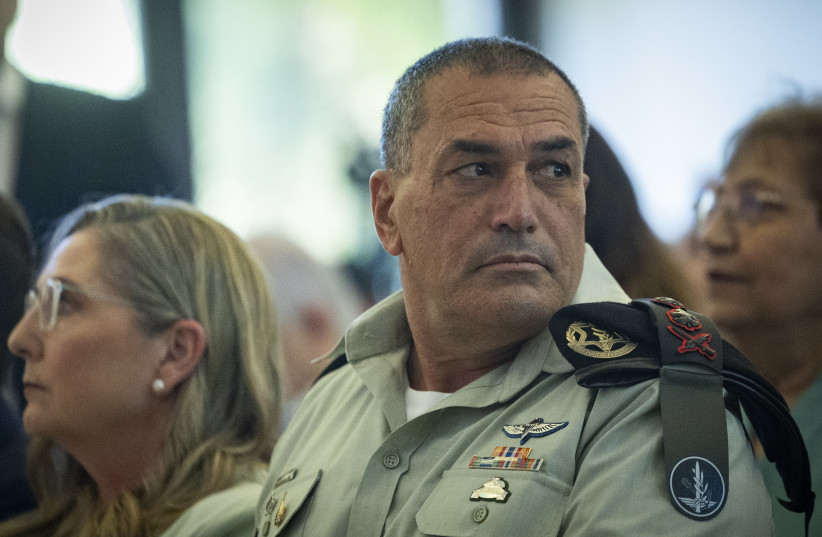
But every rule has its exception, and Chief of Staff Lt.-Gen. Eyal Zamir’s recent letter to Prime Minister Benjamin Netanyahu and others warning against legislation that would freeze arrests of haredi (ultra-Orthodox) draft dodgers for seven months falls well within that category.
Zamir was unquestionably weighing in on a policy dispute. But this was not a case of a general expressing a political preference. It was a case of the country’s top military officer warning the government that proposed legislation would make it harder for the IDF to fulfill the missions the government assigns it.
And if he chose to do so in a letter that he knew would almost certainly become public, it was presumably because he feared that a warning delivered only behind closed doors could too easily be ignored.
IDF facing critical manpower shortage
Zamir, who for months has warned that the IDF is facing a critical manpower shortage and needs an influx of 12,000 soldiers, wrote that the legislation would create a disincentive to report for military service since it grants immunity from prosecution and criminal proceedings during the freeze.
Rather than encouraging enlistment, which is what is desperately needed now, this would do precisely the opposite. And this, he wrote, is “fundamentally and unequivocally inconsistent with the operational needs of the IDF.”
Moreover, he argued, it is inconceivable that the military itself – as suggested in the legislation – would be tasked with administering a mechanism granting amnesty from prosecution for draft evasion.
“Such a move would create a deep rupture with those who have borne the burden of the fighting for the past two and a half years and would deepen the sense of inequality.”
He’s right.
Many factors explain the IDF’s success: talented officers, advanced technology, superior intelligence, and rigorous training. But nothing is more important than the morale of its soldiers, the esprit de corps that binds fighting units together, and a willingness to fight – and, if necessary, die – for the country.
Nothing chips away at that morale more quickly than their belief that they are suckers: that while they are risking their lives, the state and the army they are serving are permitting others to evade that same responsibility and, indeed, promising not to punish them for doing so.
Because of the unusual nature of the letter, Zamir predictably drew fire from coalition members backing the haredi-backed legislation, which they hope will preserve the alliance needed to form the next government. Just as predictably, he was praised by opposition figures such as Gadi Eisenkot and Naftali Bennett.
Heavily criticized by draft opponents, ‘I suggest he focus on military tasks’
One of those who criticized Zamir was Likud backbencher Amit Halevi. In an Army Radio interview, echoing others in his party, Halevi argued that the chief of staff had stepped beyond his proper role and should focus instead on battlefield success.
“I suggest that he [Zamir] focus on military tasks,” Halevi said. “There are plenty of them. He shouldn’t be dealing with legislation; he should be dealing with what he’s responsible for – and that’s winning the war.”
Zamir understands full well what his responsibility is. His letter makes clear, however, that he is concerned he will not be able to fulfill that responsibility if legislation like this deprives him of one of the most fundamental tools needed to fight and win wars: soldiers.
Warning the government that proposed legislation will make it harder to defend the country is not political advocacy; it is the very essence of a chief of staff’s professional duty.
One of the most common arguments advanced by those around Netanyahu seeking to shield him from responsibility for October 7 is that the IDF and intelligence services failed to warn him of Hamas’s planned invasion. The prime minister’s policies toward Gaza, they argue, were based on information provided by the professional echelon. He was not warned.
Now, we have a warning. Now, the head of the IDF is telling the government plainly that the military lacks sufficient manpower and that legislation such as this will further impair its ability to fight.
Halevi and those echoing his criticism are attacking Zamir for issuing that warning. Instead, they should be heeding it.
As reported by The Jerusalem Post