
Brendan Smialowski/AFP/Getty Images
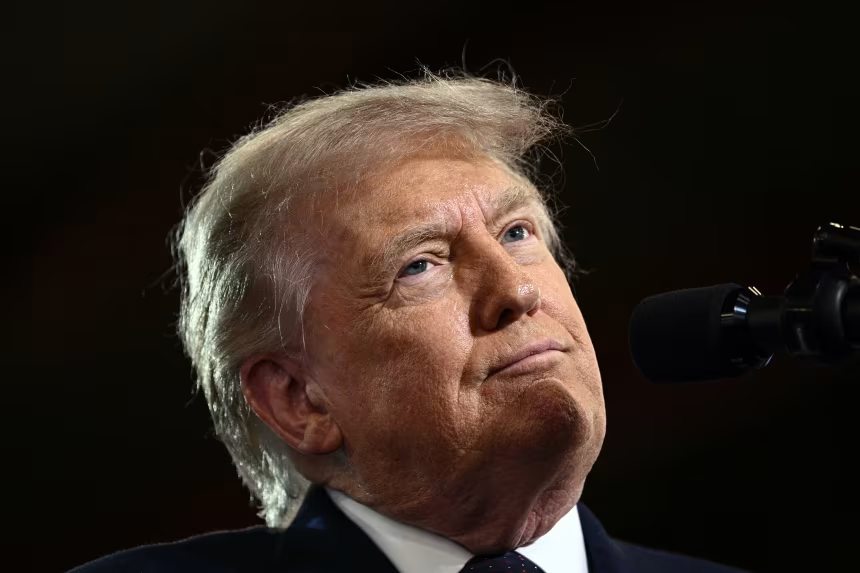
President Donald Trump said Saturday that a broader agreement between the United States and Iran has been “largely negotiated” and that the Strait of Hormuz would be reopened, signaling potential momentum toward ending the monthslong war.
“An Agreement has been largely negotiated, subject to finalization between the United States of America, the Islamic Republic of Iran, and the various other Countries,” Trump wrote on Truth Social.
Iran’s state-affiliated Fars news agency has disputed Trump’s characterization, reporting that the Strait of Hormuz will remain under Iranian control according to the latest version of the proposal exchanged between the US and Iran.
Recent versions of the memorandum of understanding that Trump appears close to finalizing would end hostilities with Iran while gradually reopening the Strait of Hormuz and ending the US blockade of Iranian ports, according to a person familiar with the matter.
The agreement would unfreeze some Iranian assets that are held in banks outside Iran.
And it would start a clock of at least 30 days for continued negotiations meant to resolve the remaining sticking points on Iran’s nuclear program, including what happens to Tehran’s stockpile of near-weapons-grade uranium.
Trump said final details were still being sorted, and it remained possible that some aspects of the memo could change.
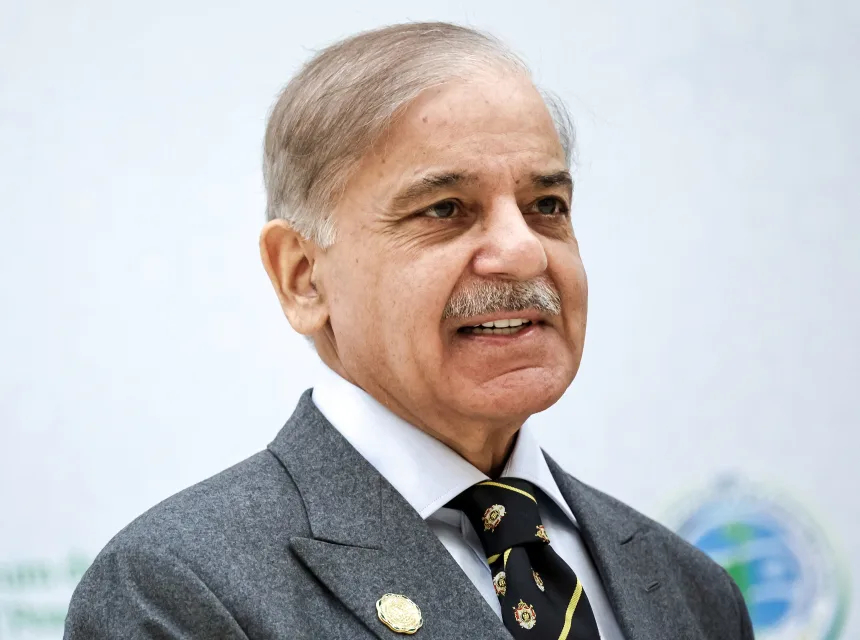
Pakistan’s Prime Minister Shehbaz Sharif congratulated Trump on his “extraordinary efforts to pursue peace,” on X early Sunday, but did not refer to any agreement or the Strait of Hormuz. Islamabad has been a key mediator in talks between Washington and Tehran.
Alexander Kazakov/Sputnik/Reuters
Instead, he mentioned a “very useful and productive telephone call” held by Trump with leaders of several Gulf states, Turkey, Egypt, Jordan and Pakistan, represented by the country’s military chief Asim Munir.
“The discussions provided a useful opportunity to exchange views on the current regional situation and how to move the ongoing peace efforts forward,” Sharif added.
Fars News said that Trump’s claims about the strait reopening are “not true” and “inconsistent with reality.”
“Although Iran has agreed to allow the number of passing vessels to return to pre-war levels, this in no way means ‘free passage’ as it existed before the war,” the outlet reported.
Trump said his call with regional leaders involved negotiations surrounding Iran and what he described as a memorandum of understanding tied to “PEACE.”
The leaders urged Trump during the call to accept the proposed framework with Iran, according to a person briefed on the discussion, who described the conversation as encouraging. Another regional source characterized the talks as positive.
“The call was very positive. Good progress is being made. Regional leaders were supportive of the progress and of the breakthrough President Trump achieved with the talks,” a regional diplomat on the call told CNN.
Trump said he held a separate call with Israeli Prime Minister Benjamin Netanyahu, “which, likewise, went very well.”
“Final aspects and details of the Deal are currently being discussed and will be announced shortly. In addition to many other elements of the Agreement, the Strait of Hormuz will be opened,” he said.
Israel’s main concern is that there will be a narrow interim agreement that will extend the ceasefire, open the Strait of Hormuz and gradually ease sanctions on Iran, while not addressing the most critical points for Israel —Tehran’s nuclear program and enriched uranium, an Israeli source said. The US continued to reassure Israel on the uranium issue.
Netanyahu will convene a limited security consultation on Saturday evening with select ministers and security officials to discuss the developments in Iran negotiations, the source told CNN.
Trump, speaking to Axios in a phone interview earlier, described the chances of reaching an agreement with Iran as a “solid 50/50” before the call with Gulf and other regional leaders, adding that he could decide by Sunday whether to resume military action.
The president said the talks could either lead to a “good” deal or result in the US choosing to “blow them to kingdom come.”
US and Iranian officials suggested that they may be closer to reaching a framework agreement to end the war after mediators from Qatar and Pakistan held talks in Tehran on Saturday. One regional source said the US and Iran were moving closer to an agreement to work toward a more detailed deal in the future.
Julia Demaree Nikhinson/Pool/AFP/Getty Images
Trump told Axios he also planned to speak with envoy Steve Witkoff and adviser Jared Kushner, his son-in-law. Vice President JD Vance, meanwhile, was spotted arriving at the White House on Saturday.
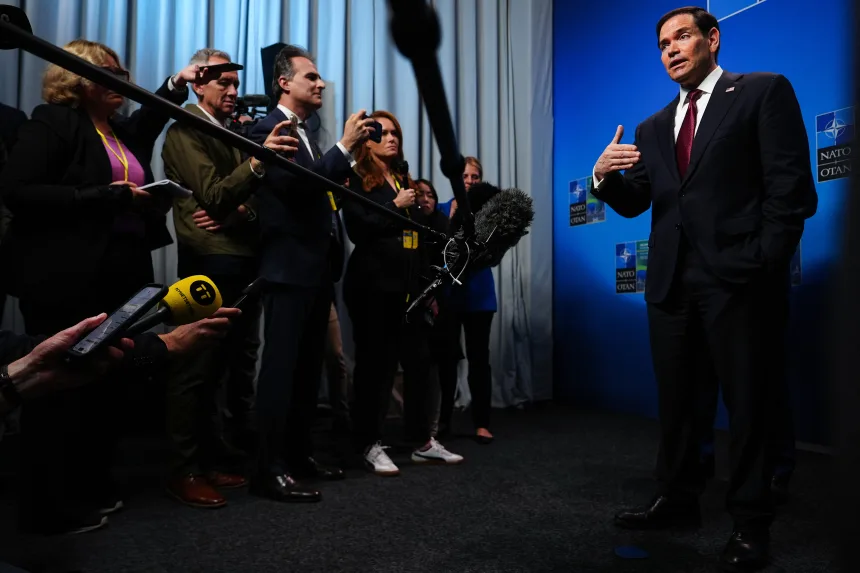
Mike Pompeo, who served as secretary of state during Trump’s first administration, criticized the reported deal and compared it to Obama-era agreements. “Not remotely America First,” he wrote on X.
That drew a profane response on X from White House communications director Steven Cheung, who wrote: “Mike Pompeo has no idea what the fuck he’s talking about. He should shut his stupid mouth and leave the real work to the professionals.”
Meanwhile, Mississippi Sen. Roger Wicker and South Carolina Sen. Lindsey Graham, two GOP Iran hawks, also expressed caution at Trump making a potential peace deal with Iran.
Graham raised concerns about Iran being perceived as a dominant “force requiring a diplomatic solution,” which he said could have broad implications for the region.
“This combination of Iran being perceived as having the ability to terrorize the Strait in perpetuity and the ability the inflict massive damage to Gulf oil infrastructure is a major shift of the balance of power in the region and over time will be a nightmare for Israel,” Graham posted on X on Saturday.
Wicker, who serves as chairman of the Senate Armed Services Committee, said he believes the negotiations will “define” Trump’s legacy and urged the president to “finish what we started.”
“His instincts have been to finish the job he started in Iran, but he is being ill advised to pursue a deal that would not be worth the paper it is written on,” Wicker wrote Friday, adding: “Further pursuit of an agreement with Iran’s Islamist regime risks a perception of weakness.”
Earlier, Iranian officials said that Tehran would focus on ending the fighting, including between Israel and Iranian proxy group Hezbollah, and releasing its frozen overseas assets. Tehran has long sought to separate immediate peace talks from negotiations over its nuclear capacity.
Fatemeh Bahrami/Anadolu/Getty Images
After meetings in Tehran on Friday and Saturday, Pakistan’s military chief Munir left for Islamabad late in the afternoon local time. The Pakistan military said the visit was “highly productive,” adding that the talks “contributed meaningfully towards the mediation process.”
“The intensive negotiations over the last twenty four hours have resulted in encouraging progress towards a final understanding,” the military said in a statement.
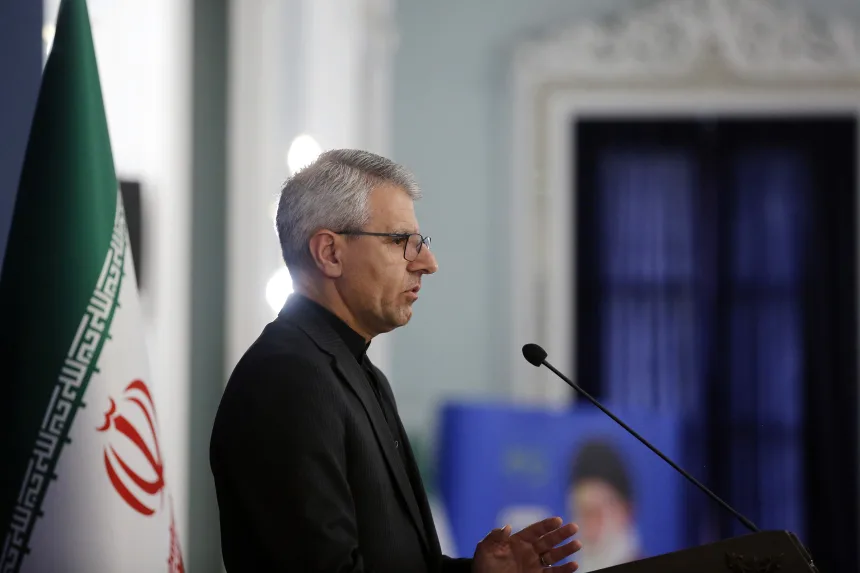
Iranian Foreign Ministry spokesman Esmail Baghaei said that 30- and 60-day timeframes had been included in a text of the memorandum, but it had not yet been finalized.
“Over the past week, the viewpoints have been getting closer,” he said. “We must wait and see what will happen in the next three to four days.”
Baghaei said any mechanism concerning the Strait of Hormuz should be agreed between Iran, Oman and the countries bordering the waterway, and that the United States “has nothing to do” with it.
Iran’s chief negotiator, Mohammad Bagher Ghalibaf, struck a defiant note after his talks with Munir, warning that Iran “will not back down from the rights of our nation and country — especially when dealing with a party that has never shown sincerity and in which no trust exists.”
“Our armed forces have rebuilt themselves during the ceasefire in such a way that if Trump makes the mistake of restarting the war, it will definitely be more crushing and bitter for America than the first day of the war,” Ghalibaf added, according to a report from Iran’s state broadcaster.
As reported by CNN