
Iran accuses US of violating truce but says situation ‘back to normal’; Trump calls strikes ‘love tap’ but says Iran ‘led by LUNATICS’ and will be hit again if it doesn’t agree to deal
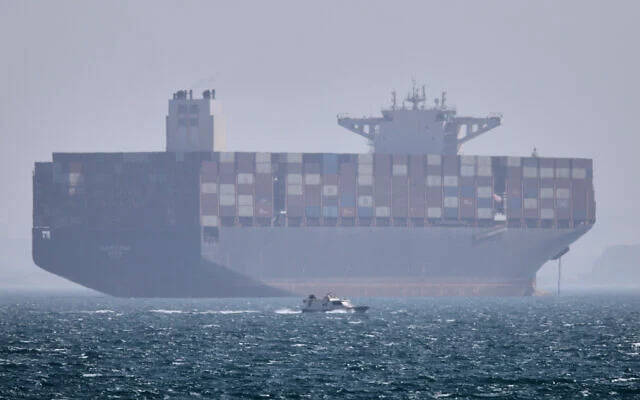
The United States and Iran exchanged fire on Thursday in the most serious test yet of their month-long ceasefire, but Iran said the situation returned to normal while the US said it did not want to escalate.
US President Donald Trump told ABC, meanwhile, that the truce was still “in effect.” But in a social media post, he threatened Iran with further strikes if it did not agree to a deal with the US.
Later, he told reporters that the United States was still negotiating with Iran.
The American military’s Central Command confirmed overnight that it carried out “self-defense” strikes in Iran in response to “unprovoked Iranian attacks” against US Navy missile destroyers that transited the Strait of Hormuz to the Gulf of Oman. Iran has been blocking the strait, a key pathway for the global oil supply, since the beginning of the US-Israeli war with the Islamic Republic in late February.
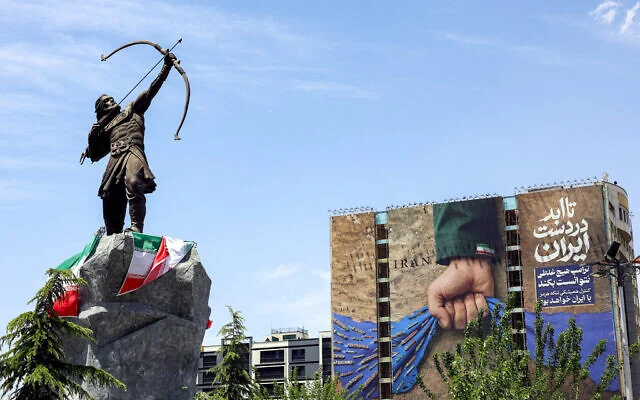
Iran’s top joint military command, meanwhile, accused the US of violating the ceasefire by targeting an Iranian oil tanker and another ship, and of carrying out air attacks on civilian areas on Qeshm Island in the strait and on nearby coastal areas of Bandar Khamir Sirik on the mainland.
Iran’s military said it responded by attacking US military vessels east of the Strait of Hormuz and south of the port of Chabahar. A spokesperson for the Khatam al-Anbiya Central Headquarters said the strikes inflicted “significant damage.”
The US military, however, said it intercepted the “inbound threats,” and “no US assets were struck.”
Speaking to ABC, Trump sought to downplay the exchange. “It’s just a love tap,” Trump told the reporter, according to her social media post. Iranian state media said after the strikes that the situation was back to normal.
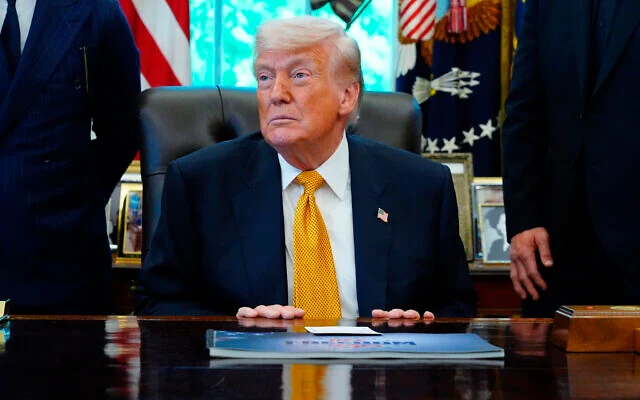
In a Truth Social post, Trump wrote that the American destroyers were not damaged but “great damage was done to Iranian attackers.” He threatened Iran with further attacks unless it quickly agreed to a deal in ongoing talks with the US.
The renewed hostilities broke out as Washington was awaiting Iran’s response to a US proposal that would stop the fighting but leave the most contentious issues, such as Iran’s nuclear program, unresolved for now. Tehran said it had not yet reached a conclusion on the emerging plan.
“A normal country would have allowed these destroyers to pass, but Iran is not a normal country. They are led by LUNATICS, and if they had the chance to use a nuclear weapon, they would do it, without question,” Trump wrote. “But they’ll never have that opportunity and, just like we knocked them out again today, we’ll knock them out a lot harder, and a lot more violently, in the future, if they don’t get their deal signed, FAST!”
The two sides have occasionally exchanged gunfire since the ceasefire took effect on April 8.
In the most recent clash, CENTCOM said Iran had used missiles, drones and small boats, which targeted three Navy destroyers. The US said it targeted missile and drone sites and other locations in response.
“CENTCOM does not seek escalation but remains positioned and ready to protect American forces,” the statement added.
Iran’s Press TV later reported that following several hours of fire, “the situation on Iranian islands and coastal cities by the Strait of Hormuz is back to normal now.”
On Monday, the US military had said it destroyed six Iranian small boats and intercepted Iranian cruise missiles and drones as Tehran sought to thwart a US naval effort to open shipping through the Strait of Hormuz. Monday also saw Iran target the UAE with missile fire.
The US effort to open the strait was suspended after Saudi Arabia and Kuwait restricted the US military’s use of their bases and airspace. According to a Fox News reporter, those restrictions came as Gulf countries were angry that US officials had downplayed the strikes on the UAE.
“The strike on one of Iran’s oil ports comes two days after Iran fired 15 ballistic and cruise missiles at UAE Fujairah Port, eliciting anger from Gulf countries after top Pentagon leaders said Tuesday that the Iranian strikes did not rise to the level of breaking the ceasefire, calling it low level attacks that didn’t rise to that level,” Fox’s Jennifer Griffin posted on X.
But the restrictions have since been lifted, potentially paving the way for the effort to open the strait to begin afresh in the coming days, The Wall Street Journal reported on Thursday, citing US and Saudi officials.
Separately, the US imposed sanctions on Thursday on Iraq’s deputy oil minister and three militia leaders over what it said was their support for Iran.
As reported by The Times of Israel