
Beirut wants a ceasefire and Jerusalem wants to disarm Hezbollah. But as long as Tehran is able to keep backing its Lebanese proxy, both seem improbable
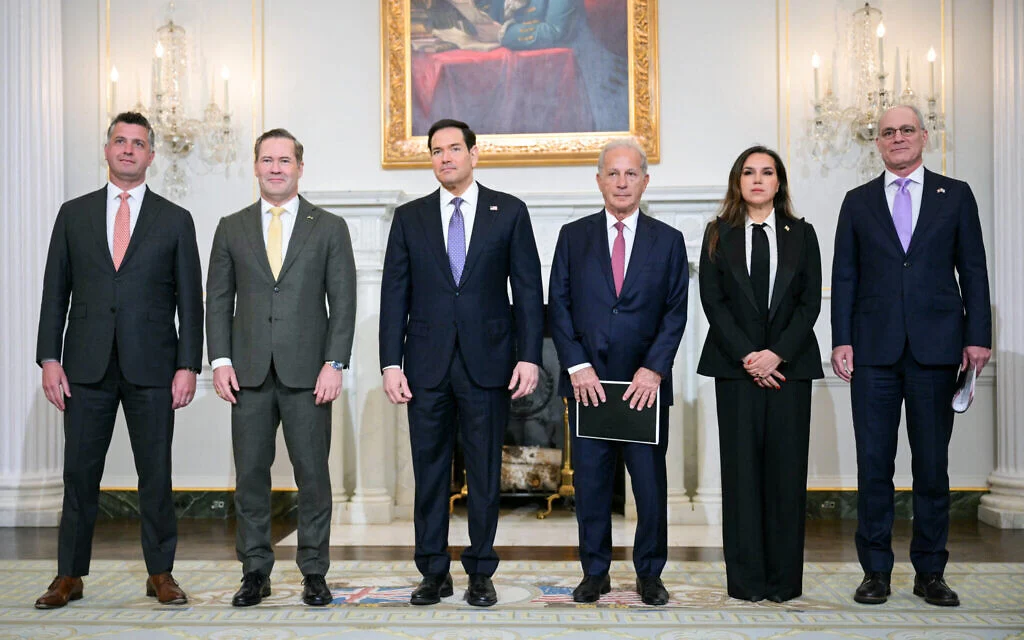
There is a clear difference in the way the US and Israel on one hand, and Lebanon on the other, are speaking about the direct talks in Washington between the two longtime enemy states.
“The hope today is that we can outline the framework upon which a permanent, lasting peace can be developed so that the people of Israel can live in peace and the people of Lebanon can live, not just in peace but in the prosperity and security that they deserve,” US Secretary of State Marco Rubio said on Tuesday after the sides sat down at the State Department.
A senior Israeli official expressed a similarly optimistic vision of the potential for a new reality for Israel and Lebanon.
“There is a mutual Israel and Lebanese interest to dismantle Hezbollah and forge a real peace between Lebanon and Israel,” the Israeli official told The Times of Israel.
“That is what we will be concentrating on.
After the meeting, Ambassador to Washington Yechiel Leiter said the talks focused on crafting a “long term vision where there will be a clearly delineated border between our countries, and where the only reason we’ll need to cross each other’s territory will be in business suits to conduct business or in bathing suits to go on vacation.”
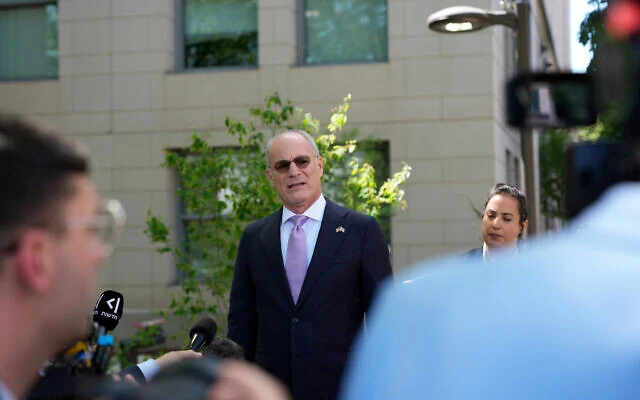
Lebanese officials, however, are talking about something else entirely. They insist their only aim at this stage is to stop Israeli operations in their country.
Before the meeting, Lebanon’s President Joseph Aoun expressed his hope that “an agreement will be reached on a ceasefire in Lebanon, with the aim of initiating direct negotiations between Lebanon and Israel, which will be handled by a Lebanese negotiating team to put an end to hostile actions.”
“This is a preliminary meeting on an ambassadorial level,” Lebanon’s Culture Minister Ghassan Salame told Al-Monitor on Monday.
“Our intent is to press during that meeting tomorrow for a pause in violence.”
Salame said that Beirut wants a 15-day pause in fighting if it is to countenance broader negotiations.
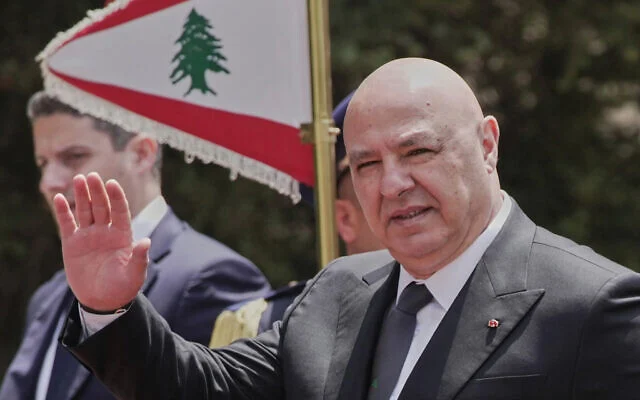
After the meeting, the joint statement said that Lebanon “reaffirmed the urgent need” for a full cessation of hostilities, while Israel and the US didn’t mention a ceasefire. According to the statement, Israel spoke about disarming Hezbollah and the US-backed Israel’s right to defend itself against Hezbollah.
“Lebanon is saying, the road to a peace runs through a ceasefire, and Israel is saying the road to peace runs through disarmament,” said David Makovsky of the Washington Institute for Near East Policy.
Linkage
But there is something that all three sides agree on — they are adamant that the Israel-Lebanon talks are independent of the US-Iran negotiations.
“This track has in practice reinforced the separation between the Lebanese file and the Iranian track,” Lebanon’s Foreign Minister Youssef Raggi told his German counterpart on Monday.
But as much as they may say that what happens in Lebanon is not influenced by decisions made in Tehran, the sides are aware there is unlikely to be a major breakthrough without fundamental changes taking place in Iran.
“These two theaters are tied to each other,” a Beirut-based analyst told The Times of Israel. “You can’t find a workable solution in Lebanon without trying to find a workable solution in Iran.”
The expert’s name could not be used as contacts with Israelis are forbidden by Lebanese law.
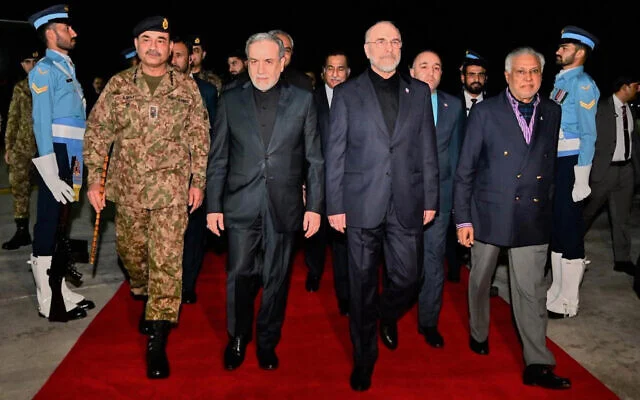
Direct US talks with Iran in Pakistan over the weekend ended without even an agreement to hold another round of talks, though both sides have expressed openness to meet again in the coming days.
Still, Iran refuses to talk about its support for armed terror groups like Hezbollah in Lebanon and Hamas in Gaza.
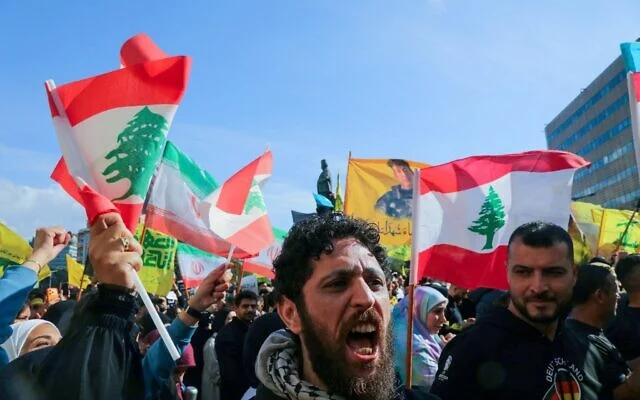
Despite its public demands for a ceasefire, Lebanon knows that it can’t get Israel to suddenly stop fighting Hezbollah after the powerful terror group has been striking northern Israel for weeks.
“It’s a negotiating position,” explained the Beirut-based analyst.
Direct talks with Israel are already seen by many Lebanese as a prize to Israel without any benefit to Lebanon, and Aoun’s government is trying to change that narrative.
“Lebanon’s government needs to be able to sell it,” said the expert. “In the end, you would need to create a scenario or a setup where you have Lebanese buy-in for whatever you’re trying to do with the Israelis.”
“As long as the bombing continues, it’s very hard for us to sell the idea of sitting with Israel,” concurred Salame.
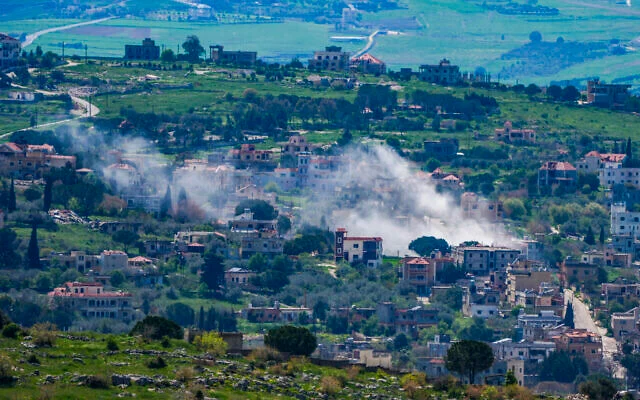
But Israel is not about to let Hezbollah off the hook. It knows that Lebanon’s government won’t risk civil war by actually trying to disarm Hezbollah, so Israel will continue operating in southern Lebanon.
“There’s really no realistic prospect of the government using coercive means to get to actually implement these decisions,” said the Lebanon-based analyst.
The government in Beirut might recognize fully that Hezbollah is dragging the country into conflict with Israel in order to protect the regime in Iran, but will not risk pushing the terror group into using violence by trying to disarm it.
The only way that changes is if the Iranian regime is toppled, or further weakened so that it agrees to stop supporting proxies like Hezbollah.
“People don’t want to talk about a linkage between these two separate sets of talks,” said Makovsky. “But unless Iran really has a different approach to proxies, it’s hard to believe that the government of Lebanon suddenly will have a sudden change in its policy.”
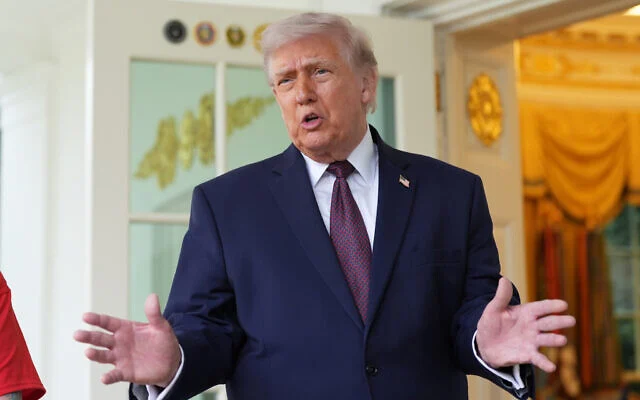
There are conceivable paths to the Islamic Republic giving in to US demands on proxies and other issues. If US President Donald Trump is serious about blockading Iranian ports, the regime will find itself running out of funds very quickly.
Or Trump could get fed up with Iran and its axis stymying his plans across the region, instead opting to go through with his threat to attack Iranian energy infrastructure.
But even those moves, if they are carried out, do not guarantee a change in Iran’s posture. And if nothing changes in Tehran, do not expect a breakthrough on the Israel-Lebanon border.
As reported by The Times of Israel