

Alex Brandon/AP/File
Attorney general may be the most impossible job in President Donald Trump’s Cabinet.
Trump demands things that are not only ethically problematic, but also that reside somewhere in the space between highly difficult and impossible. Nobody has gotten the balance right. Jeff Sessions tried to be the institutionalist and quickly marginalized himself. William Barr then took some astoundingly politicized actions on Trump’s behalf, but then was unwilling to go quite as far as Trump demanded.
Pam Bondi went even further than Barr in the service of bending the Justice Department politically for Trump. But after her firing Thursday, she wound up serving the shortest tenure for a confirmed attorney general in 60 years.
Bondi was, in a lot of ways, destined to fail. But she also clearly made things worse for herself.
And that’s especially the case when it comes to two sticking points between her and Trump: the Epstein files and Trump’s thus-far-fruitless retribution campaign.
Epstein files
The most damaging aspect of Bondi’s tenure was undoubtedly the Epstein files.
Trump and his campaign did Bondi no favors by playing up Trump’s promise to release the files back in 2024. Then Trump seemed to suddenly turn against releasing them in mid-2025, and he’d go on to fight their release for months before Congress forced him to relent.
That switch is tough to message to a highly invested public. Bondi made it actively worse.
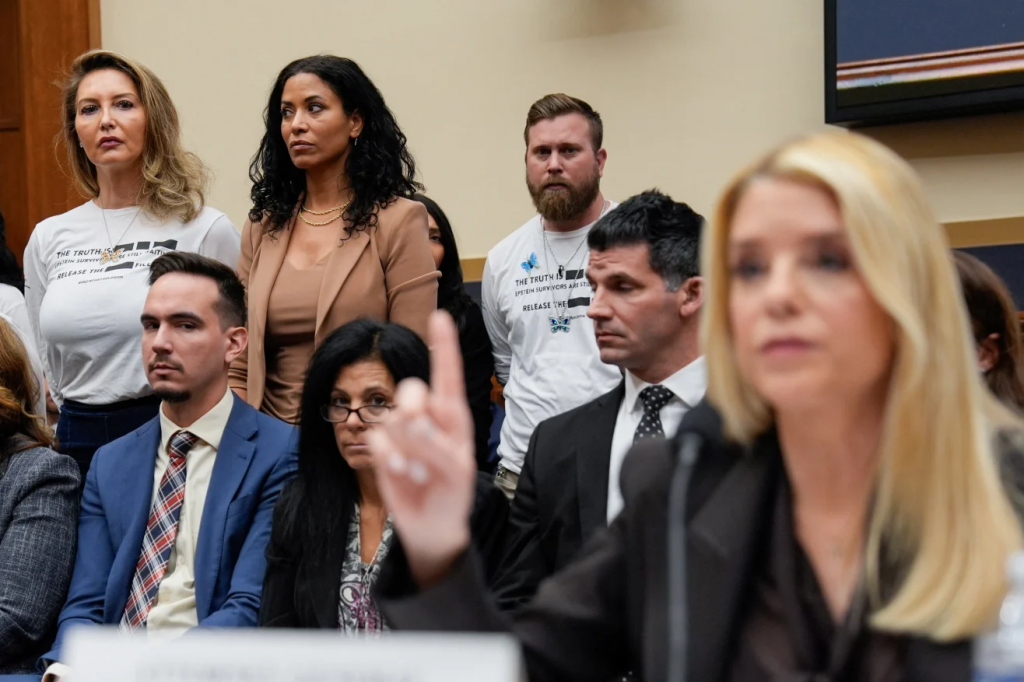
In February, she distributed “Epstein Files” binders to conservative influencers at the White House. Except the binders contained almost no new information. Some of the influencers balked at what amounted to a pretty substance-free photo op.
She also made a series of dumbfounding claims about what was contained in the files, in ways that clearly came back to bite the administration.
Kent Nishimura/Reuters
When asked about a rumored Epstein client list, for instance, she said it was “sitting on my desk right now,” creating great anticipation. She also said there were “tens of thousands of videos” of Epstein “with children or child porn.”
But when the administration reversed course on its promises of transparency, it walked those claims back. And based on what’s been released so far, there’s still nothing to back them up.
(Bondi claimed later that she hadn’t been specifically referring to a client list, but rather more Epstein documents in general.)
In truth, Bondi’s claims were going to be problematic regardless of what came of the files. But she ramped up expectations about something that the administration later wanted to downplay.
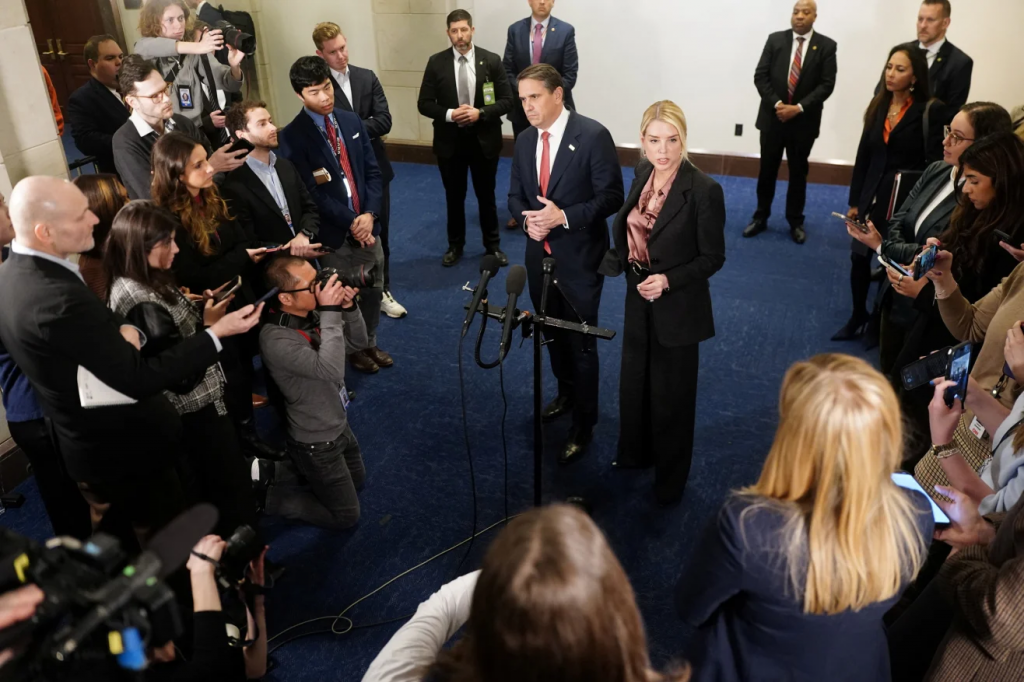
By the end of the Epstein saga, Bondi was effectively sidelined from even talking about the files — a job which often fell to Deputy Attorney General Todd Blanche, who is now temporarily leading the Justice Department. (And Blanche, it’s worth mentioning, has his own Epstein issues.)
And after some almost comedically overwrought February testimony, in which she avoided even Republicans’ questions about the subject, she was greeted with a highly unusual bipartisan subpoena to revisit the issue with the House Oversight Committee later this month.
White House chief of staff Susie Wiles summed it up in comments published in December by Vanity Fair. Bondi “completely whiffed” on the Epstein files, Wiles said, and there was apparently no use in pretending otherwise.
Nathan Howard/Reuters
Targeting Trump’s enemies
Arguably, Bondi had even higher hurdles to jump when it came to Trump’s retribution campaign.
While Trump floated efforts to investigate his foes in his first term, he’s made clear in his second that he wants real probes, charges and prosecutions against his perceived political foes — particularly after he was personally indicted four times and convicted in the only case that went to trial.
Perhaps most striking was a later-deleted Trump social media post from September that addressed Bondi by name and urged her to indict former FBI Director James Comey, New York Attorney General Letitia James and Sen. Adam Schiff of California.
Just days later, Trump forced out a US attorney who resisted and Comey was indicted. About two weeks after that, James was indicted.
But both indictments were based on flimsy evidence — this has become a trend, which we’ll get to — and the replacement US attorney was found to have been illegally appointed. So the cases fell apart.
Save for a more by-the-book indictment of another Trump foe, John Bolton (who had also been investigated by the Biden Justice Department), nobody else has been indicted over the past five and a half months.
But it hasn’t been for lack of trying by Bondi’s department:
- The DOJ has repeatedly failed in its efforts to get grand juries to re-indict James.
- It also failed to get a grand jury to indict six Democratic members of Congress over their comments urging members of the military not to obey illegal orders.
- The DOJ has also probed the third person Trump mentioned in that September post, Schiff.
- An investigation of former CIA director John Brennan has gained steam recently.
- Trump wrote an executive order demanding investigations of two foes from his first term, Chris Krebs and Miles Taylor.
- Trump publicly called for an investigation of former President Bill Clinton’s ties to Epstein, which Bondi quickly agreed to.
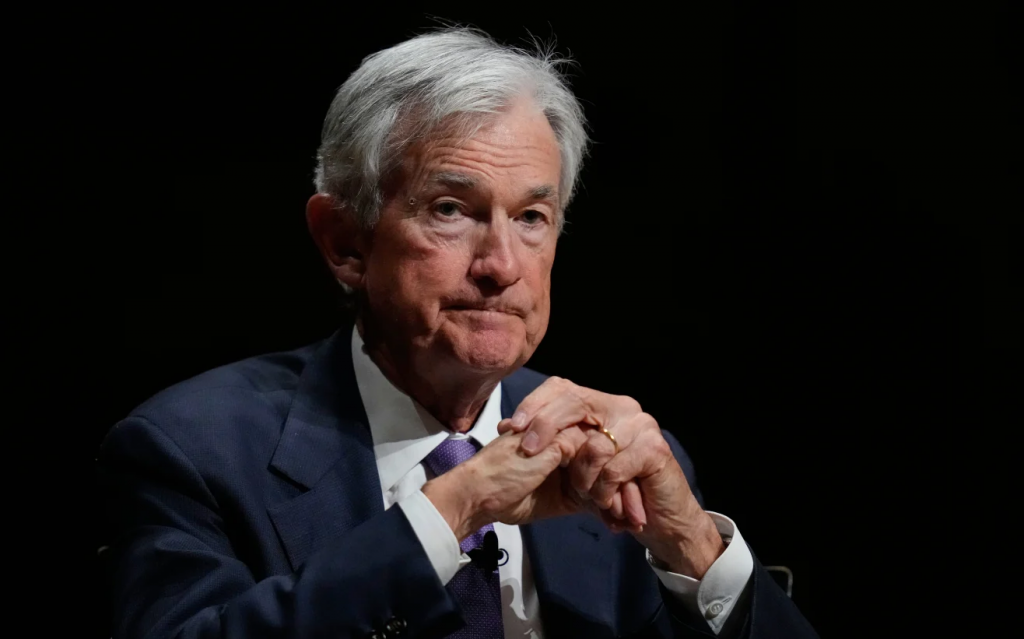
- And the DOJ’s investigation of Federal Reserve Chairman Jerome Powell, another figure Trump has frequently targeted, has caused even many Republicans to publicly cry foul.
That last one is telling.
At a hearing just last week, a Justice Department attorney was forced to make a remarkable admission: that the department had no real evidence of criminality against Powell.
Charles Krupa/AP
The known evidence in most of the other cases is, likewise, remarkably thin.
But Bondi and her department have still given it the old college try, over and over again, because Trump demanded it.
That was always bound to make her look bad. While Trump gets great political leverage out of lobbing thinly constructed conspiracy theories against his foes, that doesn’t work in a court of law.
If anything, the whole thing has actually backfired on the administration. Yes, it has created costly headaches for those targeted, but it’s also made it pretty clear that there is no equivalence between what Trump was indicted for and what he accuses his foes of.
Perhaps it was simply impossible for Bondi to dissuade Trump. But the cases have gone poorly for Bondi and her department, almost without fail. They apparently haven’t made Trump happy, either.
And similar to the Epstein files, Bondi’s legacy at the DOJ will include the most significant breakdown of the wall between the president’s personal politics and department business since at least Watergate.
Whoever succeeds her will inherit that same tension between pleasing Trump and doing what’s ethical and feasible. Perhaps Trump will find someone more adept at navigating that.
But if past is prologue, they’ll be hard-pressed to solve this riddle.
Ken Cedeno/Reuters/File
As reported by CNN