
As PM Modi arrives in Israel, Jerusalem must elevate the relationship to a top-tier priority. Moving beyond defense to a full-scale economic and tech alliance is now a geopolitical necessity.
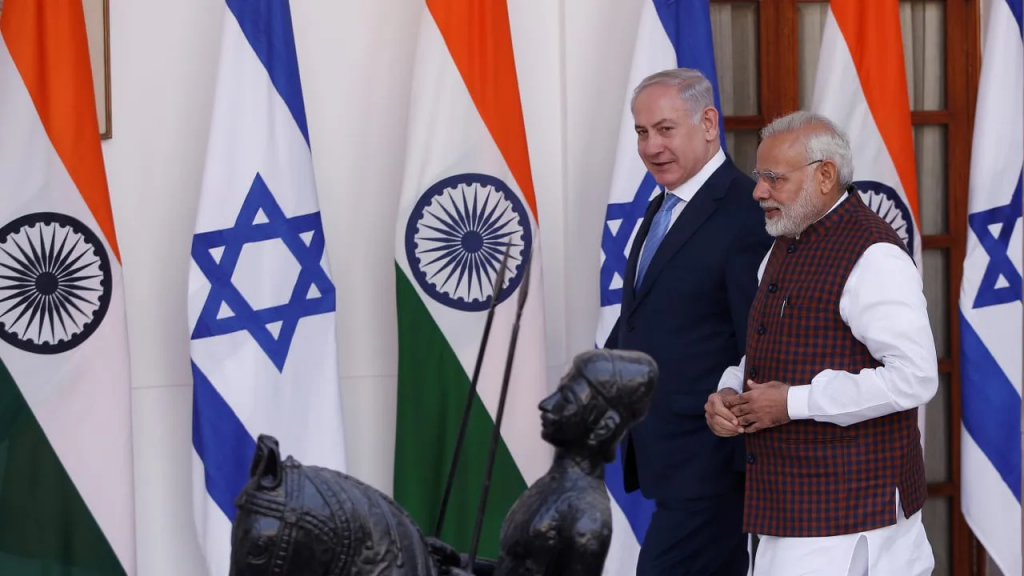
(photo credit: Adnan Abidi/Reuters)
Indian Prime Minister Narendra Modi arrives in Israel this week for a state visit on Wednesday, his second visit to the country and a rare high-level moment that comes after months of visible movement in the bilateral relationship.
India’s Prime Minister’s Office said Modi and Prime Minister Benjamin Netanyahu are expected to review progress in the India-Israel strategic partnership and discuss next steps across defense and security, science and technology, innovation, agriculture, water management, trade, the economy, and people-to-people ties. Modi is also expected to meet President Isaac Herzog.
In November, India’s Commerce Minister Piyush Goyal visited Israel and signed the Terms of Reference to begin structured negotiations for an India-Israel free trade agreement. India’s Press Information Bureau described the signing as a significant milestone and reported more than 250 B2B meetings during the visit, alongside forums bringing together business and government leaders from both sides.
In September, India and Israel also signed the Bilateral Investment Agreement in New Delhi. India’s Finance Ministry said the agreement was designed to provide greater certainty and protection for investors, including arbitration-based dispute resolution, while preserving states’ regulatory rights. It also said bilateral investments then stood at about $800 million and highlighted cooperation areas including fintech, infrastructure, financial regulation, and digital payments.
Agriculture, one of the oldest and most practical pillars of the relationship, also advanced in 2025. In April, India and Israel signed an agriculture cooperation agreement and work plan, with India’s government highlighting joint work on food security, seeds, post-harvest technologies, and expansion of Centers of Excellence. India’s Agriculture Ministry also said the network included 43 Centers of Excellence, with 35 fully functional across India.
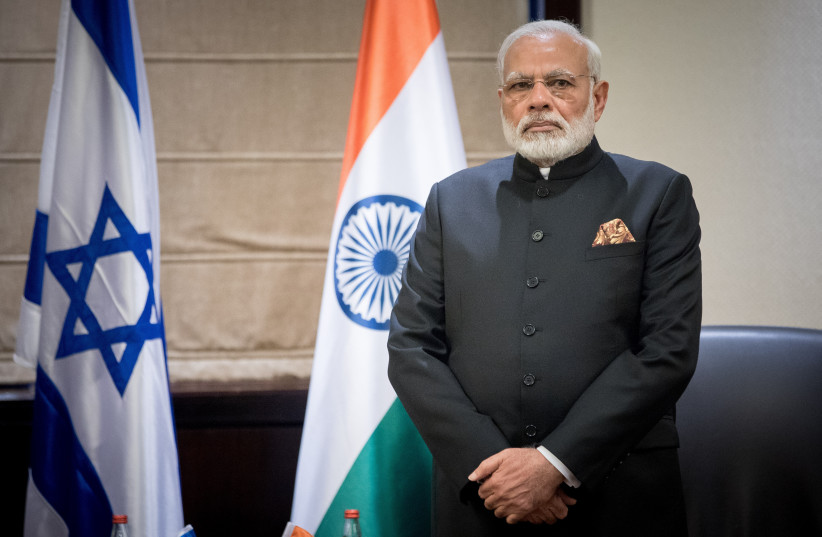
The broader India-Middle East-Europe Economic Corridor (IMEC) concept, first announced at the G20 in 2023 by India, the US, key European states, and Gulf partners, remains part of the long-term map connecting India to Europe through the Middle East. India’s Foreign Ministry has described the corridor’s basic eastern and northern components in official parliamentary responses.
Security cooperation remains central. SIPRI reported in 2025 that Israel was the world’s eighth-largest arms exporter in 2020-24 and that India was the largest single importer of Israeli arms, accounting for 34% of Israeli exports in that period.
Moment to treat India as top-tier strategic priority
Israel has treated India as an important friend for years. Modi’s visit is the moment to treat India as a top-tier strategic priority.
The relationship has trust, history, and political chemistry. It also has a recurring weakness: under-execution relative to potential. Israel and India know how to sign frameworks. They now need to build scale.
That scale should be economic first, because economics creates ballast when politics becomes noisy. Israel should push for fast, practical wins while free trade agreement talks proceed: easier market access in sectors already discussed by both governments, joint innovation pilots, better financing channels, and faster approvals for Israeli companies that can deliver water, cyber, agritech, health-tech, and infrastructure solutions at an Indian scale. One of the few places where Israeli ingenuity can have a population-level impact is India.
The geopolitical case is equally strong: A stronger India-Israel partnership gives Jerusalem a deeper anchor in Asia and provides New Delhi a proven partner in technology, resilience, and security under pressure.
The strategic case is even broader than defense sales. Israel and India should expand joint work on critical infrastructure protection, supply chain security, AI governance for defense applications, food and water resilience, and emergency preparedness. These are the fields that will define national strength in the next decade.
There is also a democratic argument that should not be ignored. India and Israel are very different countries, but both operate under relentless scrutiny and persistent security threats. They understand what it means to govern while being tested. That shared experience creates a basis for strategic candor, not just diplomatic niceties.
Modi’s visit should end with warm statements. It should also begin a more ambitious agenda.
If this trip produces a timetable for FTA negotiations, a serious investment push, and a cross-ministerial mechanism to track delivery in core sectors, it will matter long after the headlines fade. Israel and India already have a strong relationship. Today’s task is to make it consequential at a much larger scale.
As reported by The Jerusalem Post