
After Nasrallah’s killing, Israel braces for renewed clash with a weakened but well-armed Hezbollah, as intelligence tracks hidden assets, political shifts and Iranian funding ahead of possible escalation shaped by US approval and parliamentary elections
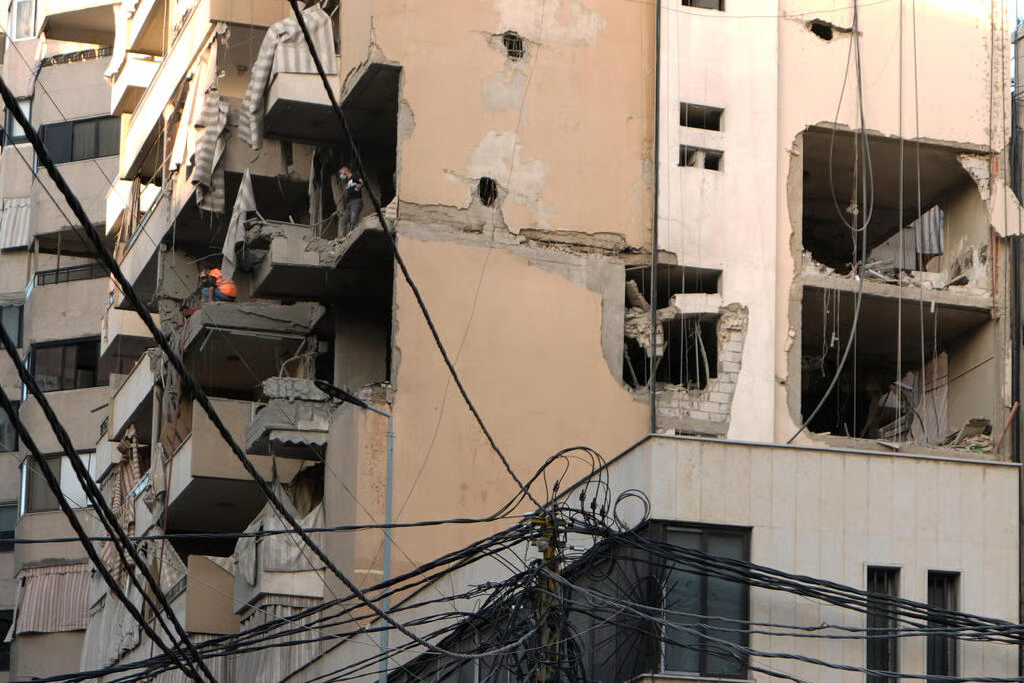
Hezbollah’s underground network in Beirut’s Dahieh district is not as deep or expansive as that found in Gaza, largely due to the type of soil that poses engineering challenges for the Iranian-backed terrorist group. Still, Israeli military intelligence believes the group will attempt to conceal most of its strategic assets in tunnels and bunkers beneath residential buildings in the Shiite-majority suburb of southern Beirut.
Intelligence officials were recently surprised to learn that Lebanese civilians in the capital have repeatedly refused Hezbollah’s requests to rent apartments outside Dahieh, fearing those properties would be targeted by Israeli airstrikes.
(Photo: AP Photo/Bilal Hussein)
A preview of a potential Israeli operation in Lebanon — one the military is urging the political echelon to authorize — came last month with the assassination of Hezbollah’s top military commander Haytham Ali Tabatabai. Yet Hezbollah opted for continued restraint, refraining even from firing a single mortar shell in retaliation for the killing of its military chief, a policy of containment that in earlier years had been more typical of Israel.
Such restraint, however, is unlikely in a full-scale escalation. The IDF anticipates that Hezbollah would respond with a coordinated barrage of hundreds of rockets, missiles explosive drones and UAVs over several days.
Unlike past rounds of fighting with Gaza or even with Hezbollah, any future confrontation is expected to have a built-in de-escalation mechanism: a joint command center, established over the past year and staffed by American and Lebanese officers, with operations split between Beirut and the IDF’s Northern Command headquarters in Safed.
Still, defense officials believe no operation will proceed without the consent of U.S. President Donald Trump, making it unlikely that any action would be taken before Prime Minister Benjamin Netanyahu’s scheduled visit to the White House later this month.
(Photo: Al Manar TV/Reuters)
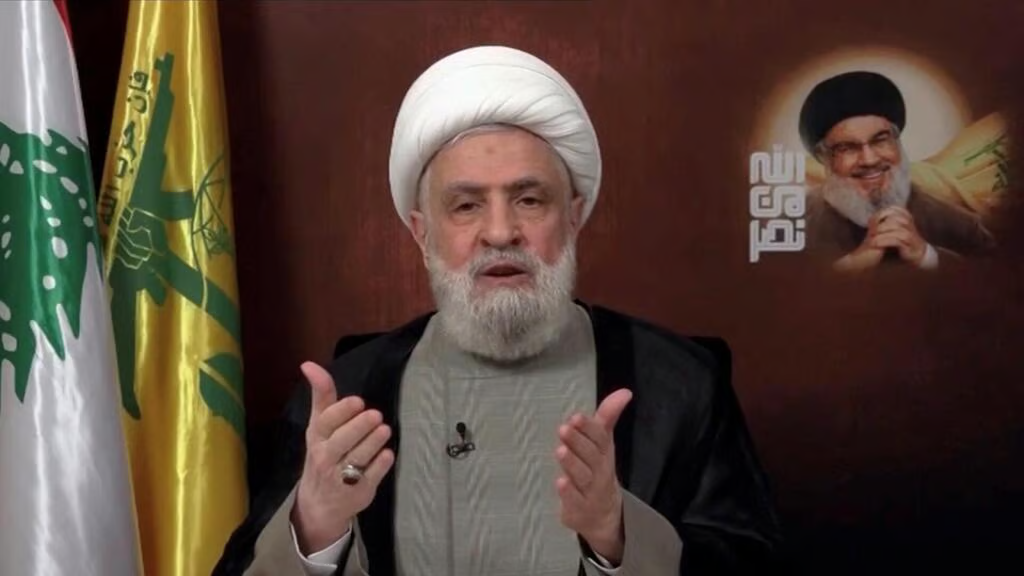
Military Intelligence officials believe Hezbollah currently prefers to absorb near-daily Israeli airstrikes rather than escalate, choosing instead to focus on domestic power struggles it sees as more manageable. According to the IDF, Hezbollah’s standing as a political and civil movement has significantly weakened over the past year, with the group struggling to pay rent for tens of thousands of internally displaced Lebanese who remain homeless following Israeli ground operations in southern Lebanon.
“We are seeing more and more Shiite supporters shift their allegiance to Amal,” a rival Shiite movement, intelligence officials said. “Hezbollah is failing to support thousands of bereaved families and many wounded. Still, from a military standpoint, Hezbollah remains stronger than the Lebanese army. When that changes, we’ll know the tide has turned.”
Until then, officials say Hezbollah will continue to rebuild, largely through domestic manufacturing and converting existing rockets into precision-guided missiles. “We will have to continue confronting it at all costs,” said one official. “As talk of disarming Hezbollah becomes more tangible and any disarmament effort moves toward force, the group is likely to become more aggressive. Hezbollah is not volunteering to disarm, and the Lebanese army, for its part, is maintaining a neutral posture.”
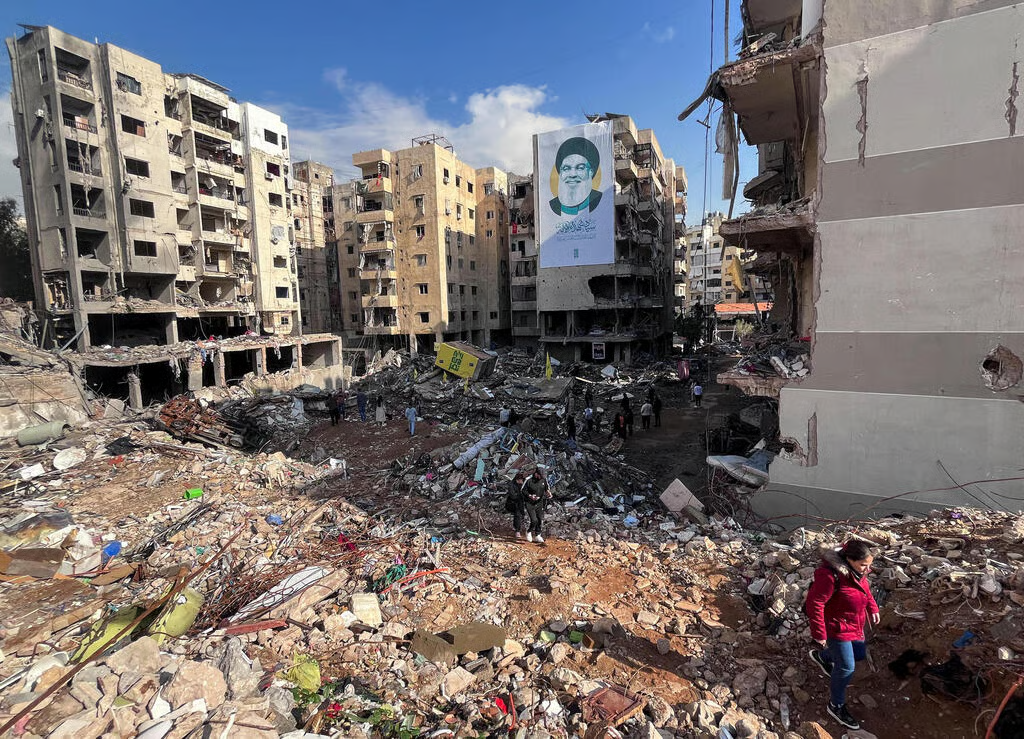
Despite efforts to diversify its presence across Beirut, Hezbollah is struggling. A new phenomenon, Israeli intelligence says, involves difficulties the group faces in renting apartments outside Dahieh. In some cases, operatives seeking to house their families or establish command centers in other neighborhoods have been rejected or even evicted by locals. “These are things we haven’t seen before,” one source said. “People know no one will compensate them if their building is destroyed in an Israeli strike on a Hezbollah position.”
(Photo: REUTERS/Amr Abdallah Dalsh)
Another pressure point shaping Hezbollah’s decisions is political. Lebanon is scheduled to hold parliamentary elections in May, and the IDF believes that the current secretary-general, Naim Qassem, 72, is more concerned with restoring internal unity and political legitimacy than entering a new war with Israel.
“Qassem lacks the charisma [Hassan] Nasrallah once had, and as a result, there’s little hope among Lebanon’s Shiite population,” one official said. “More are now turning to Amal. It’s important to remember these movements aren’t just about terrorism and military arms; they also provide welfare and education to large segments of the population.”
‘Painstaking work’: Behind the operation to kill Nasrallah
Two senior intelligence officers—Lt. Col. S, head of the Research Division’s Targeting Branch, and Lt. Col. A, head of the Political and Strategic Branch—have drawn up a detailed roadmap for the period before and after the elimination of Hezbollah’s longtime secretary-general, Hassan Nasrallah. Their analysis is now guiding top decision-makers in the IDF and political leadership, including over weighty dilemmas: Is a further weakening of Hezbollah worth another shutdown of Israel’s north, rocket fire on Haifa and air raid sirens in Tel Aviv, which has only recently resumed hosting international sporting events?
(Photo: IDF)
The two officers were among those who advocated for eliminating Nasrallah last September. “Hezbollah has dozens of bunkers and sensitive assets scattered across Beirut,” Lt. Col. Sh told ynet and its parent newspaper Yedioth Ahronoth. “We spent years tracking him to figure out which one he was using. It was painstaking work. It’s a real maze—these bunkers are connected by tunnels and corridors beneath residential buildings, with intricate connections you have to know in detail.”
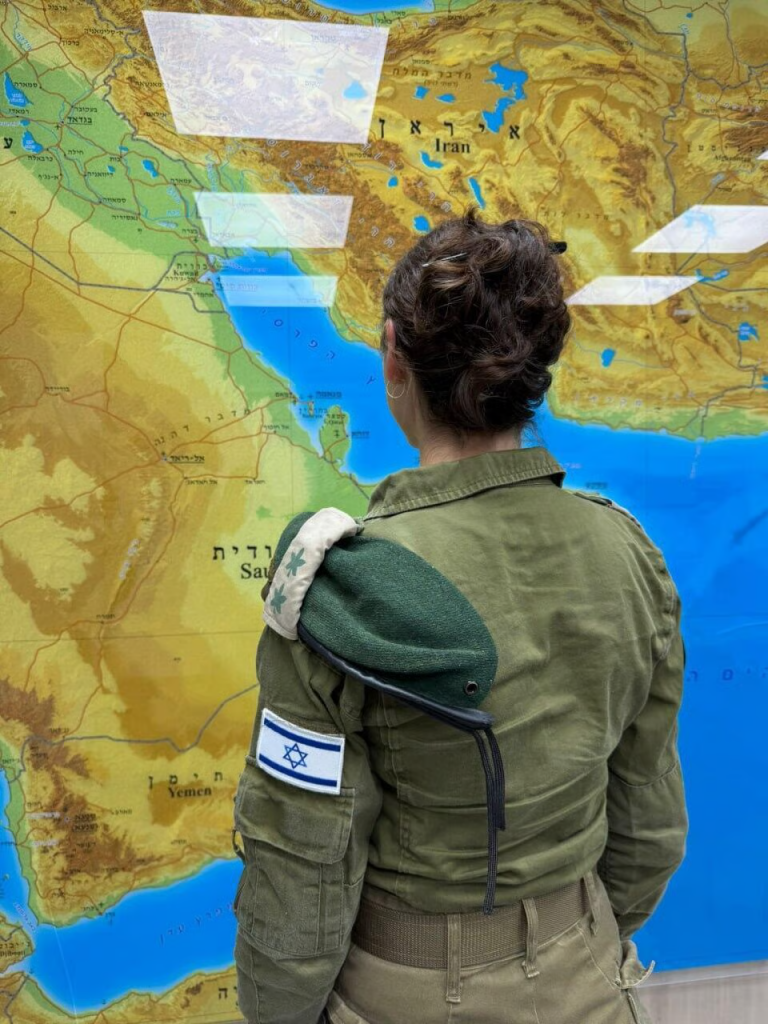
“But it wasn’t just about finding where Nasrallah was hiding,” he added. One of their intelligence NCOs, identified as Staff Sgt. N, was responsible for monitoring one of the bunkers suspected to be among Nasrallah’s hideouts. After a previous operation involving early alerts, she asked to refine surveillance of her assigned site to deepen the investigation, and that’s exactly what happened.
N, a young signals intelligence specialist, didn’t wait for Nasrallah to choose her assigned bunker as his shelter when the kill order came. For weeks, she analyzed the site, located 20 to 30 meters underground. Her goal: to help the Israeli Air Force precisely identify “entry points” for the 83 bombs that would be dropped on the subterranean facility, ensuring the outcome—eliminating Nasrallah and his senior military leadership.
“N knew that bunker inside and out,” said Lt. Col. S. “Of course, we had to confirm that Nasrallah would be in that exact bunker that evening, and not one of dozens of alternatives. She chose the precise aim points for the strike.”
(Photo: IDF)
Lt. Col. S recalled how he brought Staff Sgt. N’s findings to a high-level briefing with the head of Military Intelligence and the commander of the Israeli Air Force. “I told them I was ready to put my rank on the table if this didn’t succeed,” he said. “That’s what I told the generals when I quoted her conclusions. My counterpart from the Air Force said the same—he’d put his pilot’s wings on the table if it failed.”
To prevent any chance of escape, they didn’t just bomb the rooms where Nasrallah was believed to be hiding, but also targeted nearby tunnel junctions. The operation, dubbed “New Order,” resulted in the deaths of 30 Hezbollah operatives, including senior commanders, and 40 civilians, according to the IDF. Military officials described the civilian toll as “a collateral damage price list we’d take any day.”
With that level of confidence and experience, Military Intelligence, Northern Command and the Air Force are preparing for the next round against Hezbollah—an organization deterred, but not defeated. Officials acknowledge they are facing a changed enemy: Hezbollah has fewer seasoned commanders but still maintains a massive arsenal and tens of thousands of armed operatives.
The challenge will not only be targeting weapons factories but hunting down mid-level commanders who are now running operations. Hezbollah’s internal defense units, Israeli intelligence says, have learned from the previous campaign. “Hezbollah invests heavily in protecting its assets,” explained Lt. Col. A. “We estimate Iran will increase its annual support for Hezbollah’s reconstruction from the current $700 million to even more. Tehran still sees Hezbollah as a central proxy project and is working to ensure it doesn’t lose influence in Lebanon.”
According to the IDF, most of Hezbollah’s senior command structure has now been eliminated, leaving a second-tier leadership in charge. “That changes the dynamic,” said Lt. Col. A.
As reported by Ynetnews