
US highlighted Azerbaijan and Indonesia as likely ISF contributors, though Azeri official indicates Baku has many of the same conditions preventing Arab countries from joining mission
DOHA, Qatar — While US President Donald Trump’s administration succeeded in rallying much of the Arab and Muslim world around its Gaza peace plan, convincing those countries to contribute troops to the force needed to operationalize that proposal has been a much taller task.
Countries fear soldiers deployed to the International Stabilization Force –meant to gradually replace Israeli forces in Gaza — risk being caught in the crossfire, as Israel won’t leave the enclave until it is demilitarized and Hamas insists on keeping its weapons. They are also hesitant about parachuting into a deeply divisive conflict or being seen as acting on Israel’s behalf if the ostensibly temporary initiative does not help lead to the Palestinian Authority’s return to the Gaza Strip, as much of the international community desires.
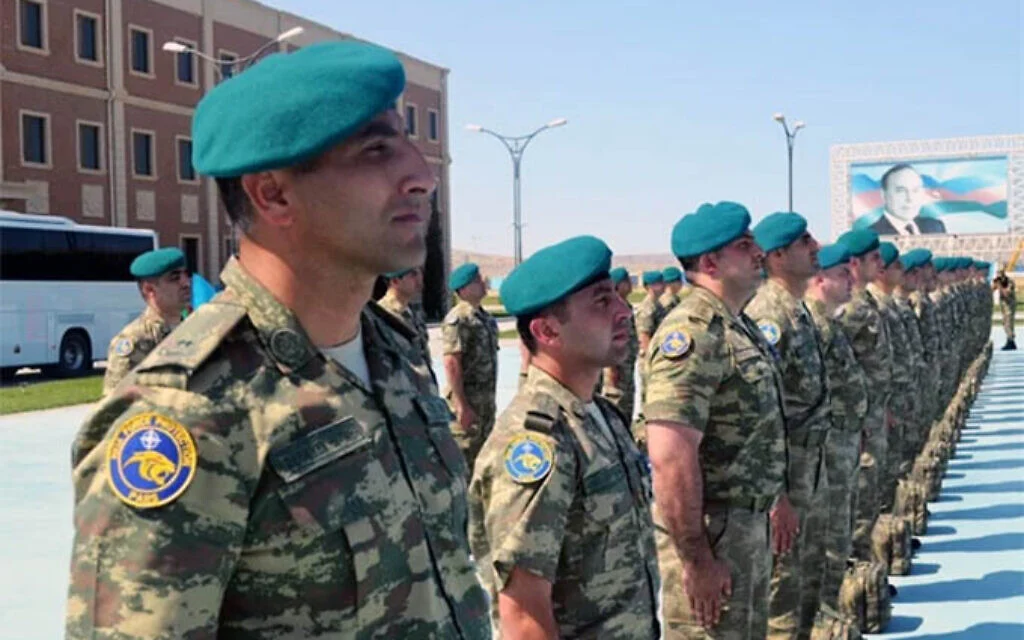
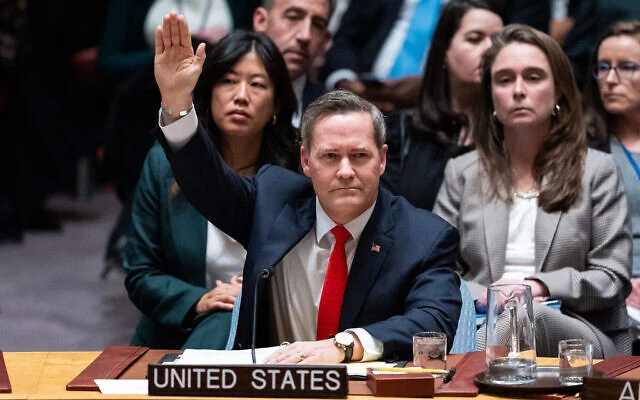
Though Arab countries particularly animated by these concerns have accordingly held off on joining the force, Indonesia and Azerbaijan appeared unfazed, responding positively enough to Washington’s engagement on the matter that US Ambassador to the UN Mike Waltz publicly named them as potential contributors in a speech to the Security Council moments before it adopted a resolution giving an international mandate to the ISF.
Both are Muslim-majority countries, which the US hopes will contribute to the ISF’s legitimacy in Gaza, their distance from which may make them less susceptible to domestic pushback over foreign involvement in the flashpoint territory.
Indonesia has been the only country to publicly express its readiness to participate in the ISF, even declaring that it is prepared to dispatch 20,000 troops. But Jakarta has been mum since the Security Council resolution was adopted nearly a month ago, and its embassy in Washington did not respond to a request for comment.
While Azerbaijan has yet to speak out publicly on the matter, a senior Azeri official indicated that assumptions about its participation in the ISF were premature.
“Azerbaijan has not made its decision on whether we will join or not,” said the official during a briefing to The Times of Israel and journalists for two other outlets on the sidelines of the Doha Forum over the weekend.
This is mainly because the US has yet to have a substantive conversation with Azerbaijan on what will be expected of its troops if they join the mission, the Azerbaijani official said. Once such a discussion is held, Washington will find that Baku has many of the same steep conditions that have kept other countries from joining the ISF.
Two-state talking point
The Azerbaijani official said that Baku wants to be sure that the force contributes to the advancement of a two-state solution within a short time frame — a demand seemingly more likely to come from the Arab states that have held off on joining the ISF than from a nation that is ostensibly still interested in participating.
Baku wants to know if the ISF is “tied to the broader Palestinian issue” or just focused on Gaza, in which case Azerbaijan will not be comfortable joining, the official indicated.
The stance indicates that the UN resolution’s reference to the pathway to a future Palestinian state that the ISF “may” help create is insufficient to Azerbaijan. Israel is sure to reject a more concrete timeline for a two-state solution, casting further doubt on whether Azerbaijan will join the foreign force.
The official explained that as a member of the Organization of Islamic States, which prioritizes the plight of Palestinians, Azerbaijan cannot be seen as contributing to an initiative that does not advance their cause. While the US hopes the force will help stabilize Gaza after the war, critics fear it will be used by Israel to advance its own agenda in Gaza that falls well short of Palestinian statehood.
The Azerbaijani official said a no less critical factor holding Baku back is that the US has yet to present a detailed pitch regarding what will be expected of its soldiers and what the role of the ISF will be, even though Washington is aiming for deployment to begin in early January.
“Azerbaijan cannot engage in a peace enforcement operation. It should be a peace-keeping,” he said, echoing comments from other Arab and Muslim countries pitched on the ISF.
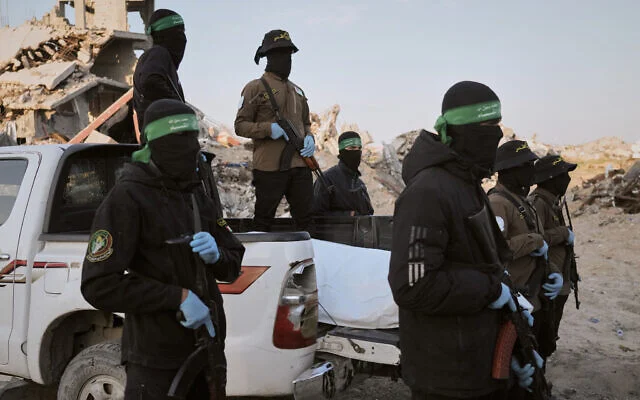
But that demand too, may be a poison pill, as the UN resolution specifies that the ISF will be tasked with advancing Hamas’s disarmament — an enforcement-like task.
‘Domestic political fallout’
While the Palestinian issue may not be as salient among Azerbaijan’s own public, the idea of sending its soldiers into a conflict zone is, and the official acknowledged that there could be “domestic political fallout” over a decision to join the ISF. Azerbaijan is just coming out of roughly three decades of war against Armenia that left thousands dead or injured.
“Azerbaijani society is finally breathing comfortably with [that] war now over. Imagine that right after such a development, [we announce] a long-distance deployment to another territory,” the official said.
While Azerbaijani troops are well trained, they will need assistance in making such a long-distance deployment, the official added, acknowledging that Baku is limited in what it can actually offer on the ground in Gaza.
Azerbaijan has deployed troops abroad before, though, helping secure the airport in Kabul as part of the NATO-led International Security Assistance Force that operated in Afghanistan for nearly two decades.
Asked if Azerbaijani troops could conduct similar operations in Gaza, the official said he could not answer without more information from the US on the task at hand. He gave similar responses when pressed on how many soldiers Azerbaijan could conceivably contribute to the ISF and when a decision on participating in the force might be made.
While Azerbaijan did receive a presentation on the ISF from US CENTCOM Chief Brad Cooper during a recent visit to the country, the official said that it still comprised a more general vision that did not address Baku’s specific questions on the matter.
US can’t be only one ‘doing the hard work’
The official clarified that Baku is honored that the US views it as a potential partner for the ISF and said that Washington’s confidence demonstrates that Azerbaijan is uniquely acceptable by Israel, the Palestinians and the Arab and Muslim worlds more broadly.
Interest in including Azerbaijan — a transcontinental country landlocked between Western Asia and Eastern Europe — in the ISF also bolsters Baku’s “multifaceted geopolitical identity,” the official said. Rather than fitting neatly into one regional identity, Baku sees itself as part of several, including the Middle East.
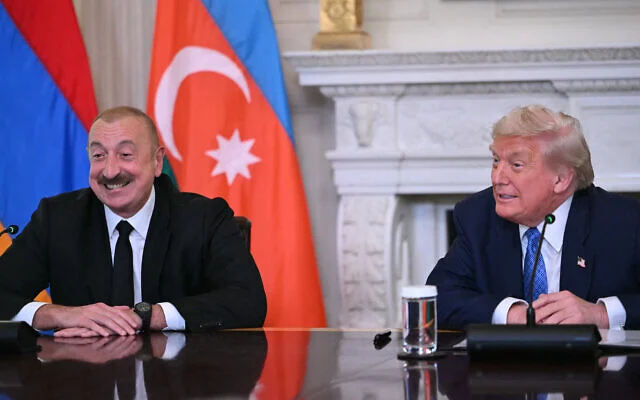
The Azerbaijani official also hailed the Trump administration’s efforts for succeeding in advancing its Gaza peace plan as far as it has, and pushed back on those doubting Washington’s ability to succeed and didn’t rule out that Baku would help out.
The US “deserves a lot of appreciation… There is no magic solution to this conflict, and they are doing certain things in a very untraditional way [because] traditional diplomacy didn’t bring any results,” he continued. “I regret that sometimes [their] efforts receive a lot of criticism when what is needed is appreciation and support from the broader international community.”
“The US is doing hard work, and other partners, including European countries should also share some of the burden to support the regional agenda,” the Azerbaijani official added.
As reported by The Times of Israel