
Analysis: Saudi Arabia’s proposed F-35 purchase would end Israel’s exclusive regional access to the jet, weakening a core security advantage even though Riyadh would receive standard model without Israel’s enhanced sensors, electronic warfare systems
A prospective U.S. sale of F-35 fighter jets to Saudi Arabia is shaping up as one of the most sensitive strategic decisions in the Middle East since the American stealth program began.
The deal would give Riyadh access to an aircraft that functions not only as a strike platform but also as a system that fuses intelligence, command and real-time battlefield data across air, land and sea. Until now, Israel has been the only country in the region operating the jet, and it flies a customized version with Israeli-developed sensors, electronic warfare systems and processing capabilities.
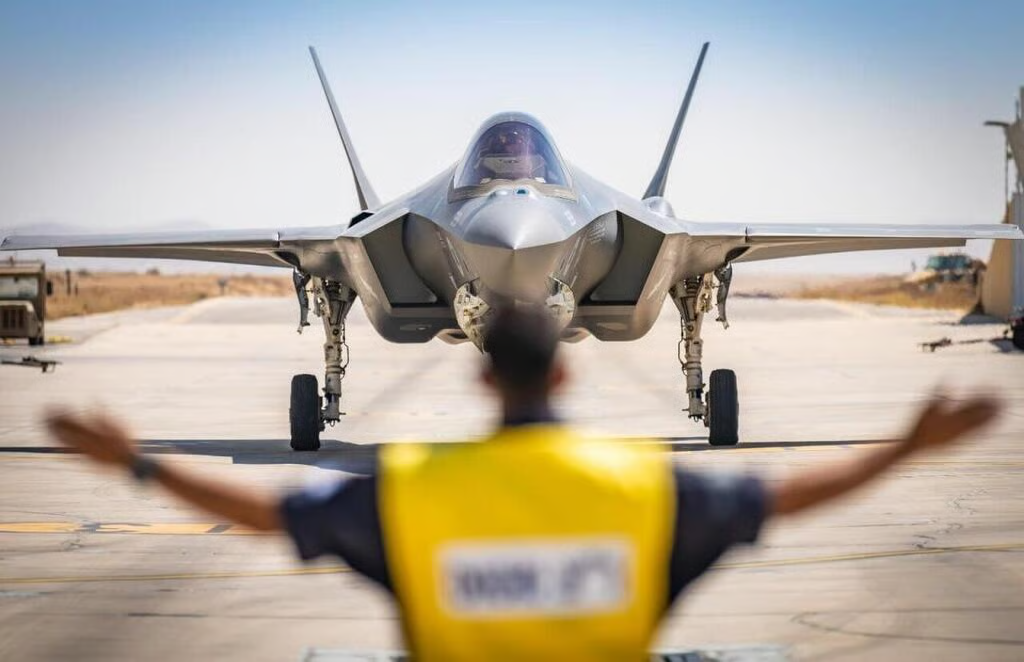
That exclusivity has been a central pillar of Israel’s national security posture. Allowing another state — especially one without formal ties to Israel — to field the aircraft would immediately weaken that strategic advantage, even if Saudi Arabia receives a standard configuration.
The Trump administration has not committed to formal normalization between Israel and Saudi Arabia as part of the sale, and no defined compensation package has been presented to Jerusalem. U.S. law requires Washington to preserve Israel’s qualitative military edge, a commitment that traditionally includes concrete, written offsets when advanced weapons are transferred in the region.
From Israel’s perspective, the requirement demands a clear and binding package. Proposals could include full diplomatic normalization with Saudi Arabia; a mutual defense arrangement or a binding U.S. mechanism to counter Iran, including coordinated responses to missile and drone threats; an additional Israeli F-35 squadron; expanded stockpiles of precision munitions; more air defense interceptors; long-term increases in U.S. security assistance; and a multilateral framework that anchors regional cooperation against Iran.
At present, no such package is on the table even as the sale advances. If Washington proceeds, Israel argues it must secure firm commitments rather than verbal assurances to ensure the shift strengthens — rather than undermines — its strategic position.
The same move that could become Israel’s most damaging arms deal, the analysis concludes, could also become its greatest strategic opportunity if tied to real agreements on normalization, defense and cooperation against Iran. For now, those conditions remain unmet.
As reported by Ynetnews