
Ilan Assayag/Reuters
Iran has vowed a heavy retaliation if US President Donald Trump carries out a threat to bomb Iran’s power plants, with Tehran warning that critical infrastructure across the region may be “irreversibly destroyed.”
Trump said he would order the bombardment if the Strait of Hormuz was not fully open to shipping within 48 hours, as disruption of the key waterway continues.
Here are the latest developments:
What are the main headlines?
- Strike threat: US President Donald Trump threatened to “hit and obliterate” Iran’s power plants if Tehran doesn’t open the Strait of Hormuz, a critical waterway for the world’s energy resources, within 48 hours. The threat marks an escalation in rhetoric from Trump, who’s previously dangled the option of hitting Iranian infrastructure but cautioned it would impair the country’s ability to rebuild. It’s also a tacit acknowledgement that the strait’s closure provides Iran significant leverage.
- Iran’s response: Prompted by Trump’s words, Iranian officials and state media vowed retaliation if that were to happen. Critical infrastructure and energy facilities in the Middle East could be “irreversibly destroyed” should Iranian power plants be targeted, Iran’s Parliament Speaker Mohammad Baqer Qalibaf said in comments posted on X on Sunday.
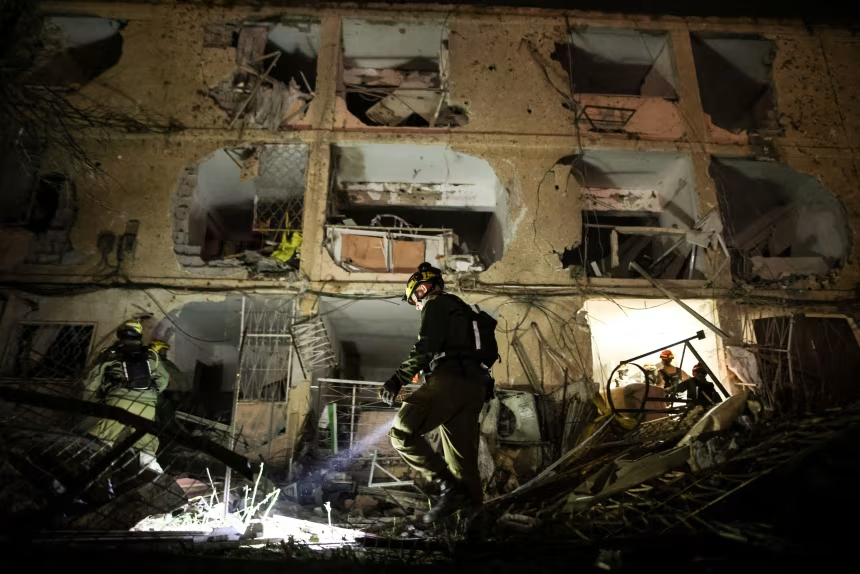
- Israel hit: Israeli Prime Minister Benjamin Netanyahu condemned Tehran for targeting a civilian area as he visited the scene of an Iranian strike on the southern Israeli city of Arad. At least 84 people were injured, including 10 seriously, in the strike Saturday. A separate Iranian missile also hit the city of Dimona, injuring several and destroying a small building.
- Helicopter crash: Seven people on board a helicopter in Qatar were killed when it crashed Sunday morning, according to the country’s Interior Ministry. Qatar’s foreign ministry said three Turkish nationals were on the aircraft.
- US-UK base targeted: The UK denounced what it called “Iran’s reckless attacks” after missiles were fired toward the Indian Ocean military base of Diego Garcia. The joint US-UK base is about 3,800 km (2,360 miles) from Iran and can accommodate long-range American bombers. The attempt has renewed questions about Tehran’s military capabilities and how far its missiles can reach.
- Israel investigating possible friendly fire incident: The Israeli military is examining whether friendly fire killed a civilian in the northern Israeli community of Misgav Am, the Israel Defense Forces (IDF) said in a statement. The IDF and emergency responders had initially blamed the incident on Hezbollah in Lebanon. It would’ve marked the first civilian killed by Hezbollah since the start of the war with Iran. It is unclear what led the IDF to consider whether it was friendly fire.
- Oil prices rise: Oil prices rose Sunday after Iran threatened to shut down the Strait of Hormuz indefinitely in response to Trump’s ultimatum on the restoration of oil traffic through the critical waterway. Brent crude, the global benchmark, climbed 1.69% to about $114.09 a barrel. US crude rose 2% to $100.29.
Majid Saeedi/Getty Images Europe/Getty Images
What’s happening in Iran and Lebanon?
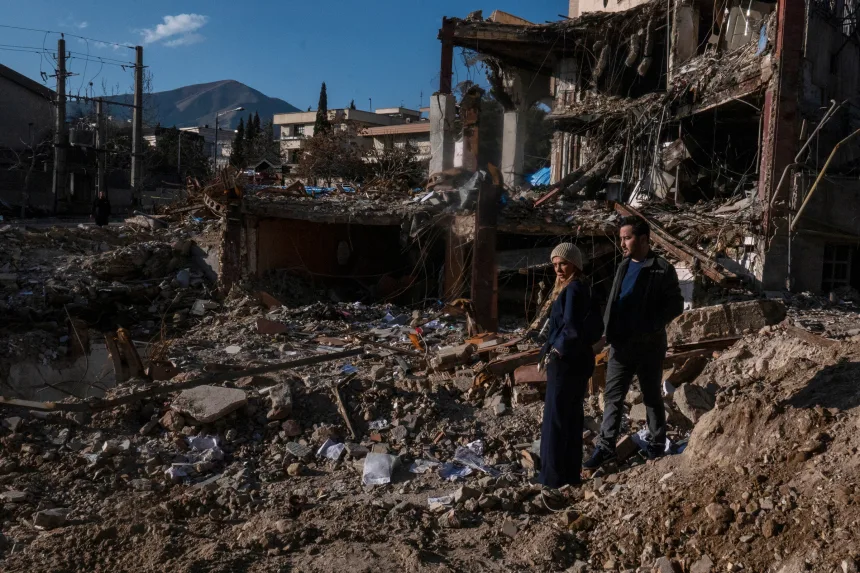
- Waves of Israeli strikes: The Israeli military says it launched simultaneous “wide-scale” waves of strikes on Iran and Hezbollah in Lebanon this weekend, hitting more than 200 targets. In Iran, the Israel Defense Forces said it struck dozens of compounds storing weapons and ballistic missiles. It also said it completed two waves of strikes in Beirut and additional areas in Lebanon, hitting “key Hezbollah command centers.” Lebanon’s President Joseph Aoun condemned Israel’s attacks on Lebanese infrastructure and said that they are a “prelude to a ground invasion.”
- Israel: Police officers and bomb disposal experts are working to secure and isolate “impact sites of munitions” in central Israel, police said Sunday. It came just hours after Iranian strikes on the Israeli cities of Arad and Dimona.
- Rising toll: In Iran, more than 18,000 civilians have been injured and more than 1,330 people – including at least 200 children – have been killed since the start of the war three weeks ago, according to the latest figures from the Iranian Red Crescent and Iran’s UN ambassador. In Lebanon, more than 1,000 people have lost their lives, according to the country’s health ministry, and more than 1 million have been displaced.
- Crackdown: Iranian authorities have arrested 25 people for “spreading rumors, filming damages, and sending them to anti-revolutionary networks,” the state-affiliated Tasnim news agency reported. The arrests come days after Iran executed three men in connection with nationwide anti-regime protests that took place at the start of the year.
Stringer/Reuters
What’s the latest in the Strait of Hormuz?
- Hormuz comments: The Strait of Hormuz remains open to all except Iran’s “enemies,” the country’s representative to the UN maritime agency said in remarks published on Sunday shortly after US President Donald Trump gave Tehran 48 hours to open the waterway.
- Protecting safe passage: The United Arab Emirates and Australia are the latest countries to express their willingness to contribute to efforts to ensure safe navigation of the Strait of Hormuz, joining a statement which now has 22 participating nations. It was not immediately clear what the efforts to secure the crucial waterway would look like.
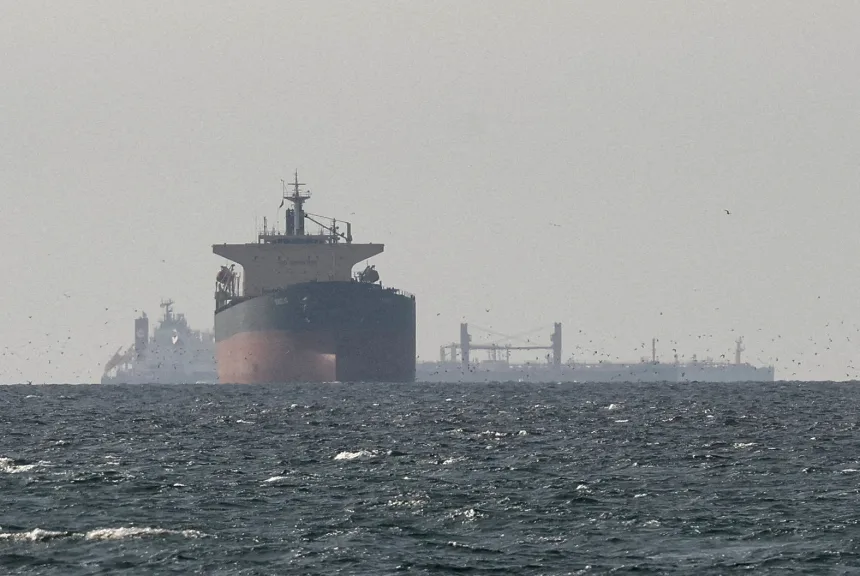
- Blast reported: An unknown projectile caused an explosion “in close proximity” to a bulk carrier off the central northern coast of the United Arab Emirates, the United Kingdom Maritime Trade Operations (UKMTO) said early Sunday. “All crew are reported safe,” it added. Since the war began, Iran has hit several ships in the strait, from US-friendly nations.
- History repeats: Suggestions of US Navy ships escorting oil tankers through the strait bring to mind the so-called Tanker War of the late 1980s, which involved some of the same weapons – and problems – a US escort force would face today. It provides lessons in how, in war, things can go wrong quickly in unexpected ways – with deadly consequences.
- Iran threats: Iran’s military vowed to close the Strait of Hormuz indefinitely if the US follows through on Trump’s threat to bomb power plants.
- NATO working to secure strait: NATO Secretary General Mark Rutte said on Sunday that he is “absolutely convinced” that the alliance will be able to reopen the Strait of Hormuz. Speaking to Fox News, Rutte said, “European allies and partners all over the world have used the last couple of weeks to make sure that we come together. They start planning to see what we can do collectively as allies, as partners of the United States.”
As reported by CNN