
Israeli official tells ToI the strikes are among steps being taken to create conditions for regime change, with US official saying that Basij members are among those on hit list
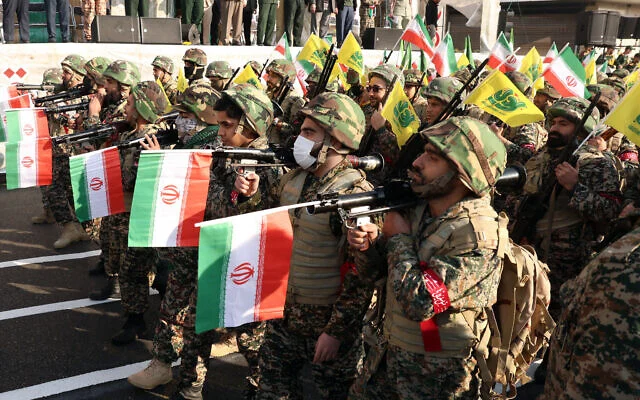
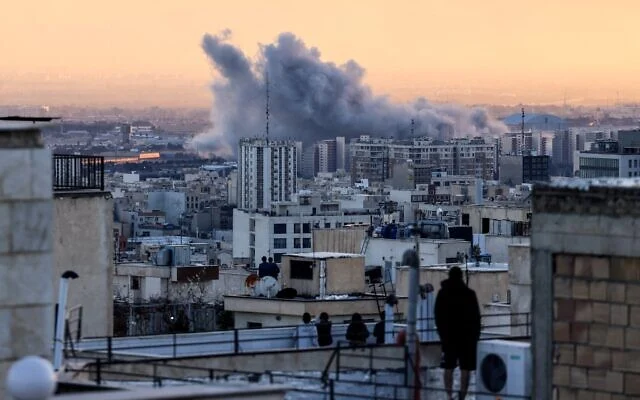
The US and Israel, in their ongoing airstrikes throughout Iran, are targeting members of the regime’s forces that took part in the crackdown on anti-government protesters earlier this year, hoping to make it easier for demonstrators to return to the streets once the bombing subsides, a US official and an Israeli official told The Times of Israel on Wednesday.
“When we said that we’re trying to create the conditions for regime change, these are the kinds of things that we’re referring to,” an Israeli official said.
In announcing the launch of Operation Epic Fury on Saturday, US President Donald Trump called on Iranian freedom-seekers to take over their government once the bombing subsides.
In the days that followed, though, Washington has clarified that while it views the fall of the government as merely a potential byproduct of the operation, the stated aims are limited to destroying Iran’s missile program, destroying its navy, preventing it from obtaining a nuclear weapon and ceasing its support for proxy militias.
Still, the US official confirmed that regime forces involved in the crackdown — such as the Basij voluntary paramilitary off-shoot of the Islamic Revolutionary Guard Corps — are among those that American and Israeli forces are targeting.
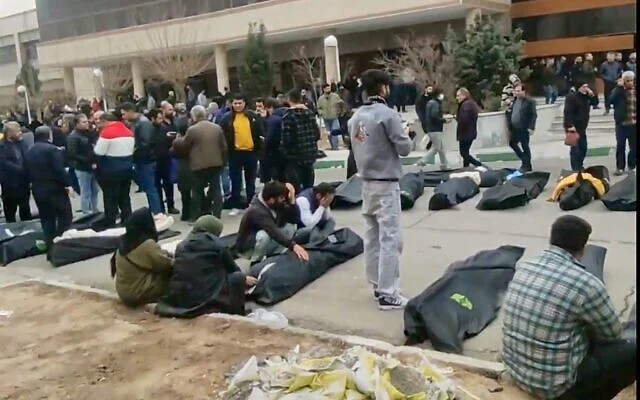
Trump has put the number of Iranians killed by the regime for protesting against the government earlier this year at 32,000.
In January, Trump declared that “help is on the way,” as Iranian protesters began taking to the streets. He then urged them to take over their institutions, as the regime preceded to launch a bloody crackdown on the protesters.
Protests subsequently thinned out — save for periodic, smaller demonstrations in recent weeks by university students — with the regime ostensibly succeeding in instilling fear among large swaths of the population regarding the significant risks in continuing to take to the streets.
It’s unclear whether the launch of US and Israeli strikes, which began with the killing of supreme leader Ali Khamenei and dozens of other top Iranian leaders on Saturday, will be enough to overcome the fear of the regime following the crackdown, but the Israeli official said Jerusalem is intent on assisting the protesters.
He did recognize that the regime’s monopoly on force is a major obstacle and that the collapse of the government will require dissent from within — something that has not yet appeared.
While the US and Israeli officials declined to elaborate on the additional steps being taken to assist the Iranian people, American media reported that the US has been arming Kurdish fighters in Iraq.
The White House denied that was the case on Wednesday, asserting that while Trump has been in touch with Kurdish leaders in Iraq, the subject was the American military base in the country.
Some analysts warned of the danger of a Kurdish insurgency, arguing that it could harm efforts to unify opponents to the regime.
As reported by The Times of Israel