
Visiting Israel a day ahead of fresh nuclear talks in Geneva, GOP Sen. Lindsey Graham says US decision on Iran is ‘weeks, not months’ away; Tehran drills in strategic Hormuz Strait
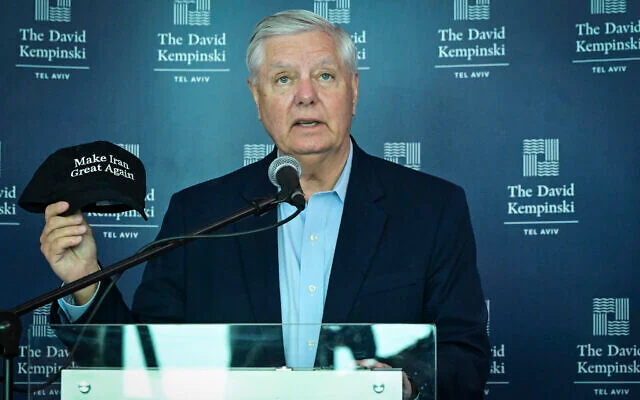
A Republican senator seen as close to US President Donald Trump suggested Monday that an American decision on potential military action against Iran was “weeks, not months” away and opined that it would be a “strategic victory” for the Islamic Republic if its supreme leader isn’t toppled amid the current standoff.
Lindsey Graham made the comments during his latest visit to Israel, which came a day before a second round of nuclear talks between the US and Iran was set to be held on Tuesday in Geneva.
Speaking at a press conference in Tel Aviv, Graham said he was visiting the country “to reassure the Israeli people there is no light” between Washington and Jerusalem on Iran.
“There are two lines in the water right now,” said Graham. “One’s a diplomatic line, trying to find a way to end this regime diplomatically that will advance our national security interests. The other line is the military option.”
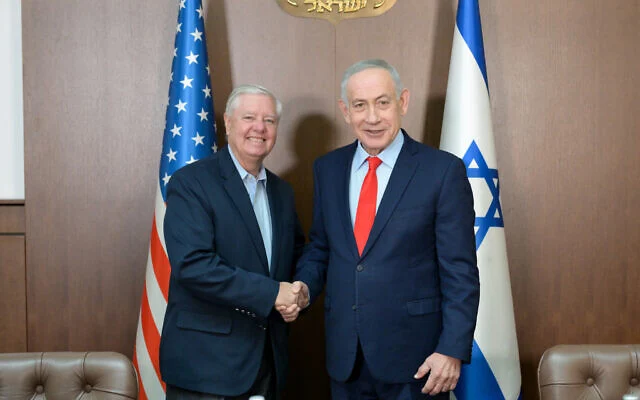
Graham, who also met with Prime Minister Benjamin Netanyahu on Monday, said that he believed Trump “is looking for which line can catch the biggest fish. Bottom line is we’re in the weeks, not months, in terms of decision-making.”
The US senator said, “The Iranian ayatollah and his murderous regime are at their weakest point since 1979. Their economy is in shambles. Their military has been degraded. There are people in the streets.”
“The risk of regime change is real. There are unknowns. But let me just say this, I’m willing to take that risk. I think the Iranian people have the potential to be a great ally of the United States, Israel and the region,” Graham said.
While Graham is seen regularly with Trump, it is unclear the degree to which he influences the US president’s decision-making.
He is also part of the Republican party’s more hawkish wing, which is competing with more isolationist members of Trump’s inner circle who are more wary of military action against Iran.
‘Strategic victory for Iran’ if ayatollah not toppled
Graham held a phone interview with The Times of Israel later Monday, during which he said that the US must deliver on its pledges to aid Iranian anti-regime protesters.
“We promised that help would be on the way to the protesters,” he said after meeting with top Israeli officials in Jerusalem, including Netanyahu. “We have to deliver on that promise.”
“If having said all the things we’ve said and done all the things we’ve done,” he continued, “if the ayatollah is still standing after all this bluster, then it would be a strategic victory for Iran and the force of radical Islam.”
There is “no daylight” between Trump and Netanyahu on Iran, he stressed.
But Trump’s statement after his meeting last week with Netanyahu in Washington appeared to suggest otherwise.
He wrote on Truth Social that he “insisted” to the Israeli prime minister that a chance be given to see if the ongoing nuclear talks succeed before military options are pursued. Netanyahu has been more skeptical of the negotiations.
Trump later last week opined that regime change in Iran “would be the best thing that could happen,” appearing to contradict US Vice President JD Vance, who said hours earlier that Washington was not trying to topple the Islamic Republic and was focused on reaching an agreement that will prevent Tehran from obtaining a nuclear weapon.
Trump spoke to reporters on Monday night as his top aides Steve Witkoff and Jared Kushner departed for Geneva.
“I’ll be involved in those talks indirectly, and they’ll be very important,” Trump said aboard Air Force One.
Calling the Iranians “tough negotiators,” Trump said he hopes “they’re going to be more reasonable” than they were during last year’s talks, which didn’t result in a deal and instead saw the US strike Iran’s nuclear facilities.
“I think they want to make a deal. I don’t think they want the consequences of not making a deal,” Trump said.
Huckabee: At some point, US will need to say enough is enough
Striking a similar tone to that of Graham, US Ambassador to Israel Mike Huckabee said Monday that he hopes a diplomatic accord with Iran can be reached but is skeptical that military action can ultimately be avoided.
“Will there be anything that can come from that that will bring peace?” he asked, while speaking to Jewish leaders at a gathering of the Conference of Presidents of Major American Jewish Organizations in Jerusalem. “I honestly don’t know. I know there’s a lot of significant and legitimate doubt that the Iranians will ever agree to something that would cause them to lay down any ambitions of nuclear weaponry.”
“At some point, the United States needs to say: enough is enough. We’re not going to continue to believe that they’re ever going to be different than they are. And it’s time for them to either make a radical change of their point of view and their direction, or for them to experience what we call in the south, the ‘second kick of a mule,’” the ambassador said.
Huckabee reiterated that Israel and the United States are “absolutely aligned in our understanding that Iran has to be dealt with and it cannot continue as it is.”
“They cannot remain a nuclear threat. They cannot continue to build extraordinary surpluses of ballistic missiles and aim them, not just at Israel, but also at the rest of the world,” he continued.
While Huckabee said he would be “delighted” if an accord could be reached — adding that the consequences of failing to do so for Iran would be “harsh and much worse” than Israel’s 12-day conflict with Iran last year — he expressed skepticism that Iran would be “serious” about making or keeping such a commitment.
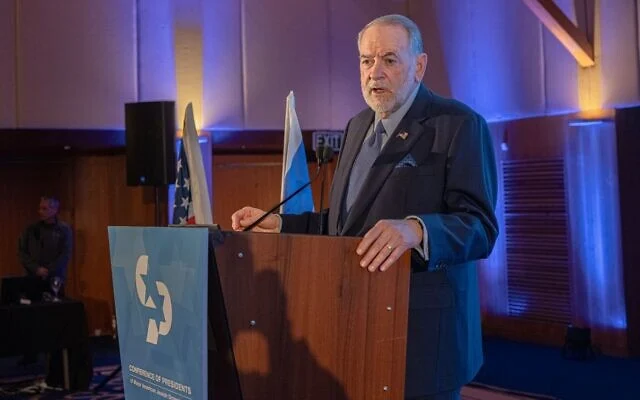
Huckabee said he told Trump last week at the White House that it would be “miraculous if some deal could be reached that would thwart the need, the necessity, the absolute certainty of some military action,” but also that he was “willing to do whatever must be done to stop this threat that I’ve had to listen to for 47 years since 1979.”
Iran says US stance now ‘more realistic’
Meanwhile, Iran said on Monday that the US position on its nuclear program “has moved toward a more realistic one.”
“A cautious assessment is that, from the discussions that have taken place in Muscat to date, at least what we have been told is that the US position on the Iranian nuclear issue has moved towards a more realistic one,” said foreign ministry spokesman Esmaeil Baghaei, the official IRNA news agency reported.
Washington has ordered a second aircraft carrier group to the Middle East in the latest standoff with Tehran, in addition to other US warships and aircraft that have already been deployed.
Adding to the tension, Iran began a military drill on Monday in the Strait of Hormuz, a vital international waterway and oil export route from Gulf Arab states, who have been appealing for diplomacy to end the dispute.
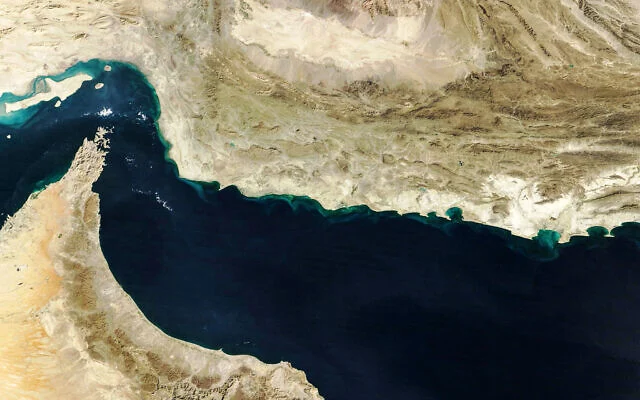
Iran has repeatedly threatened to close the Strait of Hormuz in retaliation against any attack, which would choke a fifth of global oil flows and send crude prices sharply higher.
The waterway connects the biggest Gulf oil producers, such as Saudi Arabia, Iran, Iraq and the United Arab Emirates, with the Gulf of Oman and the Arabian Sea.
Iran’s Revolutionary Guards have conducted a drill named “Smart Control of the Strait of Hormuz,” to test the readiness of the guards’ naval units to protect the waterway, the semi-official Tasnim news agency said on Monday.
“Intelligently utilizing the geopolitical advantages of the Islamic Republic in the Persian Gulf and the Sea of Oman are among the main objectives of this exercise,” Tasnim said.
Iran’s Foreign Minister Abbas Araghchi met with International Atomic Energy Agency (IAEA) head Rafael Grossi in the Swiss city on Monday. The IAEA has been calling on Iran for months to say what happened to its stockpile of 440 kilograms (970 pounds) of highly enriched uranium following US strikes on three key Iranian nuclear facilities during a 12-day Israel-Iran war in June, which put an end to previous US-Iran talks.
Araghchi’s direct meeting with Grossi came after Iran suspended all cooperation with the IAEA following the June war.
As reported by The Times of Israel