
Without accepting responsibility, Prime Minister Benjamin Netanyahu released a redacted 55-page response to the state comptroller, blaming Israel’s withdrawals from Lebanon and Gaza for October 7 and citing security assessments made 75 minutes before the Hamas attack
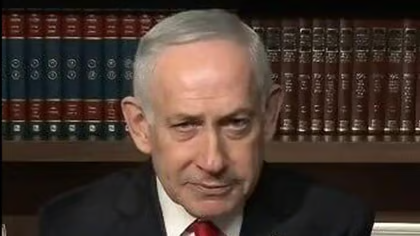
Prime Minister Benjamin Netanyahu on Thursday night published his responses to questions from State Comptroller Matanyahu Englman as part of the comptroller’s review of the October 7 attack, a review that was later halted by a High Court of Justice ruling. Netanyahu released the full document, spanning 55 pages, three of which were redacted.
The document contains numerous quotations from senior security officials, most of them partial. It includes no acceptance of responsibility by Netanyahu, who has served as prime minister for more than 16 years, for the failures that led to the Hamas massacre.
(Photo: Roi Avraham/GPO)
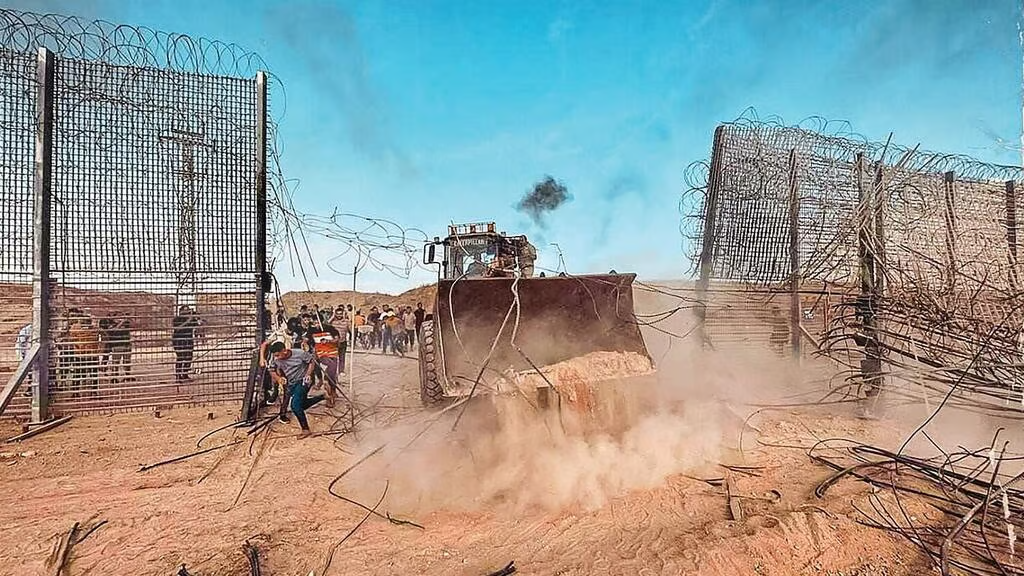
In the final section of the document, responding to the comptroller’s question about the causes of the strategic failure on October 7, Netanyahu pointed to Israel’s withdrawal from Lebanon in 2000 and the 2005 disengagement from Gaza. These were among the few periods in which he was not serving as prime minister. Netanyahu said he opposed the disengagement plan, despite having voted for it in the Knesset at the time.
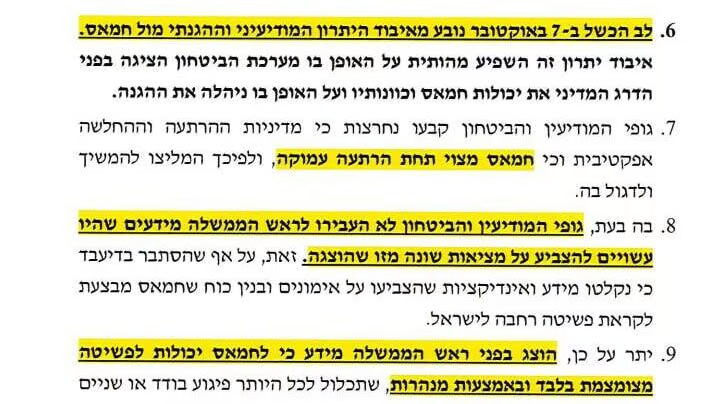
In the document, Netanyahu blamed the security establishment, writing that “the heart of the failure stems from the loss of intelligence and defensive superiority vis-a-vis Hamas. The intelligence and security bodies determined unequivocally that the policy of deterrence and weakening was effective and that Hamas was deeply deterred, and therefore recommended continuing this approach.”
“At the same time,” he wrote, “they did not convey information that could have pointed to a reality different from the one presented, even though it later emerged that intelligence and indicators were received pointing to training and force buildup by Hamas ahead of a large-scale raid into Israel.”
Netanyahu claimed he was presented with intelligence suggesting Hamas had only limited raid capabilities, primarily via tunnels, involving at most one or two isolated attacks near the border. He said this assessment shaped the security establishment’s real-time response, even amid unusual signs, leading to a directive issued during a situation assessment chaired by the head of the Shin Bet to avoid broad preparedness measures out of concern for miscalculation.
Englman asked Netanyahu what decisions were made by the political leadership on October 7, when they were made, and what directives were issued regarding the conduct of the fighting. Netanyahu replied that at 6:29 a.m. he was informed by his military secretary via WhatsApp that the Hamas attack had begun. At 6:44 a.m., the two spoke again, and according to the document, Netanyahu asked whether there was an ability and opportunity to eliminate Hamas’ leadership, sought to understand the scope of the surprise attack, and questioned whether reserve forces needed to be mobilized.
Netanyahu said he wondered how “nothing appeared in the intelligence,” and emphasized that the immediate priority was to determine the scale of the attack, whether it involved kidnappings, whether reserves should be called up, and whether Hamas leaders could be eliminated immediately, “from Sinwar southward,” in his words.
The document states that at 9:47 a.m., the military secretariat received a Shin Bet situation assessment completed by Shin Bet chief Ronen Bar at 5:15 a.m., about an hour and 15 minutes before the massacre began. Netanyahu published excerpts from that assessment, which stated that the likelihood of a broad campaign was considered low, while a localized surprise could not be ruled out. The leading assumption was concern over Israeli offensive activity.
The document also notes that the assessment recommended avoiding broad Israeli activity at that stage to prevent miscalculation, emphasizing caution given that a wide escalation was not the primary assumption. Netanyahu claimed the document contained no mention of an alleged directive to update his military secretary about overnight events. He asserted that such a clause appeared only later, in material Bar attached to Shin Bet internal probes into the October 7 failure. Netanyahu reiterated his long-standing support for targeted killings as an effective deterrence tool and revealed for the first time that Israel assassinated senior Hamas operative Mazen Fuqaha in 2017 using an assassin. The document also includes quotations from a situation assessment held on September 21, 2023, about two and a half weeks before the attack. At that meeting, Bar said Hamas was experiencing partial satisfaction and was not interested in entering another round of fighting, instead seeking to formalize understandings.
Defense Minister Yoav Gallant said at the time that Hamas was signaling interest in a prolonged arrangement, arguing that Israel’s interest was to pursue a long-term calm in Gaza and improve humanitarian conditions there, both in the short and long term. Netanyahu said during the same meeting that Israel needed to contain the campaign while applying controlled force, adding that Hamas’ proposed terms conveyed to Qatar were “delusional.”
Netanyahu also released a summary from an intelligence meeting held on October 3, four days before the attack, titled “Aman summary of the annual intelligence assessment in the Palestinian arena.” According to Netanyahu, the summary made no mention of a raid, invasion plan or Hamas-initiated offensive intent. The document stated that Hamas continued to build strength at a moderate pace and was not expected to be the driving force behind a multi-front war. Additional excerpts were published from a July 31, 2023, meeting between Netanyahu and Bar, in which Bar described a sharp rise in daily threat warnings, many originating from Gaza. Netanyahu responded by saying, “You need to hit them hard. Kill someone there.” Bar replied that a covert message was being prepared for Hamas leader Yahya Sinwar, warning of impending action. Netanyahu repeated, “You need to kill someone.”
Netanyahu read the quotations aloud during a meeting of the security cabinet on Thursday night. He also cited statements by former defense minister Avigdor Liberman, former prime minister Naftali Bennett, former Shin Bet and military intelligence chiefs, and former IDF chiefs of staff, arguing they had opposed conquering Gaza or assassinating Hamas leaders. In a video released alongside the document, Netanyahu said his meeting with the comptroller took place on December 25, 2025, and lasted four hours. He claimed that six days later, the High Court issued interim orders halting the comptroller’s work, suggesting suspicious timing. Netanyahu said sensitive security sections were redacted and would be available to authorized officials, while reiterating his opposition to establishing a state commission of inquiry.
Opposition leader Yair Lapid responded by saying Netanyahu had been warned repeatedly before October 7 and ignored the warnings. Former IDF chief of staff Gadi Eisenkot said the document consisted of manipulations and distorted, selective quotations.
The October Council, an organization demanding a state commission of inquiry and organizing a protest in Tel Aviv on Saturday night, said the prime minister was attempting to bury the truth by releasing carefully selected documents without context.
As reported by Ynetnews