
Jewish Leadership Council said on Saturday that it was appalled by the welcome received by El-Fattah, which it felt contradicted Starmer’s previous promises to root out antisemitism in the country.
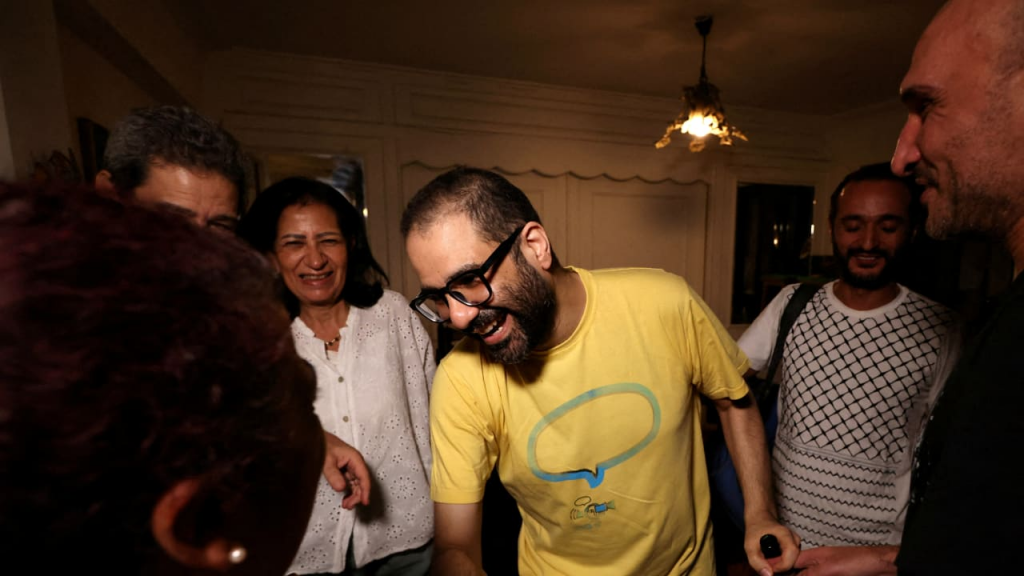
(photo credit: REUTERS/MOHAMED ABD EL GHANY)
Controversy arose after the British government announced on Friday that a long-imprisoned Egyptian political activist was being brought to the United Kingdom, as his social media history revealed statements supporting the killing of Zionists and whites, as well as denigrating the British people.
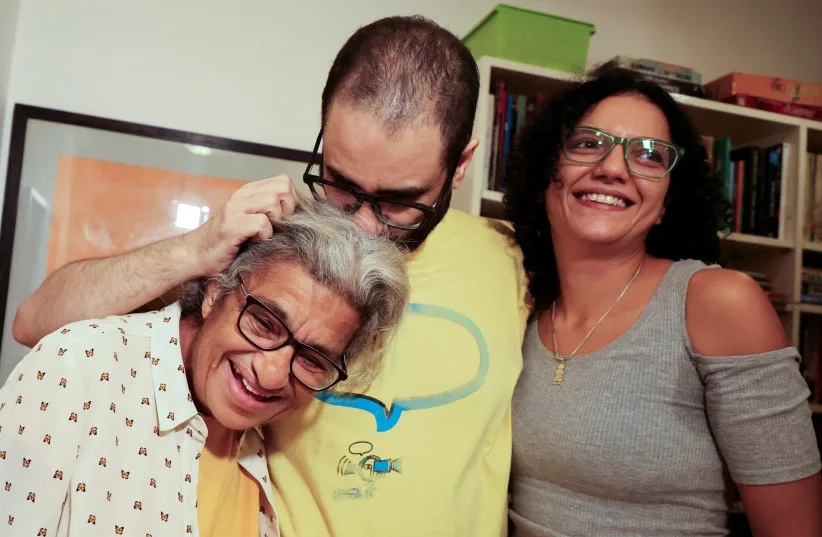
Prime Minister Keir Starmer and other cabinet ministers announced on social media that they were “delighted” that Egyptian activist Alaa Abd El-Fattah had been brought to the UK and reunited with his family after having been imprisoned for almost all of the last 12 years. Starmer paid tribute to El-Fattah’s family for the extended campaign for his release since 2013 and thanked Egyptian President Abdel Fattah al-Sisi for pardoning the activist.
“Alaa’s case has been a top priority for my government since we came to office,” said Starmer.
Deputy Prime Minister David Lammy shared that he had first met with El-Fattah’s family while in the opposition and “committed to them then that I would do everything I could to advocate for his return. It’s an immense relief that this has now happened.”
Yet soon after Starmer and other Labour ministers, such as Foreign Secretary Yvette Cooper, expressed their delight about bringing him to the UK, his social media history came to light.
On X/Twitter, El-Fattah had in the past expressed animosity for several groups, declaring “all Zionists are my enemies, all MB [Muslim Brotherhood] too, and definitely all police” in 2013, and, in 2011, “advocating killing police, hating white people.”
In 2012, he said that he rejoiced “when Zionists are killed,” and in 2010, he considered “killing any colonialists and especially Zionists heroic” and that “we need to kill more of them.”
The activist aspired to killing Israelis, joking in 2011 that he wanted a drone so that he could “shoot Zionist weddings,” and a year before, he told another social media user that it would be acceptable to commit a suicide bombing if it took “a few Zionists’ lives.”
El-Fattah’s calls for the killing of Israelis were previously raised in a 2014 scandal, when the revelation of his comments led to the withdrawal of his nomination for the Sakharov Prize for Freedom of Thought.
El-Fattah didn’t recognize the legitimacy of Israel within any borders, in a 2011 post, and in 2010 said that it was possible to “kick them all out.”
“What’s wrong with saying Israelis should get the hell out of Palestine?” he said in another 2010 post. “The British got the hell out of India, [and the] French out of Algeria?”
While El-Fattah was granted UK citizenship of his own in December 2021, and both Conservative and Labour governments have advocated for his release, the activist expressed disdain for British and white people.
“I’m telling [you] that I hate white people,” he said in 2011.
The activist in 2013 called for “more fear” to convince white males that “racism costs lives,” suggesting that more “random shooting of white males” would fit that purpose. El-Fattah in 2009 considered Jews to fall under white people since “whiteness can expand” and “Jews used to be outside the system of privilege, and now western ones are totally inside it.”
The activist’s mother had British citizenship, but in 2010, he called the British “dogs and monkeys” and called British history “pure BS [bulls**t].”
Jewish orgs. slam UK’s decision to grant El-Fattah citizenship
Jewish organizations, civil groups, and opposition politicians criticized the policy of granting citizenship and then repatriating a person who held views that were in conflict with the fabric of British society.
The Board of Deputies of British Jews said on Sunday that El-Fattah’s violent rhetoric against Israelis and whites was a threat to the British public and that it was urgent to know if the Egyptian activist still held these views. Board of Deputies Senior Vice President Adrian Cohen urged the government to explain what measures it would introduce to ensure that the Jewish community and the broader British nation would remain safe.
The Jewish Leadership Council said on Saturday that it was appalled by the welcome received by El-Fattah, which it felt contradicted Starmer’s previous promises to root out antisemitism in the country. “The government has celebrated Mr. Abd El-Fattah’s arrival as a victory; British Jews will see it as yet another reminder of the danger we face,” JLC said on X.
Reform Party leader Nigel Farage said on social media on Saturday that the affair was evidence of how the current government keeps getting “worse.”
Conservative Party MP Robert Jenrick sent a letter to Starmer on Saturday questioning the prime minister’s commitment to combating antisemitism and public order with his endorsement of El-Fattah. Jenrick noted that El-Fattah had urged protests in 2011 to “go burn the city or Downing Street or hunt police.”
He asked if Starmer condemned such statements and if they were known by the government before welcoming the activist to the UK.
Other Conservative MPs leveled criticism, but the Board of Deputies noted in its statement that the campaign on behalf of El-Fattah was “cross-party” and the welcome he received demonstrated “a broken system with an astonishing lack of due diligence by the authorities.”
In 2022, then-foreign secretary James Cleverly promised to “work tirelessly for his release.”
Then-secretary of state for Foreign, Commonwealth and Development Affairs David Rutley said in 2022 in response to a question from Labour MP Naz Shah that then-prime minister Rishi Sunak had been raising El-Fattah’s case and requesting consular access for him. The Egyptian authorities had not recognized the British nationality conferred upon him.
Over 100 members of the Labour Party, Conservative Party, Liberal Democrats, Green Party, Scottish National Party, Plaid Cymru, Sinn Fein, Social Democratic and Labour Party, Democratic Unionist Party, Alliance Party of Northern Ireland, and independents such as MP Jeremy Corbyn and MP Ayoub Khan signed a 2024 letter to then-foreign secretary Lammy urging him to push for El-Fattah’s release.
According to the El-Fattah freedom campaign website, the activist has long been persecuted in Egypt. He was detained in 2006 for a month for online activities, according to CIVICUS: World Alliance for Citizen Participation. In 2011, he was jailed for 45 days under former Egyptian president Hosni Mubarak’s regime and then again by the Supreme Council of the Armed Forces for involvement in demonstrations.
In 2013, he was arrested by Sisi’s government, and in 2014, he was sentenced to five years for organizing protests. He was briefly released in 2019, then rearrested. His mother is a British citizen, according to El-Fattah in a 2012 post on X, and he was given British citizenship in 2021.
As reported by The Jerusalem Post