
Baharav-Miara warns coalition’s plan would politicize commission, undermine its independence and let those under scrutiny shape the investigation
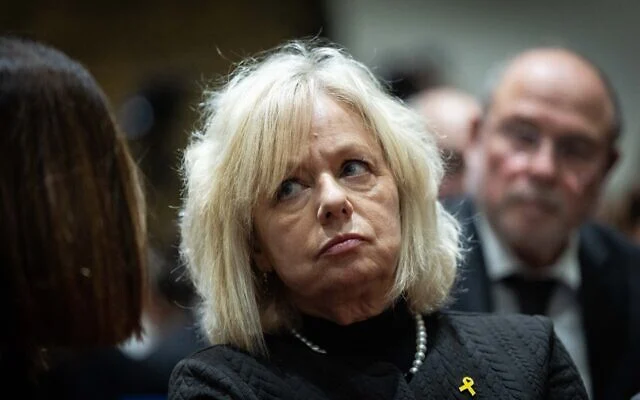
Attorney General Gali Baharav-Miara on Sunday excoriated government-backed legislation to create a politically appointed commission of inquiry into the failings surrounding the October 7, 2023, Hamas invasion and atrocities, describing it as being “tailor-made” for the “personal” needs of the current government and coalition.
In an opinion published by her office, Baharav-Miara said the commission of inquiry envisioned in a private member’s bill submitted by Likud MK Ariel Kallner would “politicize” the inquiry; “trample” on professional considerations for getting at the truth; give commission members powers not befitting them; and harm the ability of any future, non-politicized, independent commission to properly investigate the October 7 failings.
As such, the severe deficiencies of the bill mean the government should not support it, the attorney general said.
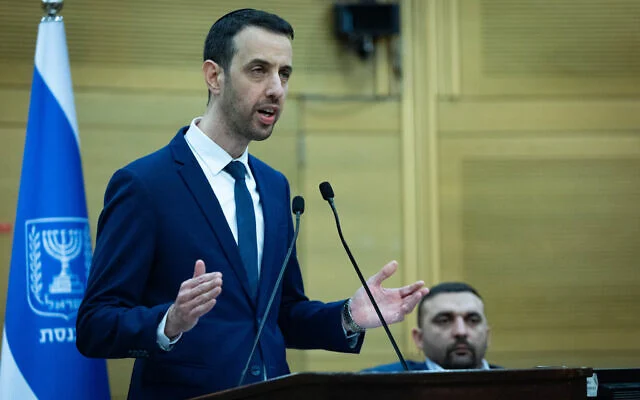
Kallner’s bill, which is due to be approved by the cabinet on Monday for support in the Knesset, would create a “national state investigation committee” whose members would be chosen by politicians, with almost no criteria for determining the qualifications of members.
The opposition has vowed to boycott such a panel, insisting instead on a state commission of inquiry. The members of a state commission of inquiry, as defined under current law, are appointed by the Supreme Court president and it is led by a retired justice of the court.
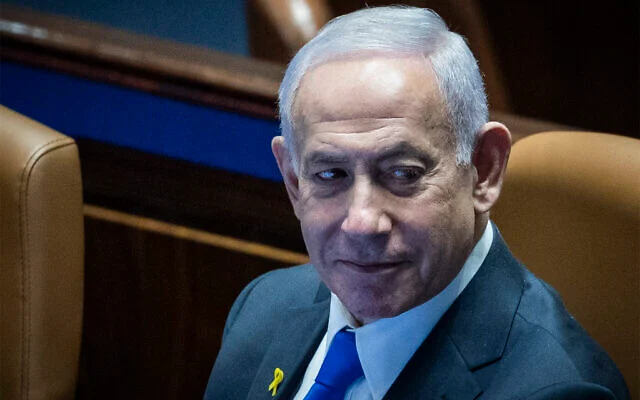
Prime Minister Benjamin Netanyahu has claimed that the public would not trust a state commission because its make-up would be determined by the judiciary, which his government has sought to weaken through a series of controversial laws. As recently as 2022, Netanyahu had backed a state commission of inquiry into the conduct of the previous government.
Despite Netanyahu’s claims, opinion polls consistently show that a state commission of inquiry is backed by most of the public.
“Before us is a ‘personal bill,’ that is ‘tailored to the measurements’ of the current government and coalition,” Baharav-Miara charged on Sunday.
“It is not the result of professional staff work, but rather of political discourse led by the prime minister and in cooperation with coalition factions,” she continued in her broadside against the proposal.
“The proposal politicizes the commission, creates a commission for which there is a real concern that political considerations will override the professional considerations essential to investigating the truth, whose investigative powers are not appropriate for such a panel in the absence of a senior judge at its head, and whose mechanism is cumbersome and will thwart the ability to investigate the truth and draw objective conclusions,” she said.
Baharav-Miara said that if any changes are to be made to commissions of inquiry, then the extreme nature of the October 7 invasion and atrocities require finding ways “to reduce the dependence of a state commission on the government” in order to boost public trust, “and certainly do not justify creating a mechanism that will increase dependence on the government and a panel that is [formed as] a result of political considerations.”
The bill, she continued, is designed to “serve the personal, political interests of the government and its members, while abusing the [legislative] pathway of a private member’s bill” to avoid scrutiny by the Attorney General’s Office.
Government legislation requires approval from the attorney general, whereas private members’ bills do not.
Baharav-Miara also said that a so-called ministerial committee for deciding the mandate and scope of the proposed “state-national” commission, which is set to begin deliberations on Monday and be led by Netanyahu, is not operating under any real legal authority, since such committees only operate in conjunction with a state commission of inquiry established under current law.
“Therefore, there is no place for the government to support the bill, and instead it should act in accordance with existing law and establish a state commission of inquiry,” she concluded.
The plan calls for a majority of 80 out of 120 MKs to appoint a six-member committee and its chairman. If there is no agreement after two weeks, both the opposition and coalition will each be allowed to select three committee members, will would be joined by four supervisory members representing bereaved families.
The proposal states that if either the coalition or opposition does not cooperate in the process or cannot settle on a candidate, the Knesset speaker will choose instead — giving the coalition effective control in the event of an expected opposition boycott.
Any two members of the committee would be empowered to subpoena any person or investigate any entity, and all discussions would be broadcast live.
“Instead of appointing a committee by one controversial individual, who heads a judicial system that is at an unprecedented low in terms of public trust, the establishment of a committee would be done in an equitable manner by those elected by the people. This would give the committee and its conclusions the broad public trust it needs,” Kallner has argued.
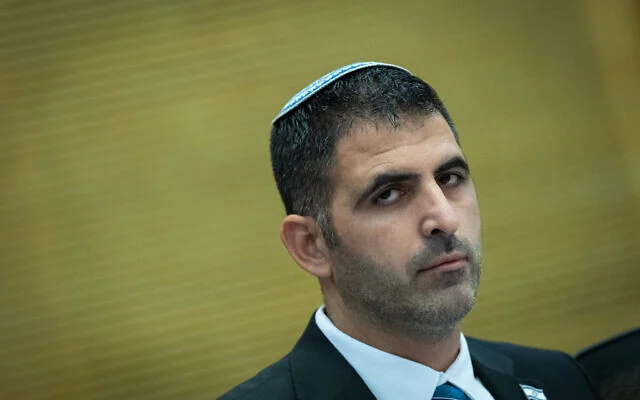
Communications Minister Shlomo Karhi dismissed Bahara-Miara’s criticism on Sunday.
“We won’t allow the ousted attorney general and her circle to evade a commission of inquiry,” Karhi wrote on X, implying that the justice system will be a target of the nascent probe. The government has tried to fire Baharav-Miara but the High Court ruled that the dismissal process was not legal, and she has remained in her role.
“The wording of the mandate frightens them, and a commission that is not under their control drives them mad,” the Likud minister added.
Karhi suggested that there will only be “justice” through the coalition’s own inquiry, despite Baharav-Miara’s “objections and fury.”
The government’s planned commission, as well as the fact that Netanyahu is set to head the ministerial committee that will decide the investigation’s mandate, has been met with outrage from the premier’s political opponents, who have accused the premier of trying to “whitewash” his responsibility for the failures leading up to and during the attack.
Opposition Leader Yair Lapid has said the opposition will not cooperate with any attempt to sidestep the establishment of a state commission of inquiry and form “a cover-up committee for October 7.”
Former prime minister Naftali Bennett has described it as “a knife in the back of the bereaved families and the entire people of Israel.” Bennett argued that the bill boils down to one thing: “Those being investigated appoint the investigators.”
The government’s plan was also assailed Sunday by the October Council, made up of families who lost loved ones on October 7, as a “smokescreen” and a “shameful political scam.” The group vowed to stage a week of protests against the plan.
As reported by The Times of Israel