
Report says White House rebuked Netanyahu over strike: ‘We won’t allow you to ruin president’s reputation’; Rubio, Witkoff and Kushner said ‘pissed by Israeli inflexibility’ on Trump plan’s 2nd phase
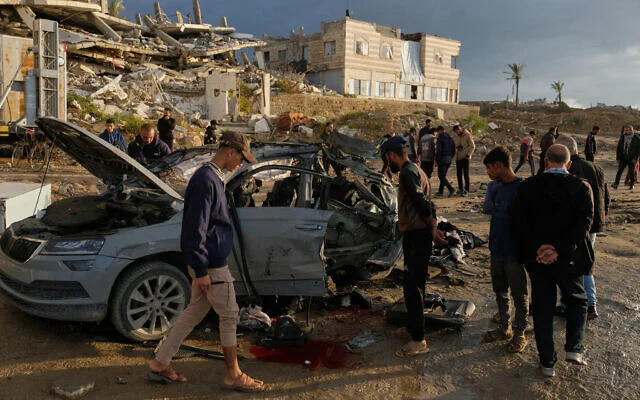
US President Donald Trump on Monday said Washington was “looking into” whether Israel violated the Gaza ceasefire with its strike that killed senior Hamas commander Raad Saad over the weekend.
Trump also denied any rift in his relationship with Prime Minister Benjamin Netanyahu and Israel more broadly, after Axios quoted US officials saying the White House sent a stiff rebuke to the premier over the assassination, alleging it violated the ceasefire.
“The White House message to Netanyahu was, ‘If you want to ruin your reputation and show that you don’t abide by agreements, be our guest, but we won’t allow you to ruin President Trump’s reputation after he brokered the deal in Gaza,’” a US official told the news site.
The officials told the US outlet that US Secretary of State Marco Rubio, top envoy Steve Witkoff, and Middle East adviser Jared Kushner are fed up with Netanyahu. “Steve and Jared are pissed by Israeli inflexibility around several Gaza-related issues,” said one of the Americans.
Israel fears Washington may push to advance to the next phase of the ceasefire, even if Master Sgt. Ran Gvili, the last deceased hostage held in Gaza, is not returned, and before a clear operational plan is established for Hamas’s disarmament, the Ynet news site reported last week.
The second phase laid out in Trump’s plan for the Strip outlines governing arrangements for the enclave. It is expected to begin soon, though Israel is still awaiting the return of Gvili, which is to be completed under the first phase.
The next step of the plan envisions Hamas disarming and Israel withdrawing as a multinational force deploys across the Strip at the same time that a Palestinian technocratic body begins managing Gaza’s day-to-day affairs. Asked by reporters Monday when the International Stabilization Force (ISF) will begin operating in Gaza, Trump claimed that, “in a form, it’s already running.”
No country however has publicly announced that it will contribute troops to the ISF, given concerns over Hamas’s refusal to disarm and Israel’s veto on the involvement of key mediating countries Turkey and Qatar. The US is hosting a conference in Doha on Tuesday aimed at offering potential donor countries more details on how the ISF will operate in a bid to move ahead with the initiative that has appeared to stall since the UN Security Council backed its formation roughly a month ago.
Trump again asserted that Hamas has agreed to disarm and that countries are eager to send troops in order to advance that effort if the terror group refuses to do so. Those claims however have been refuted by officials from Hamas and potential ISF donor countries.
“They’ll send any number of troops that I ask them to send,” Trump insisted nonetheless.
‘Global pariah’
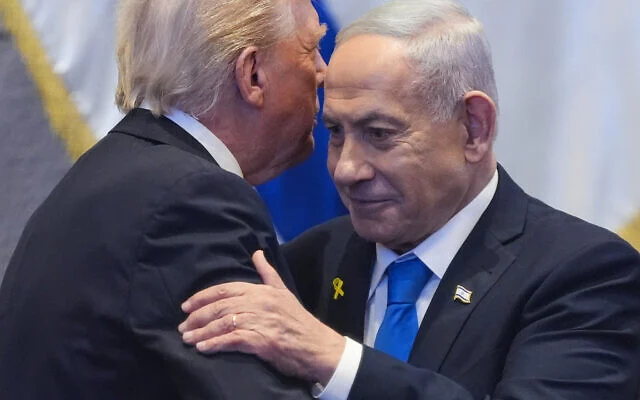
Trump’s comments and the report by Axios came two weeks before Netanyahu to meet the US president at his Mar-a-Lago resort in Florida.
The Prime Minister’s Office did not respond to requests for comment.
An Israeli official told Axios that the White House is indeed displeased, but sent a relatively restrained message that “certain Arab countries” saw the assassination as a violation of the ceasefire. The officials added that it was Hamas that had violated the ceasefire by carrying out attacks on soldiers and trying to smuggle weapons into Gaza.
But the White House felt that Israel was unnecessarily angering potential Arab partners and would not move on from the war in Gaza to a new era of peace-making, according to US officials who spoke to Axios.
Over the last two years, Netanyahu has become “a global pariah. He should ask himself why [Egyptian President Abdel-Fattah el-] Sissi refuses to meet him and why, five years after the Abraham Accords, he still hasn’t been invited to visit the UAE,” a US official said. “The Trump administration is doing a lot of hard work to fix it. But if Netanyahu doesn’t want to take the steps that are needed to de-escalate, we are not going to waste our time on trying to expand the Abraham Accords.”
A government official told The Times of Israel on Friday that the premier is actively seeking a sit-down with Sissi, but Cairo still fears that Israel has not ruled out efforts to push Palestinians southwards in the Strip toward Egypt’s Sinai Peninsula — a possibility it considers a red line and a national security threat.
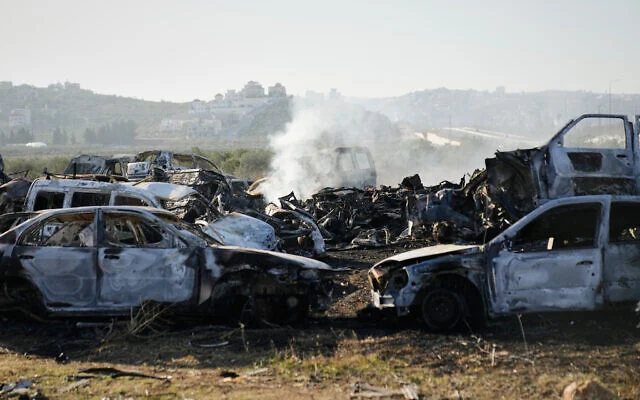
The White House is also upset over settler violence in the West Bank, according to a senior US official. “The US doesn’t ask Netanyahu to compromise Israel’s security. We ask him not to take steps that are perceived in the Arab world as provocations,” the official told Axios.
Violence by extremist settler activists has ramped up in recent months during the olive harvest season, with repeated incidents of extremists beating Palestinian civilians and carrying out arson attacks and other forms of violence.
Dozens of illegal outposts have been established around the West Bank since the beginning of the war with Hamas in Gaza.
The heightened violence has generated international condemnation, with Rubio expressing concern last month over the attacks.
As reported by The Times of Israel