
As Geneva talks open on Trump’s 28-point Ukraine plan, seen as demanding Kyiv’s surrender, he scolds Zelensky for showing ‘zero gratitude’; Zelensky thanks him, Rubio reports major progress; Europe offers a counterplan limiting Ukraine’s army and tying any Donbas pullback to frontline talks
Ukrainian President Volodymyr Zelensky thanked U.S. President Donald Trump on Sunday for Washington’s support in the war against Russia, hours after Trump scolded him on Truth Social and claimed Ukraine’s “leadership” had shown “zero gratitude” for U.S. efforts. Trump’s use of quotation marks was widely seen as a dig at Zelensky’s leadership.
Zelensky, who had already endured public jabs from Trump during their first summit this year at the White House, quickly posted on X: “Ukraine is grateful to the United States, to every American heart, and personally to President Trump for the assistance that – starting with the Javelins – has been saving Ukrainian lives.” He appeared to highlight the anti-tank missiles because the initial shipments began during Trump’s first term, a point Trump has repeatedly emphasized.
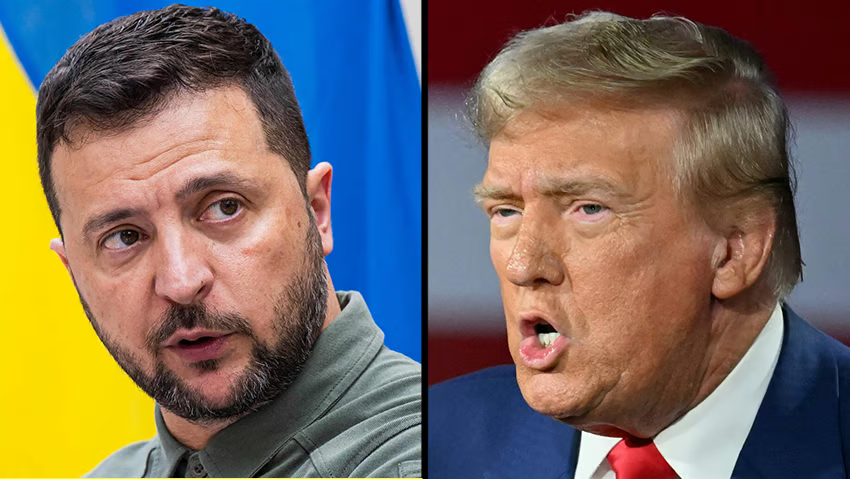
(Photo: AP Photo / Dmitry Serebryakov / Jonathan NACKSTRAND / AFP , Mandel NGAN / AFP)
The reprimand and Zelensky’s response came at a critical moment in efforts to end the war in Ukraine, Europe’s largest conflict since World War II, which will mark four years in February since Russian President Vladimir Putin launched his full-scale invasion. Frustrated that he has not fulfilled his campaign promise to quickly end the war, Trump is pushing a new 28-point plan, drafted with Russian representatives, that is viewed as serving Moscow’s interests and pressuring Ukraine to surrender. It includes requiring Kyiv to give up the remaining territory it holds in the contested Donbas region and imposing major limits on the size of Ukraine’s military.
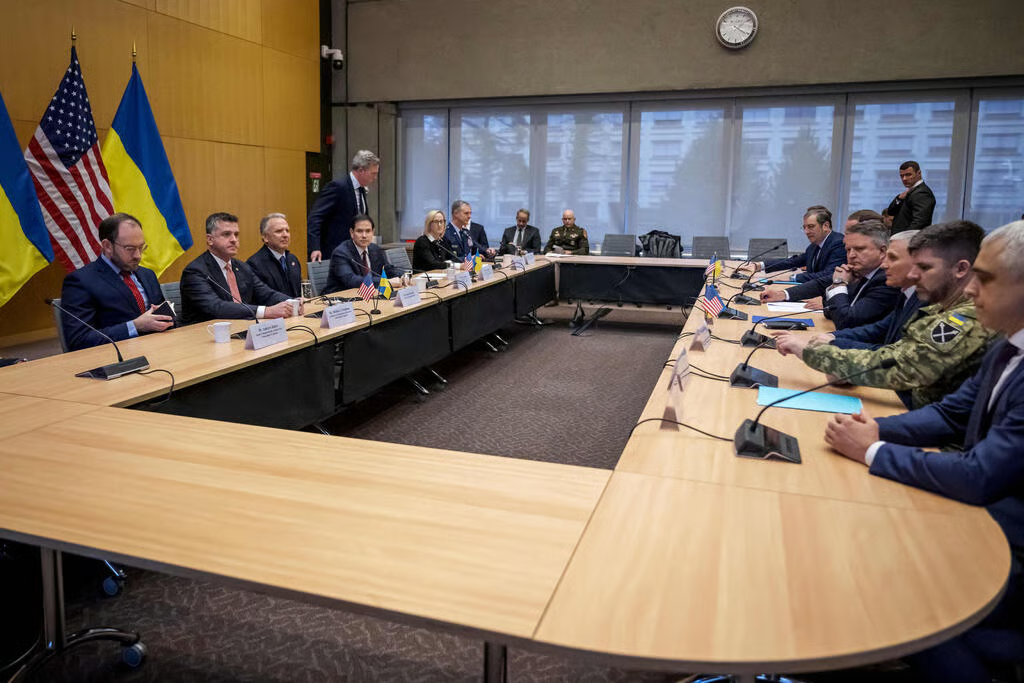
Kyiv and its European allies have voiced deep concern, warning that Washington may suspend military and intelligence support if Ukraine refuses to agree. A key round of talks between U.S., Ukrainian and European officials took place Sunday in Geneva, beginning under tension following Trump’s online broadside, which also criticized European states for continuing to buy Russian oil despite new U.S. sanctions on Russian energy giants. After the meeting, U.S. Secretary of State Marco Rubio expressed optimism and said “significant progress” had been made.
Rubio said he briefed Trump after the session and that the president was “pleased” with the reported progress. He said Washington and Kyiv had narrowed gaps over Trump’s proposal but noted that Trump and Zelensky would need to approve the final version, and that Russia must ultimately sign off as well. “They have to agree to it,” he said. Rubio added that the leaked draft circulating over the weekend would not be the final text. “This is a living, breathing document. Every day, with input, it changes. The remaining issues are not insurmountable,” he said, though he cautioned that no final deal had been reached. “I do not want to declare victory. There is more work to do, but we are much closer now than we were this morning.”
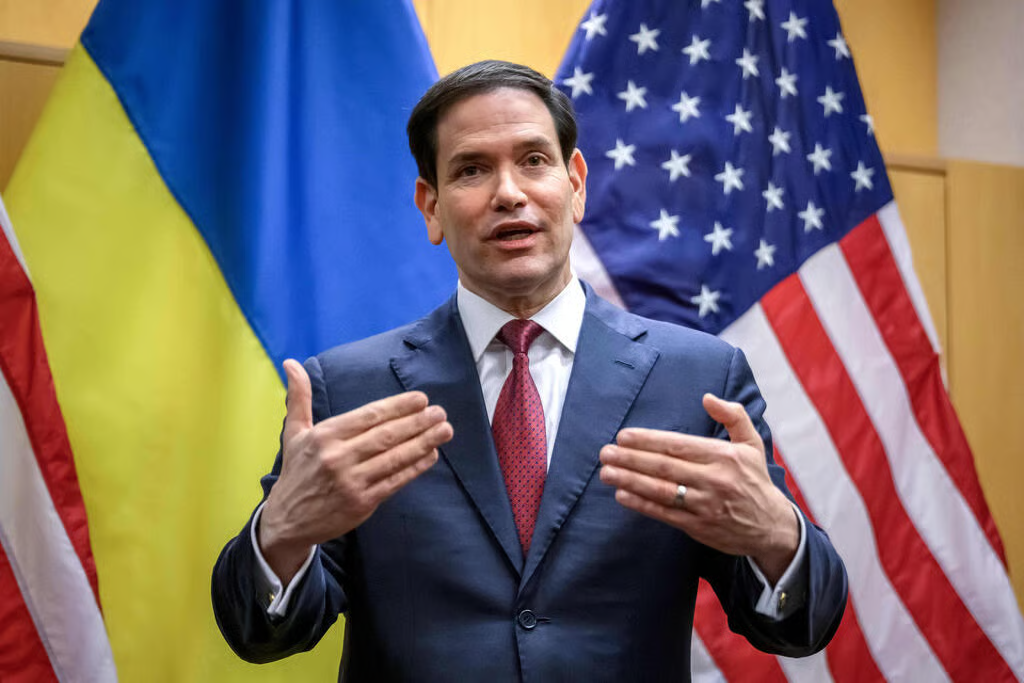
(Photo: Fabrice COFFRINI / AFP)
Trump, who said over the weekend that the leaked plan was not a “final offer,” has demanded Kyiv deliver its response by Thursday. Asked about the deadline, Rubio said they would “welcome” an agreement by then but signaled it was not rigid. Rubio said the United States still needed time to address the pending issues. He hoped a deal could be reached by Thursday, but suggested that it could also take longer.
At the Geneva talks, Rubio was joined by U.S. special envoy Steve Witkoff and Trump’s son-in-law Jared Kushner. Witkoff and Kushner played central roles in negotiations to end the war in Gaza, and while Witkoff has been heavily involved in Ukraine diplomacy over the past year, Kushner had not previously been known to hold a major role in the Ukraine discussions.
(Photo: REUTERS/Emma Farge)
Reports on the draft of Trump’s 28-point plan — developed, according to multiple accounts, with Russian envoy Kirill Dmitriev — triggered alarm in Kyiv and across European capitals, where many view it as meeting nearly all of Russian President Vladimir Putin’s maximalist demands. There is also deep suspicion that Moscow dictated much of the proposal, which the Kremlin has welcomed. Several U.S. lawmakers said Saturday that Secretary of State Marco Rubio had described the plan to them as more of a Russian “wish list” than a U.S.-led initiative. Rubio and a State Department spokesperson later denied the lawmakers’ account, calling it “an outright lie.”
According to the reports, the plan would require Ukraine to relinquish all territory seized by Russia, amounting to 19 percent of Ukraine’s prewar landmass: Crimea, the Luhansk and Donetsk regions (which make up the broader Donbas) and large areas of Kherson and Zaporizhzhia. Ukraine still controls significant territory in Donetsk, including the strategically vital “Fortress Belt,” where Russian forces have struggled to advance and where intense fighting continues around the key city of Pokrovsk. But the plan would force Kyiv to withdraw even from that area, which would be recognized as Russian “de facto” territory. Russian troops would not be permitted to enter it, and the zone would be demilitarized.
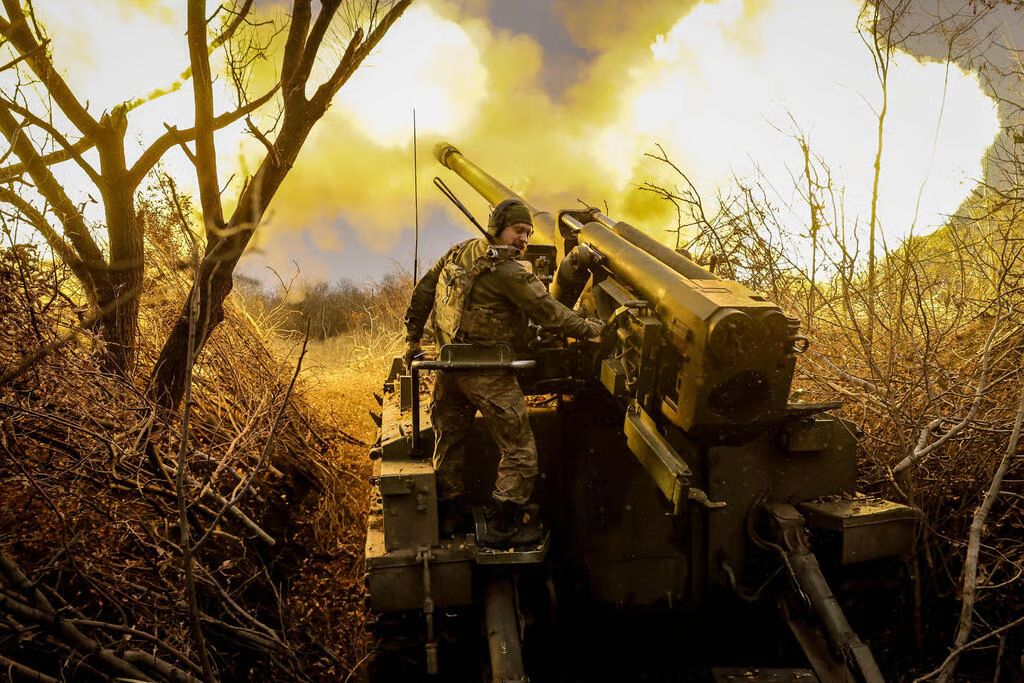
(Photo: AFP PHOTO / Press service of the 24th Mechanized Brigade of Ukrainian Armed Forces)
The plan also states that Ukraine would be barred from joining NATO, with that prohibition written into Ukraine’s own constitution and NATO’s founding documents. Kyiv would be required to make deep cuts to its military, reducing its forces to no more than 600,000 troops — down from roughly 880,000 today. Ukraine would also pledge not to pursue nuclear weapons. The Zaporizhzhia nuclear plant, Europe’s largest, which was seized by Russian forces, would be restarted under International Atomic Energy Agency supervision, with electricity output split evenly between Russia and Ukraine. The proposal also calls for lifting sanctions on Russia and restoring it to the Group of Eight, which has been known as the G7 since Moscow’s expulsion in 2014 after its annexation of Crimea.
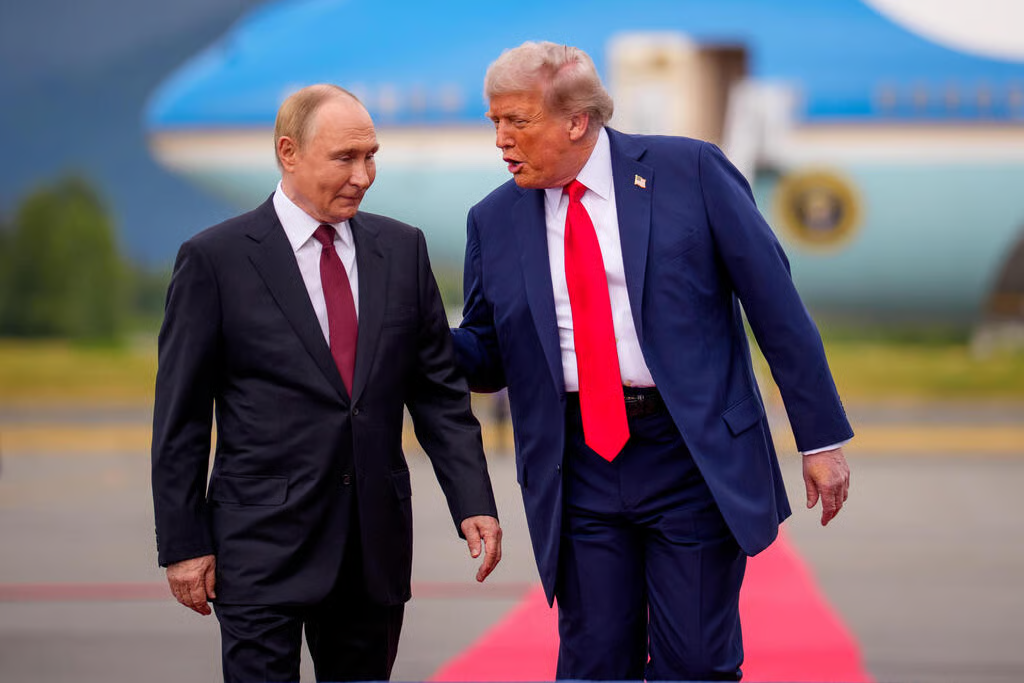
The American plan includes many provisions Kyiv considers red lines. Zelensky has repeatedly said Ukraine will not make territorial concessions and has hinted that, if forced to choose, he may prefer a rupture with Washington — despite the consequences — rather than accept terms he believes would strip Ukraine of its dignity and freedom. European leaders have also expressed strong concern, issuing statements backing Kyiv and insisting that any agreement must guarantee the security of Ukraine and its allies. They fear Putin would use any cease-fire to prepare for future invasions and expansion across Eastern Europe.
(Photo: Andrew Harnik/Getty Images)
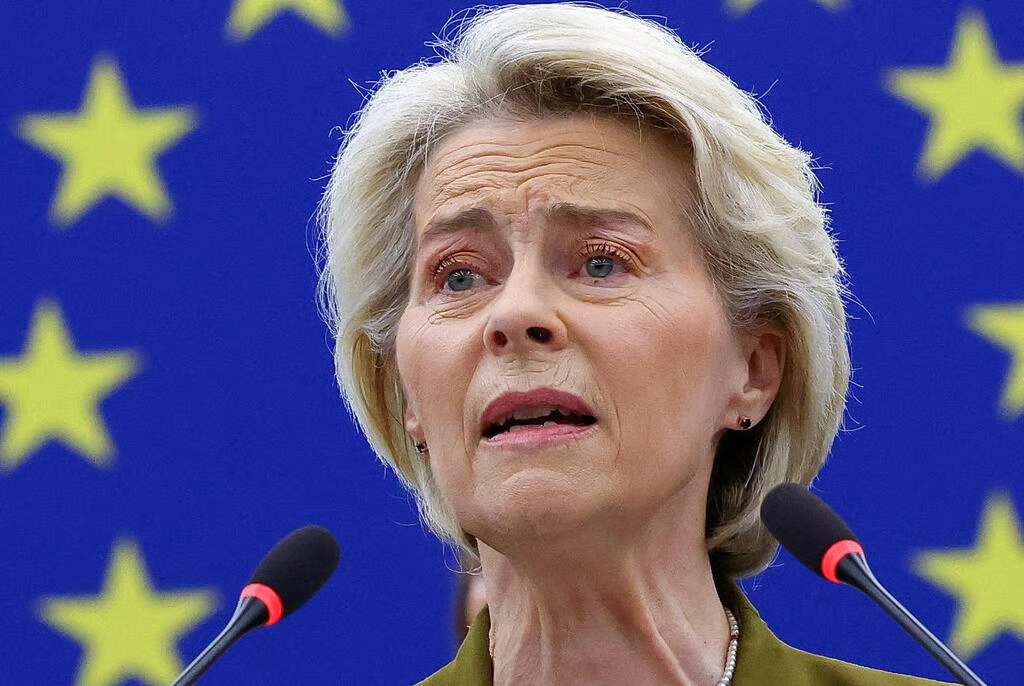
“Any credible and sustainable peace plan should first and foremost stop the killing and end the war, while not sowing the seeds for a future conflict,” European Commission President Ursula von der Leyen said Monday. She outlined three principles that must guide any future settlement between Russia and Ukraine: borders cannot be changed by force (meaning Ukraine should not be pressured to surrender occupied territory); Ukraine’s status as a sovereign state must not be undermined by limits on its armed forces, which “would leave the country vulnerable to future attack and thereby also undermining European security”; and the European Union must have a central role in any agreement. “Ukraine must have the freedom and sovereign right to choose its own destiny,” she said. “They have chosen a European destiny.”
On Monday, Britain, France and Germany unveiled a counterproposal. While based on Trump’s 28-point outline, it contains major revisions, including a demand that “negotiations on territorial swaps begin from the line of contact” — meaning current front lines — rather than requiring Ukraine to preemptively withdraw from the areas Russia seeks in Donbas. The European proposal would cap Ukraine’s “peacetime” military at 800,000 troops, a slight reduction from today’s 880,000 but far above the 600,000 limit in the American plan.
(Photo: REUTERS/Yves Herman)
Unlike the U.S. proposal, which offers Kyiv only vague security assurances, the European plan calls for guarantees modeled on NATO’s Article 5, the alliance’s core commitment that an attack on one member requires a collective response. The European draft does not explicitly state that Ukraine cannot join NATO but notes that membership requires unanimous consent among all allies, “which does not exist,” in the document’s phrasing. European leaders say they support a gradual lifting of sanctions on Russia if a peace agreement is reached and implemented, and they agree Moscow should be allowed to rejoin the Group of Eight under those conditions.
As reported by Ynetnews