
The attacks organized by Iran were before June’s 12-day war, so reflect the export of Tehran’s strategy of targeting Jews abroad, a playbook it has used for decades.
(photo credit: AlboMP/X)
First things first: Australia deserves praise for expelling Iran’s ambassador over his country’s alleged involvement – according to the Australian Security Intelligence Organisation – in two violent antisemitic attacks.
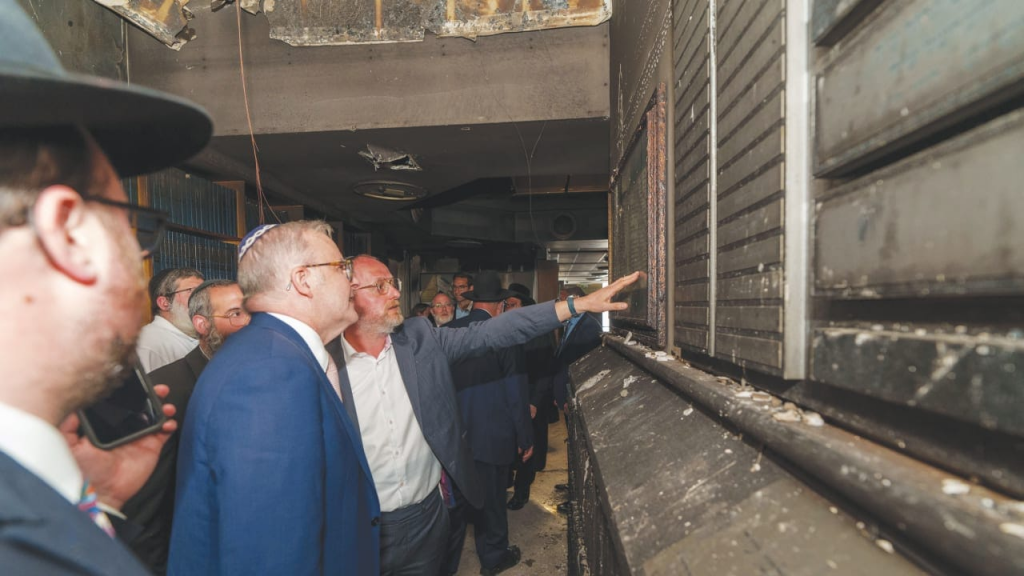
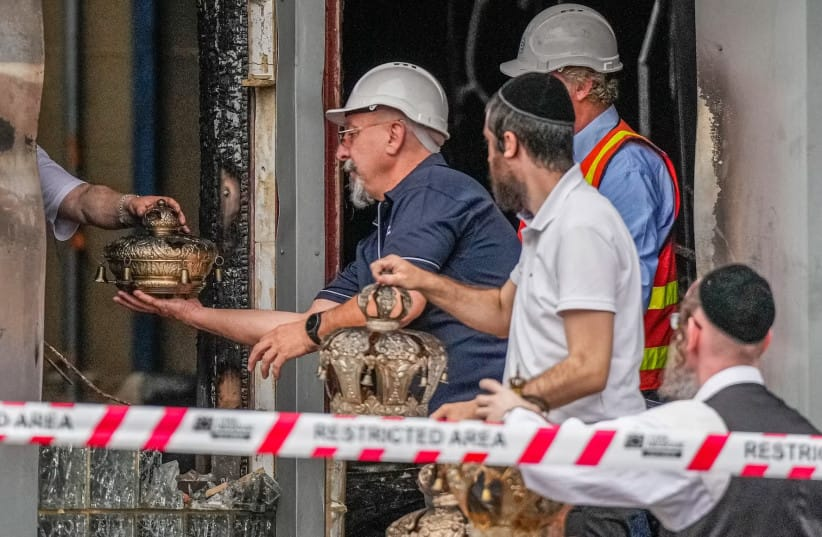
The first was the torching of Melbourne’s Adass Israel Synagogue in December 2024, and the second was setting alight a kosher restaurant in Sydney a few weeks later. Both incidents shook Australia’s 120,000-strong Jewish community and were part of a broader wave of antisemitic violence, including just last month’s arson at another Melbourne synagogue.
Iran targeting Diaspora Jewry before June war
What makes the timing significant is that the synagogue and restaurant attacks occurred before June’s 12-day war between Israel and Iran. In other words, these were not retaliatory acts triggered by that conflict. They were part of something deeper and more disturbing: the export of Iran’s strategy of targeting Jews abroad, a playbook it has used for decades.
Australian leaders have for months insisted that antisemitism has “no place” in their country. Those are nice words, but the reality has proven otherwise.
Jews have been attacked while praying in synagogues, eating in restaurants, or simply living visibly Jewish lives. Protesters chant “Death, death to the IDF” in city streets. Universities debate whether such slogans even count as antisemitism.
But when Iran’s hand is alleged to be behind the flames in Melbourne and Sydney, the conversation shifts. This is no longer just about local bigots or angry mobs feeding off social media. This is about a hostile state actor deliberately stoking hatred of Jews and Israel thousands of miles from its borders.
Iran has a track record. In the early 1990s, it was implicated in two devastating terrorist attacks in Argentina: the bombing of the Israeli embassy in Buenos Aires in 1992 and the attack on the AMIA Jewish community center in 1994, which together killed 114 people.
Those operations, coordinated through Hezbollah, demonstrated Iran’s willingness to project violence against Jewish and Israeli targets far from the Middle East. Over the years, it has been involved in attacks or planned attacks everywhere from Burgas to Baku, London to Washington.
Australia is the latest arena in that campaign.
Iran’s alleged involvement in the synagogue and restaurant arsons raises another question. For months, Australia, like many other countries, has seen massive anti-Israel protests that have sent tens of thousands into the streets, including one on Sunday.
No one doubts that anti-Israel sentiment exists locally and organically. Universities, activist networks, and social movements provide plenty of fuel for demonstrations. But if Tehran has been willing to light fires at synagogues and restaurants, it is reasonable to ask whether its hand is also at work in fanning the broader climate of hostility to Israel through these protests and those worldwide.
This is why Canberra’s move matters. It recognizes that antisemitism in Australia today is not only homegrown but also potentially imported – that the line between local anger and foreign manipulation is not always clear and needs to be ferreted out.
Sending a signal
Australia’s decision to act – to move beyond platitudes and actually expel Iran’s ambassador – sends a signal worth noting.
For months, Canberra’s relationship with Jerusalem has been rocky, particularly after it joined France, the UK, and Canada in announcing plans to recognize a Palestinian state and, just days later, barred MK Simcha Rothman from entering the country. Just last week, Prime Minister Benjamin Netanyahu blasted Australian Prime Minister Anthony Albanese as a “weak leader” who betrayed Israel and abandoned Australia’s Jews.
By ejecting Tehran’s envoy, however, Albanese’s government is trying to demonstrate that it has done neither. It recognized that antisemitism in Australia today is not only homegrown but also imported and that confronting it requires concrete steps, not just sympathetic words.
This lesson should not be lost on other governments. What happened in Melbourne and Sydney is not unique to Australia. Iran has a long history of using Jewish targets abroad as pressure points against Israel. If its reach has extended to Australia, it has undoubtedly extended elsewhere as well.
Australia acted only after its synagogues and restaurants were attacked. Others should not wait before asking whether Tehran’s hand is also at work on their own streets. Iran’s malign influence is global; Australia just provided more proof of that.
As reported by The Jerusalem Post